DAY 04 : AI as My Second Pair of Hands — Beyond the Bench
DAY 04 · Tue 26 OCT - “Hand & Algorithm — A Nine-Day Online Exhibition”
Chap.6- 44 | DAY 03— AI as My Second Pair of Hands-Beyond the Bench
Learning 4: Assistance Without Surrendering My Voice
Can AI give an independent artist more time to make?
When I began Hand & Algorithm eight months ago, I imagined AI might help me generate creative ideas. What I didn't expect was how useful it would become in managing the many responsibilities surrounding my jewellery practice.
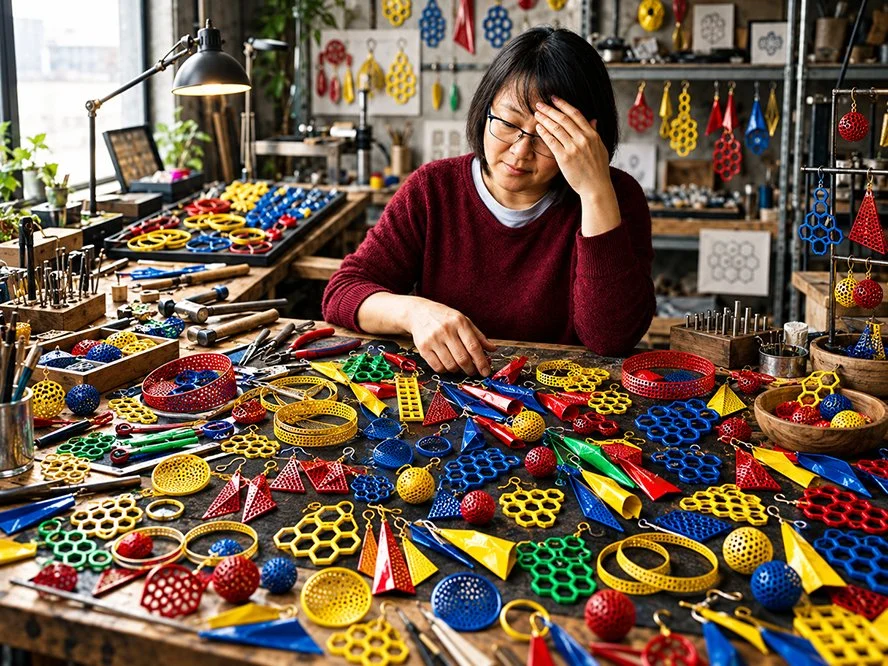
As an independent artist, I am also a writer, researcher, administrator, photographer, marketing manager and small-business owner. There is only one of me!
Over the past eight months, I have experimented with various AI tools, gradually discovering which ones are useful for different tasks.
ChatGPT — My Everyday Studio Assistant
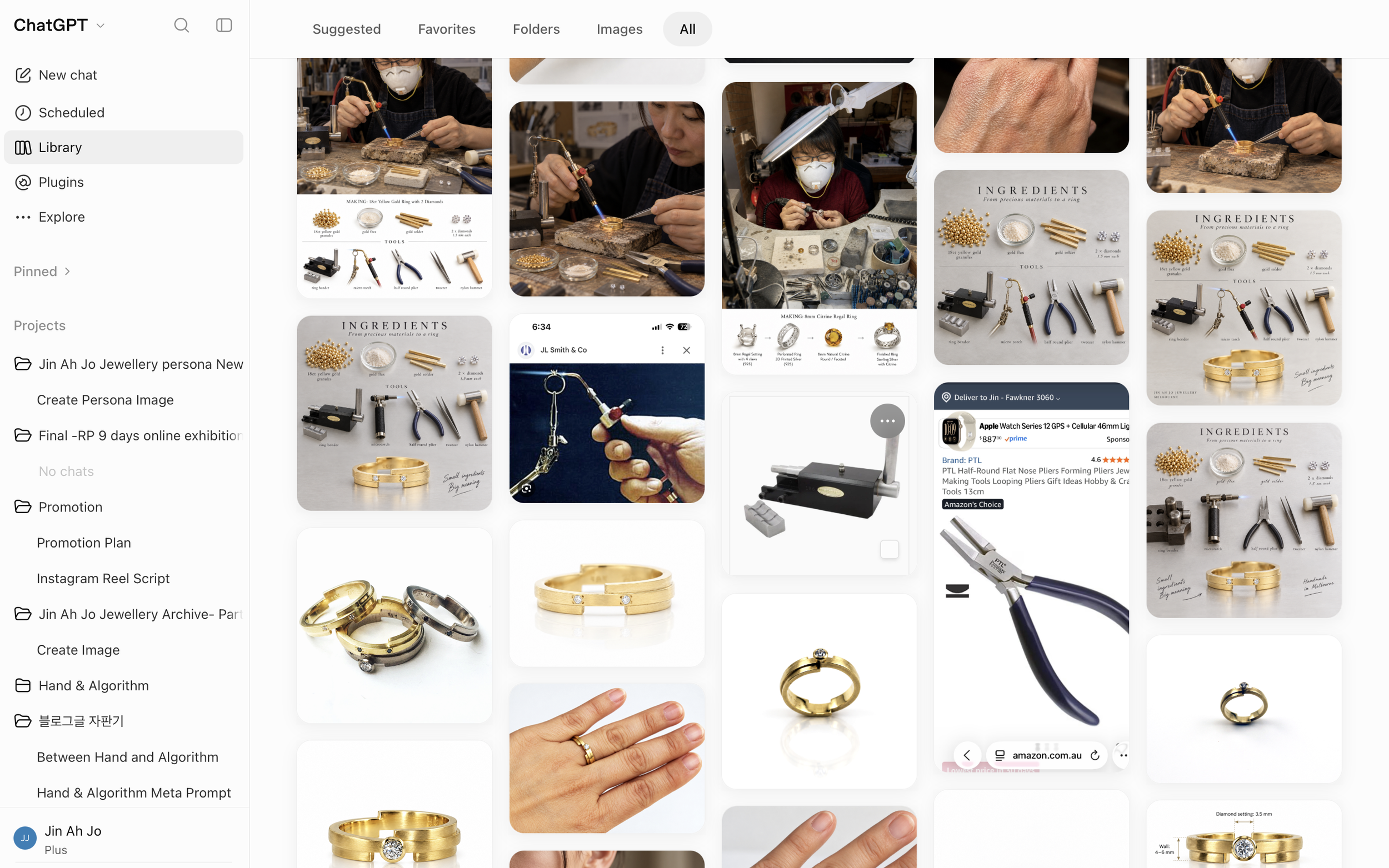
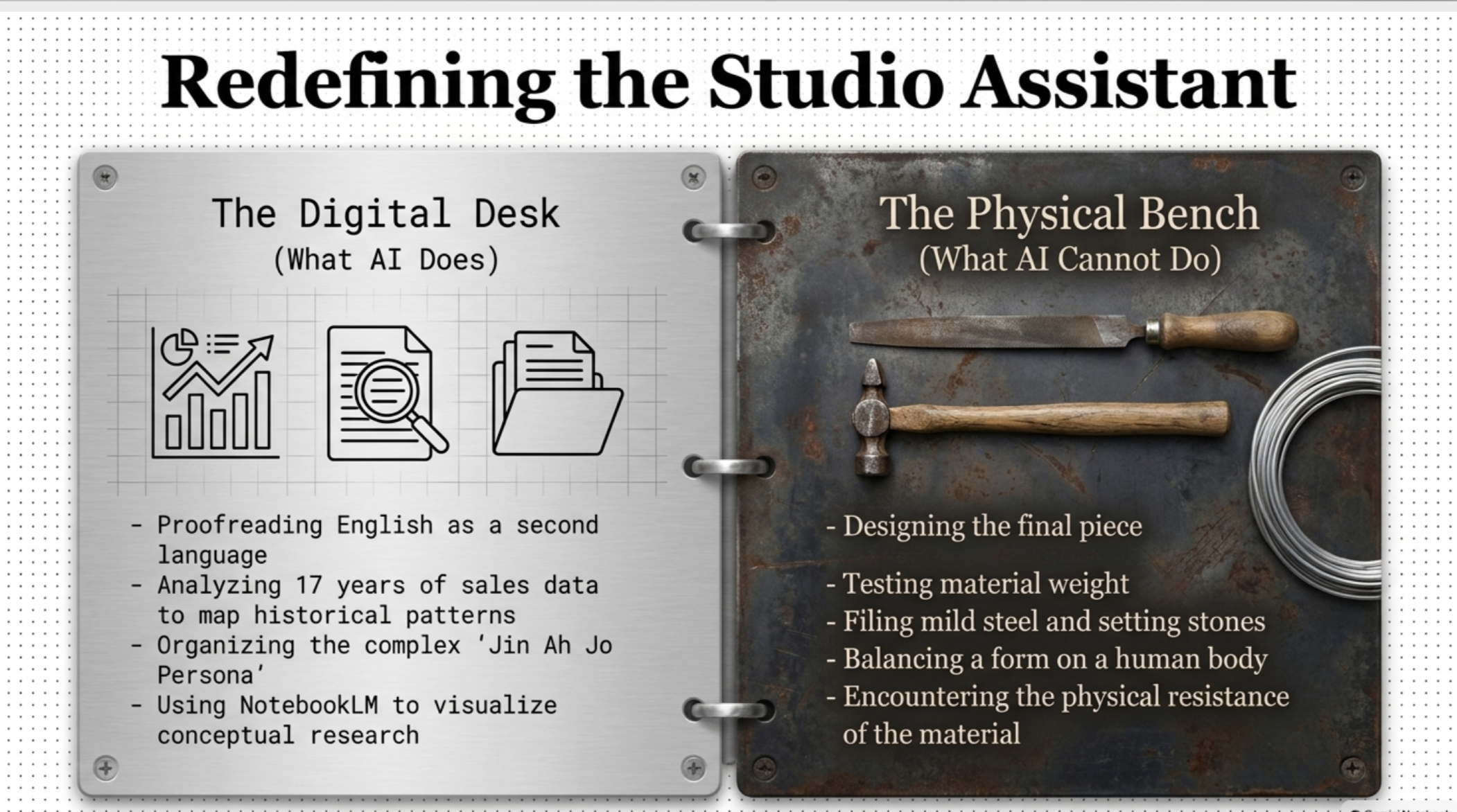
ChatGPT has become one of my most frequently used tools. I use it for proofreading and translating, developing blog writing, drafting professional emails, preparing competition applications, researching complex information and organising projects.
It also helped me develop my Jin Ah Jo Jewellery Persona, bringing together seventeen years of artistic practice, materials, techniques and visual language. I have experimented with its image-generation and editing capabilities, as well as using it to explain technical processes and develop promotional ideas.
As someone whose first language is Korean, I particularly appreciate being able to express my thoughts more confidently in English without losing my own voice.
NotebookLM — My Research and Knowledge Assistant
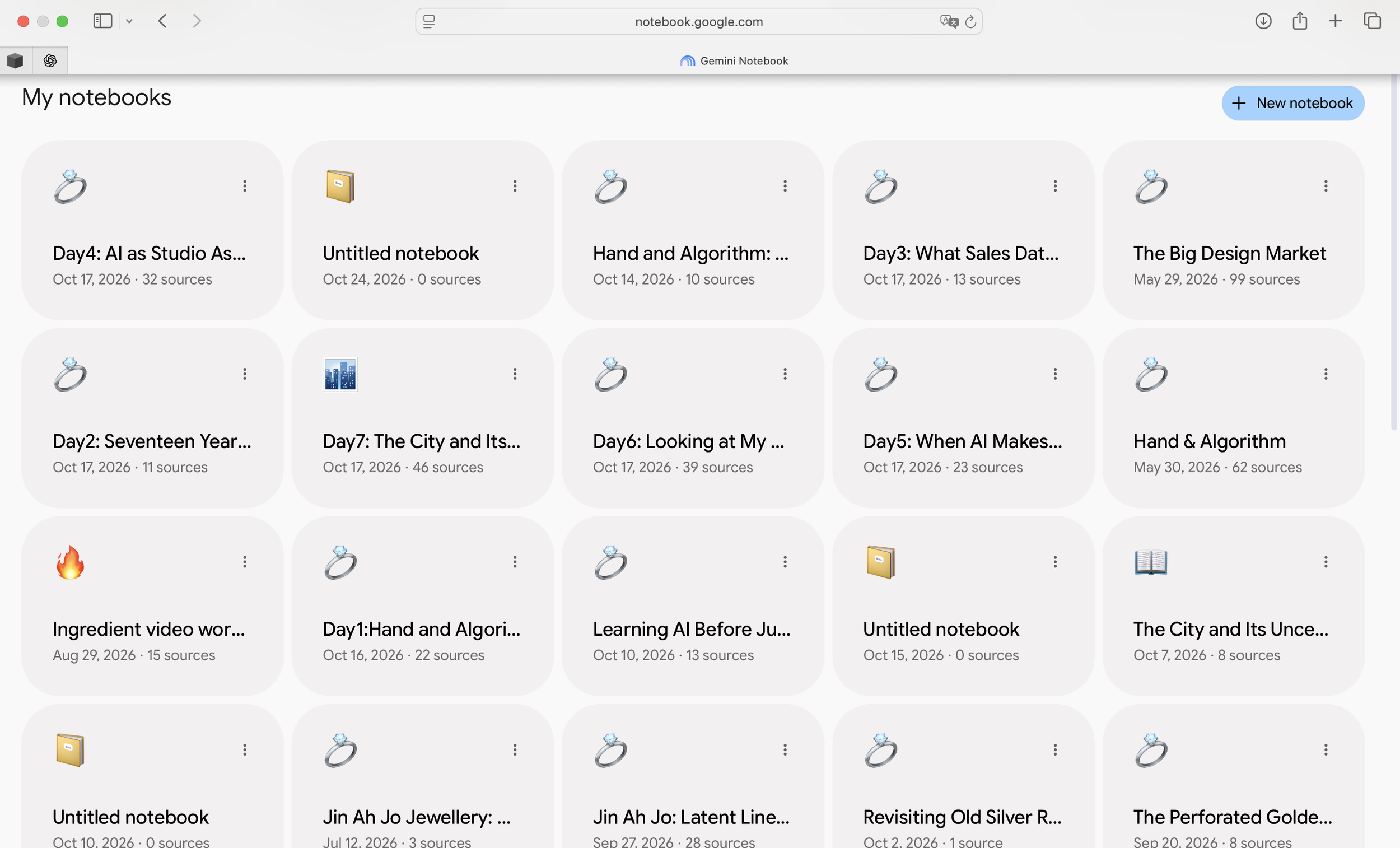
Google's NotebookLM opened another interesting possibility: organising my scattered knowledge.
I uploaded research materials, documents and writing into separate projects, then experimented with audio and video overviews, infographics, slide presentations and research summaries.
I was fascinated by how information I had collected over many years could suddenly become accessible in different formats.
It sometimes felt as though I was looking at my own practice from the outside.
AI for Data Analysis and Business Planning
I also experimented with analysing my jewellery sales history, identifying recurring designs, comparing product categories and considering future directions.
AI helped me look at information that I had previously collected but rarely examined as a whole.
However, numbers alone could not explain why I made certain works or what I wanted to create next. I still needed to interpret the results through my own experience.
AI as a Project Manager
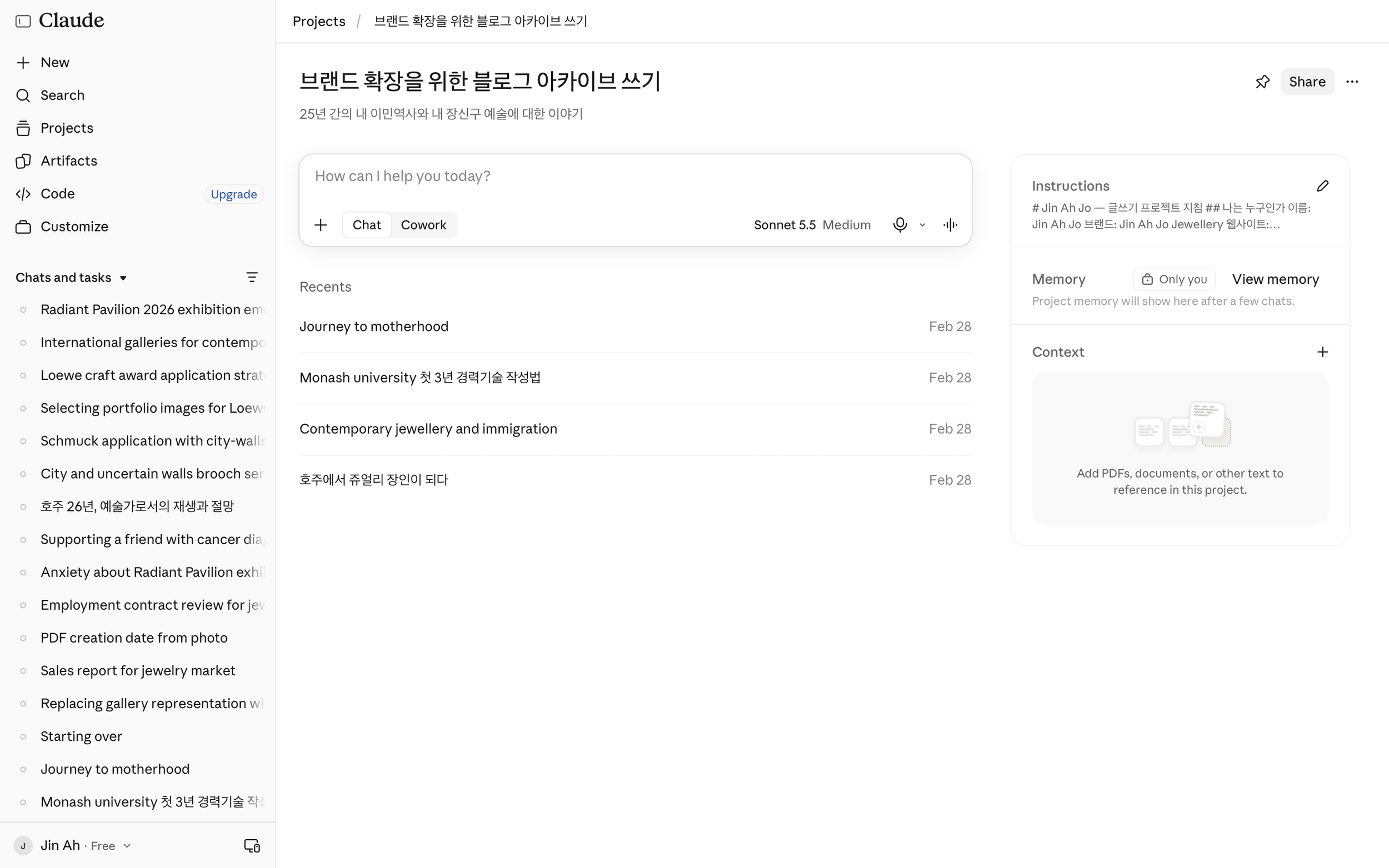
From organising my Radiant Pavilion exhibition to researching opportunities, preparing professional correspondence and planning promotional schedules, AI has helped me manage complicated projects.
It has become something like an additional desk in my studio, where I can organise ideas, ask questions and develop plans before returning to my jewellery bench.
The Paradox of Efficiency — More Possibilities, More Work!
Here is something I didn't expect.
My working efficiency has improved enormously. I would even say 100% in some tasks! But strangely, I have never been busier.
AI allows me to complete tasks that previously took hours in a fraction of the time. However, the time I save is quickly filled with new ideas, experiments and responsibilities.
One photograph becomes several promotional images. One piece of jewellery becomes a video, a Reel, a blog post and an entire story.
And there is so much to read!
AI can provide an overwhelming amount of information within seconds. I often spend more time reading, comparing, questioning and deciding what is actually useful.
I have also learned to recognise when AI might be hallucinating — presenting incorrect or invented information with great confidence. I am becoming better at identifying these mistakes, questioning the answers and checking information rather than simply accepting it.
Perhaps learning how to ask better questions is becoming one of my most valuable skills.
I ask, challenge, correct and ask again. Sometimes the most useful result comes not from the first answer, but from the conversation that follows.
The video accompanying this chapter explores exactly this contradiction: technology promises efficiency, but greater efficiency can also create an unexpected overload of work.
What Have I Learned?
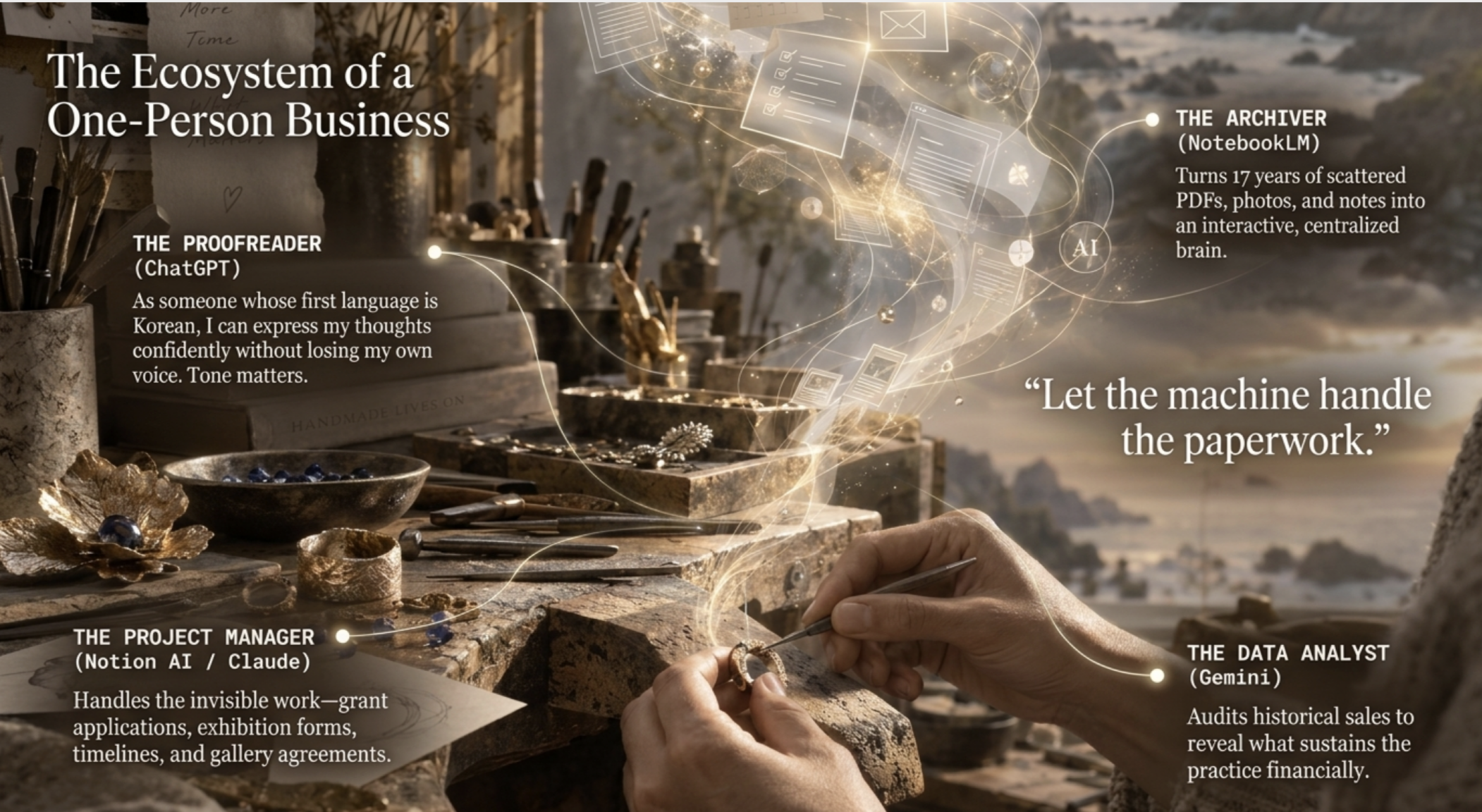
Eight months of learning AI has expanded my knowledge and capabilities far beyond what I originally imagined.
I have learned to write, research, organise, analyse, edit, create images, experiment with videos and manage projects in ways I could not have done independently before.
I have also learned to be more critical of the information I receive and more precise about what I ask.
But there is still only one of me, and only so many hours in a day.
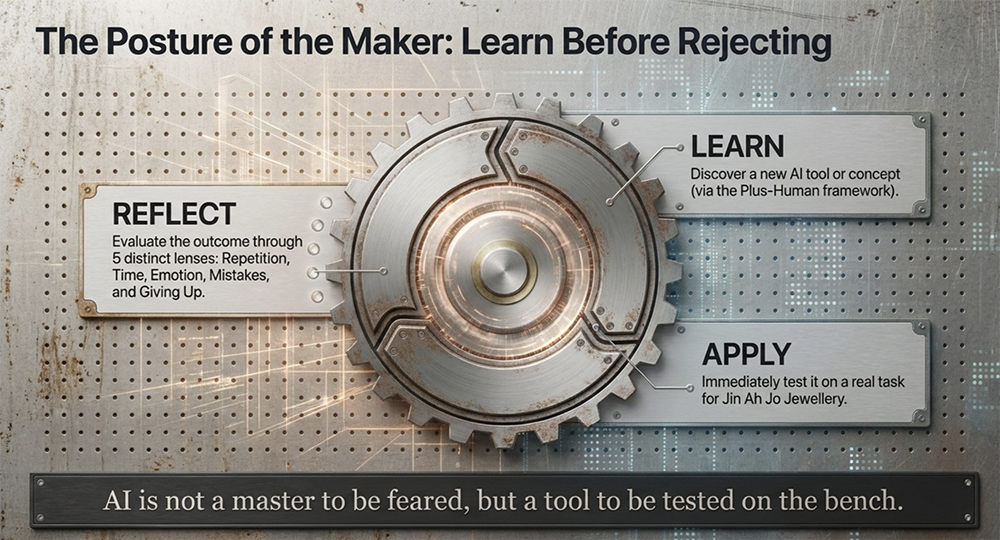
I am learning that AI is most useful when I know what I want it to do, what to question and when to stop.
AI can help me manage my practice, but it cannot decide what kind of artist I want to become.
Perhaps the real benefit of having a second pair of hands is not producing more, but gaining greater independence and protecting time for creativity.
After all, I still need my own two hands to make the jewellery.
Explore the Original Chapters
Chapters 1–5 to 1–9 — Defining AI as a Studio Assistant
Chapters 3–26 and 3–27 — Productivity and AI as an Administrative Assistant
Read the original chapters to explore my experiments, discoveries and reflections in greater detail.