Chap 1-8: Learn → Apply → Reflect: My Project Method
Learn → Apply → Reflect: My Project Method
My method for Hand & Algorithm is gradually becoming clearer.
First, I learn a new idea, tool or process.
Then, I apply it to a real part of Jin Ah Jo Jewellery.
Finally, I reflect on what happened.
This cycle sounds simple, but it has become an important way of preventing my AI learning from turning into endless consumption.
Applying What I Learn
So far, I have applied AI to many different parts of my practice.
I have used it to assist with proofreading, blog writing, artist statements, exhibition planning, image editing, promotional material, video experiments, sales analysis, research and archiving.
I have also tested it as part of the design process, including an experiment that analysed previous rings and helped me think about how a ring-design algorithm might work.
The visual tools have been especially interesting.
AI can quickly suggest new backgrounds, exhibition displays, model-wearing images or promotional concepts. However, it often misunderstands the physical structure of my jewellery.
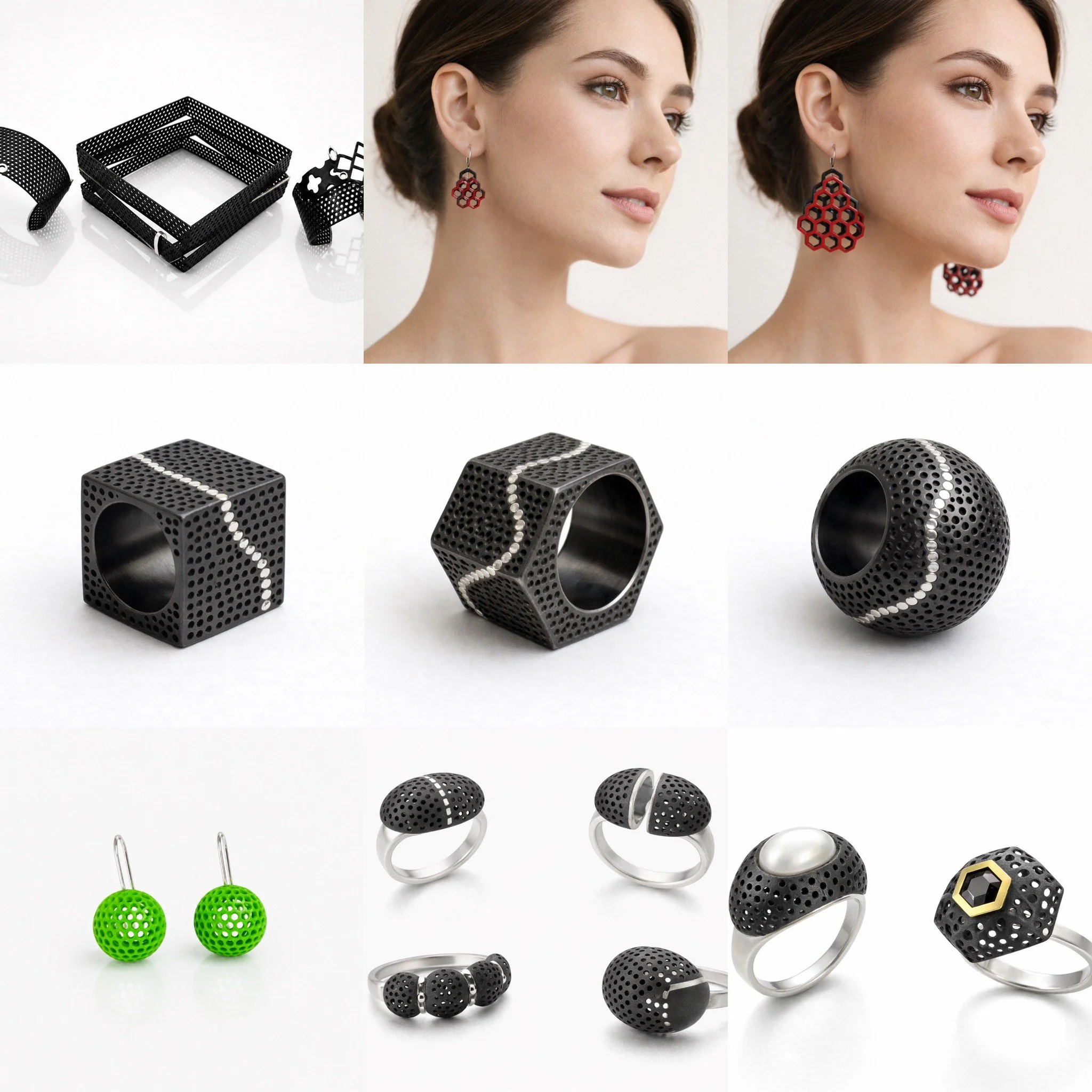
Some inaccurate interpretations of my jewellery generated by AI: the scale is wrong, the designs are altered, and the perforations and patterns are unrealistic. The results often look like sketches that do not consider how the jewellery could actually be constructed. They reveal none of the material knowledge I have developed over many years as a maker.
Perforations disappear. Silver inlays change position. Carefully formed shapes become distorted. The object may look visually impressive while no longer being truthful to the original work.
These failures have reminded me that speed is not the same as accuracy.
My material knowledge is still necessary to recognise what is wrong.
Discovering New Ways to Communicate
Video has been another important experiment.
Using Google AI Studio, I created a short video related to jewellery making. I was fascinated that a written prompt could be transformed into moving imagery.
The video later received more than 10,000 views.
The number was exciting, but the more important discovery was that audiences respond differently to process, movement and storytelling.
AI did not make the jewellery. It helped me explore another way of communicating the work.
I have since learned that video production can be divided into smaller stages: researching successful examples, planning scenes, preparing images, generating movement or music, and editing everything together.
A task that once felt impossible has become a series of manageable experiments. I will explore this process in more detail in a later chapter of the blog. I also plan to create many more experimental videos through language and prompting. How exciting it is to feel that I am finally building my own digital assets from seventeen years of experience as a jewellery maker.
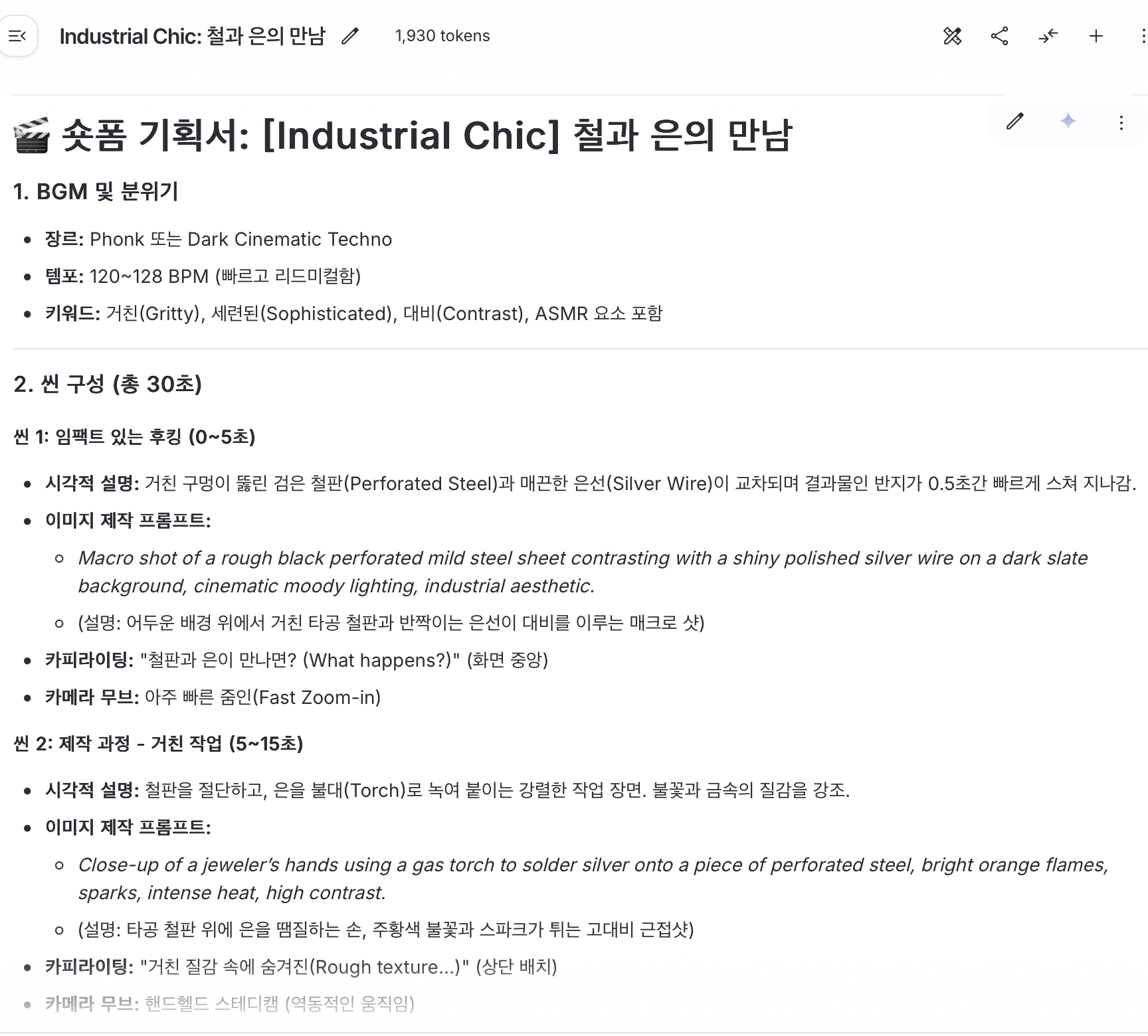
To create my first video through language and prompting.
Reflection Is Part of the Research
After applying a tool, I ask:
Did it save time?
Did it communicate the jewellery clearly?
Did it misunderstand the object?
Did it help me notice something new?
Did it create more work rather than less?
What still required my own judgement and experience?
These questions are essential.
Without reflection, I would simply be collecting new technology. Through reflection, each experiment becomes part of the research.
Sometimes a successful result shows me a new possibility. Sometimes a failed image teaches me more about the structure of my jewellery than a perfect image would.
Acceleration Without Losing the Hand
The idea of becoming a plus human is exciting. AI can support one independent artist with tasks that might otherwise require a larger team.
But acceleration is not automatically progress.
The purpose of Hand & Algorithm is not to make everything faster or to give every responsibility to AI. It is to understand where AI genuinely supports my practice and where the knowledge of the hand must remain central.
AI can help me organise seventeen years of work, but it did not live those years.
It can analyse a photograph of perforated steel, but it cannot feel the resistance of the metal beneath the drill.
It can suggest a ring, but it cannot feel its weight, balance or relationship to the finger.
It can help me find language, but I still need to decide whether that language expresses what I mean.
My method will therefore continue:
Learn something new. Apply it to the practice. Reflect honestly on what it changes.
This is how Hand & Algorithm will grow—not as a final conclusion about AI, but as an ongoing record of learning through use.
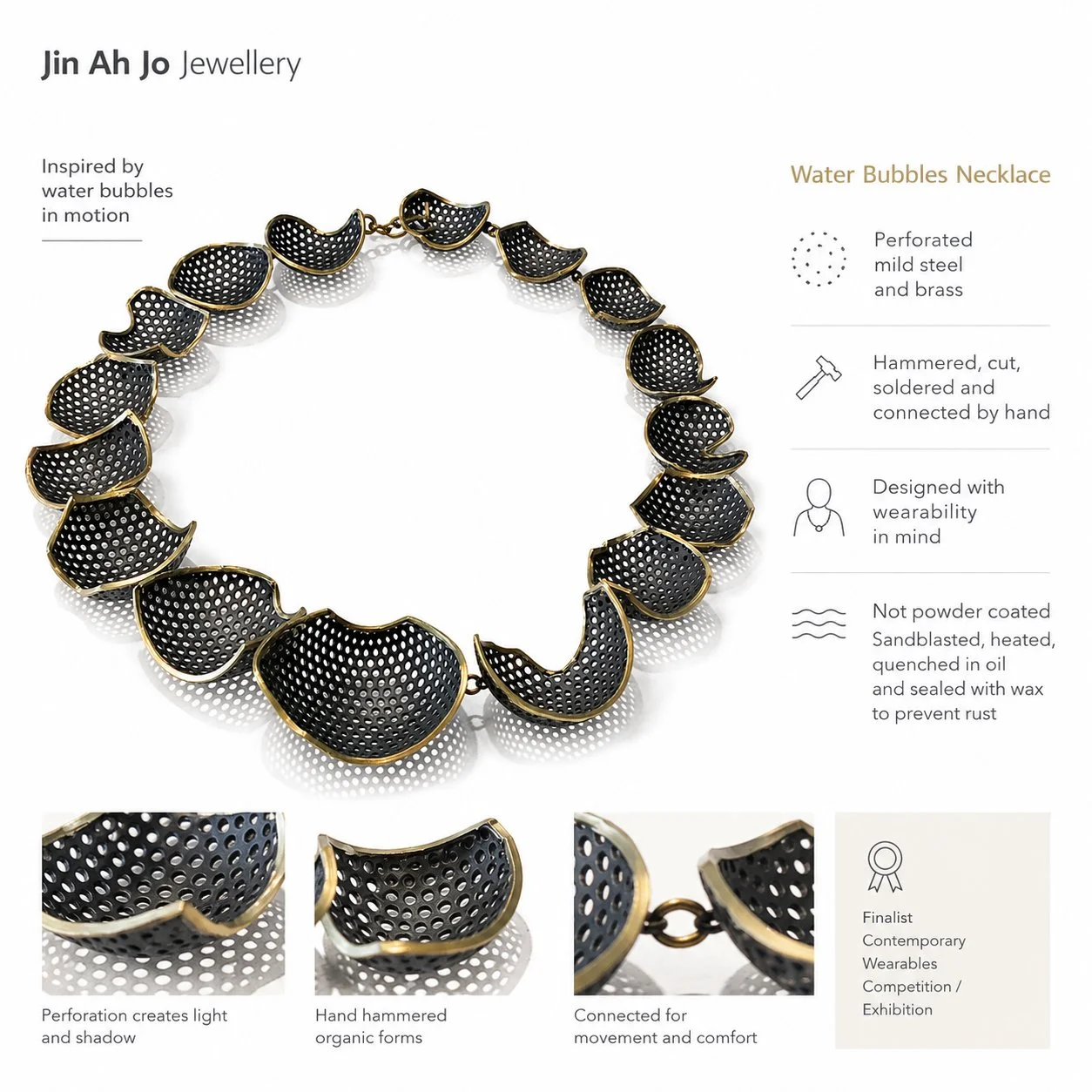
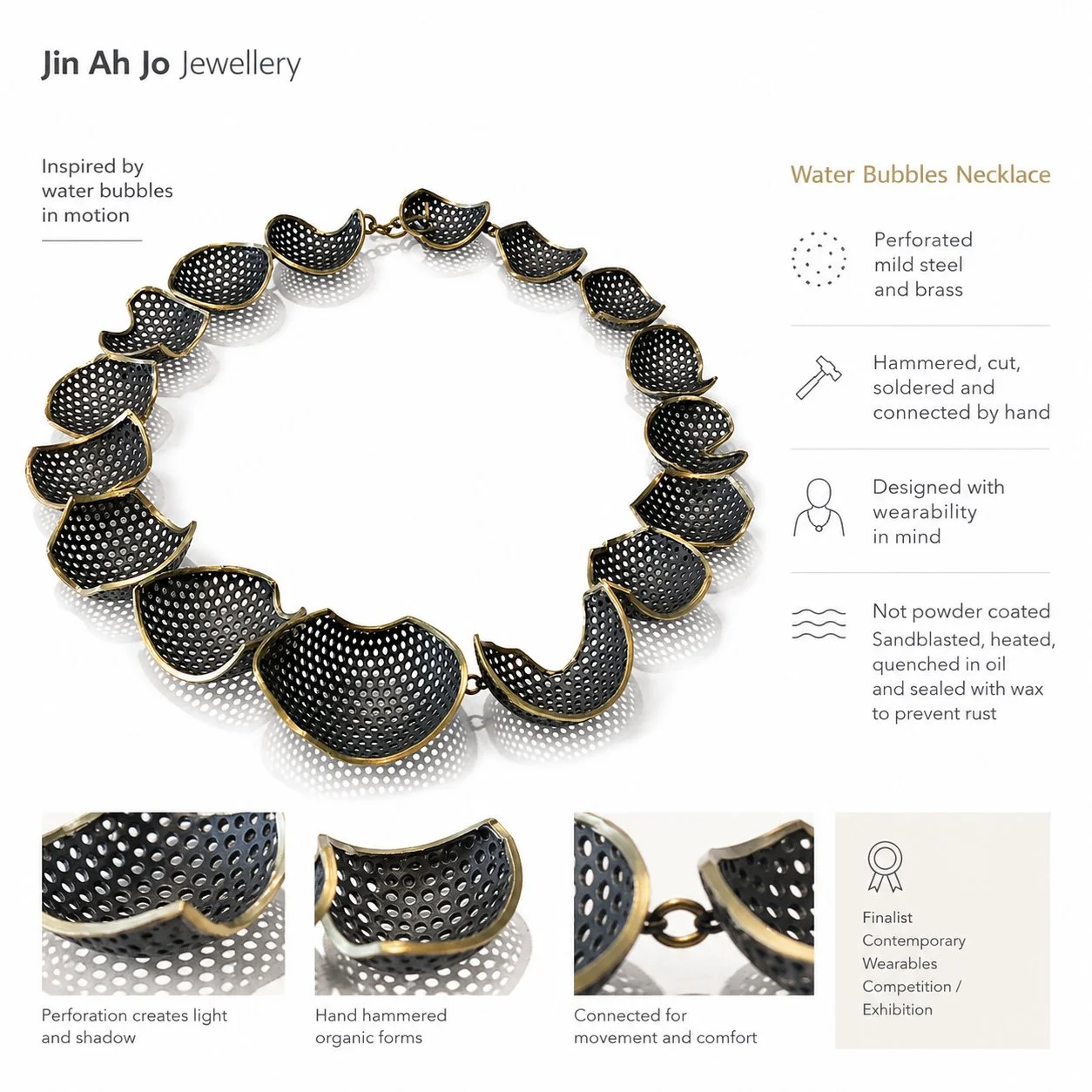
“Bubbles” necklace- image for Jin Ah Jo Jewellery persona