Chapter 2 Seventeen Years of Practice as Data, Memory and Archive 11:My Starting Point: Seventeen Years of Jewellery Practice
Chap2-11: My Starting Point: Seventeen Years of Jewellery Practice
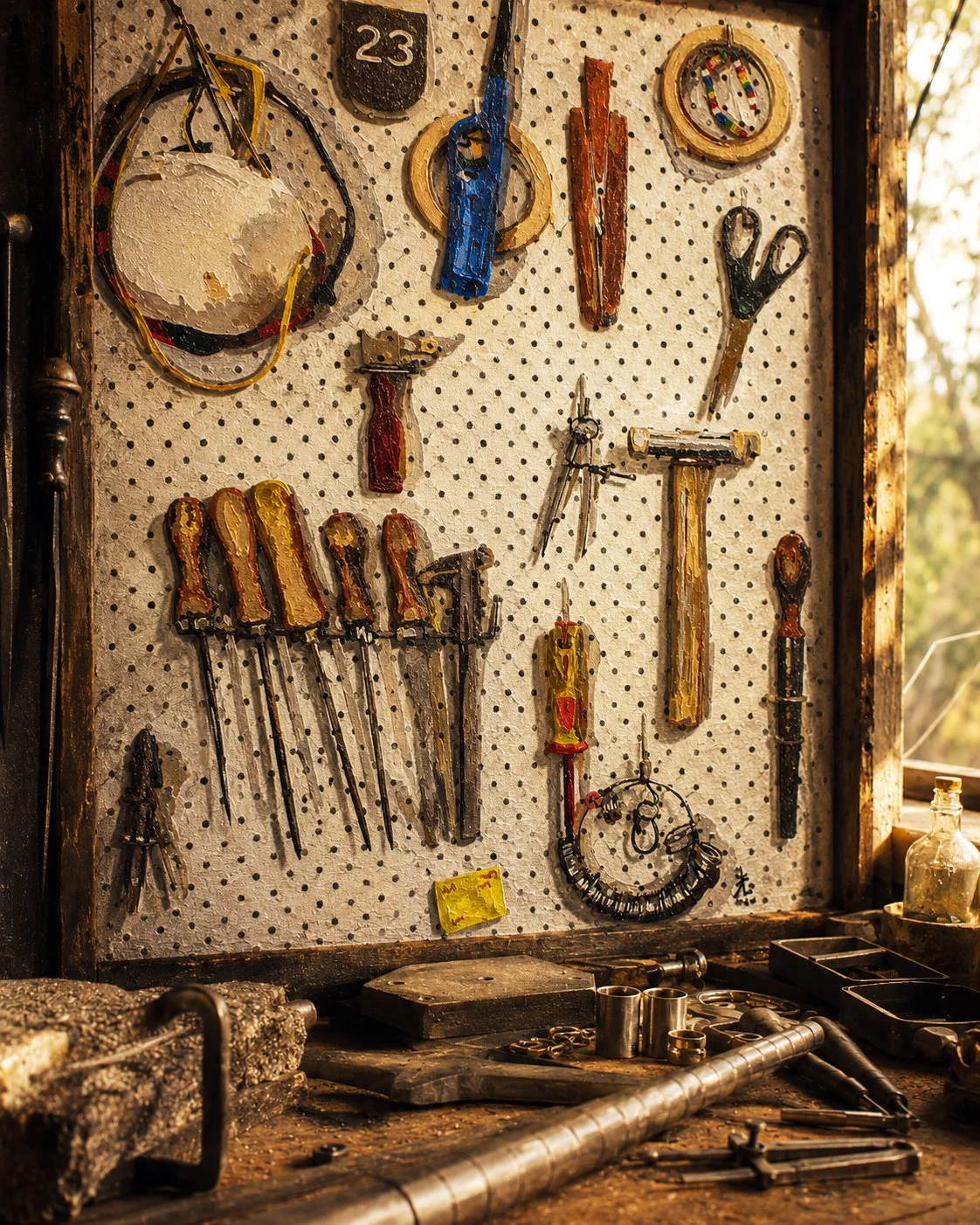
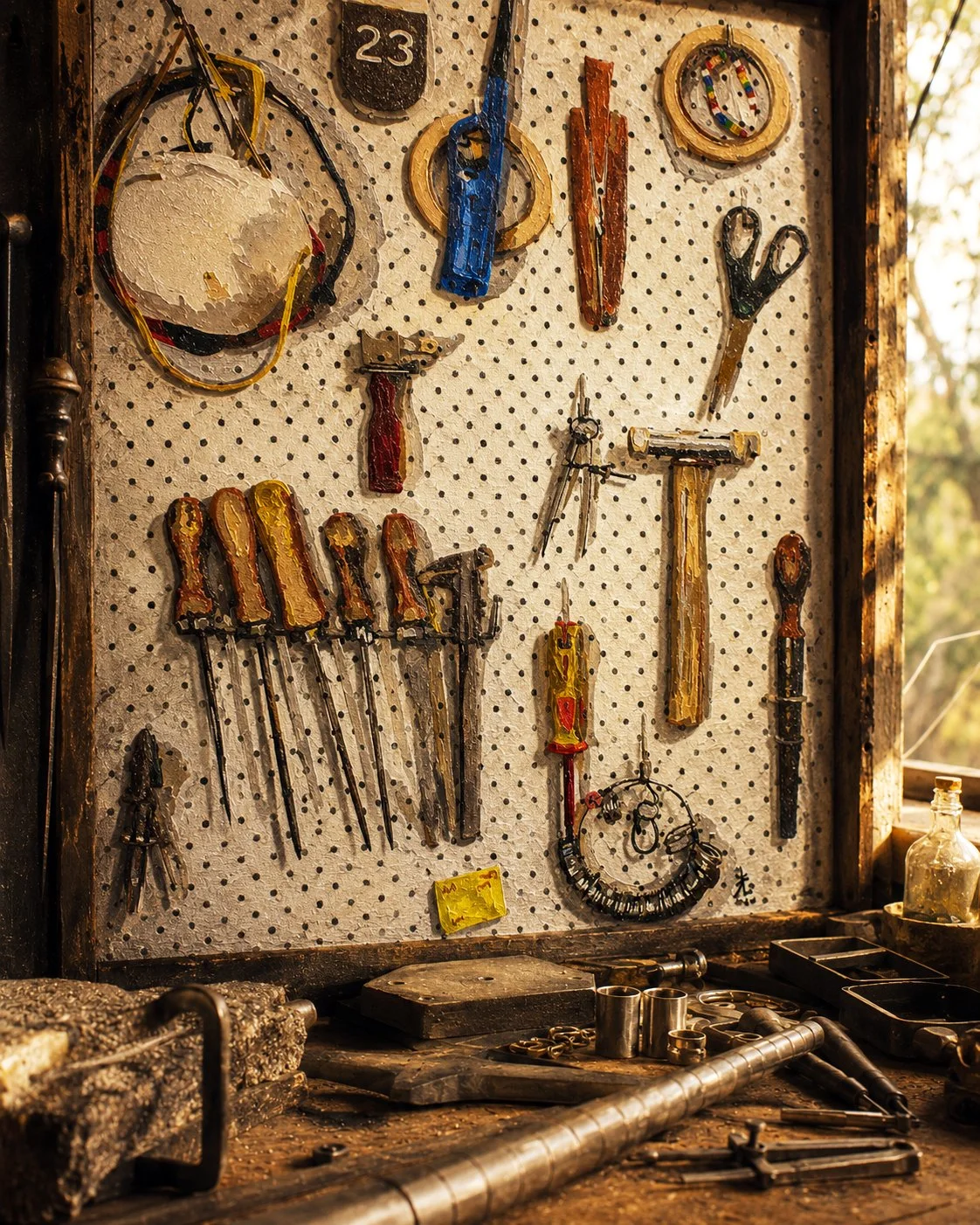
My painting of “Tools- the peg board”
Before Hand & Algorithm, before AI entered my studio, there were already seventeen years of jewellery practice behind me. My work began with the hand, the bench, and the material, anchored today in my Fawkner backyard studio. Hanging on my pegboard is a physical timeline of my life as a maker—including my first pair of Korean-made flat -nose and chain-nose pliers and worn bench files that have been with me for decades. For a long time, my relationship with these tools was entirely tactile and intuitive; it was only after working in jewellers' supplies that I learned to attach all those formal names to them, but names are always secondary to touch.
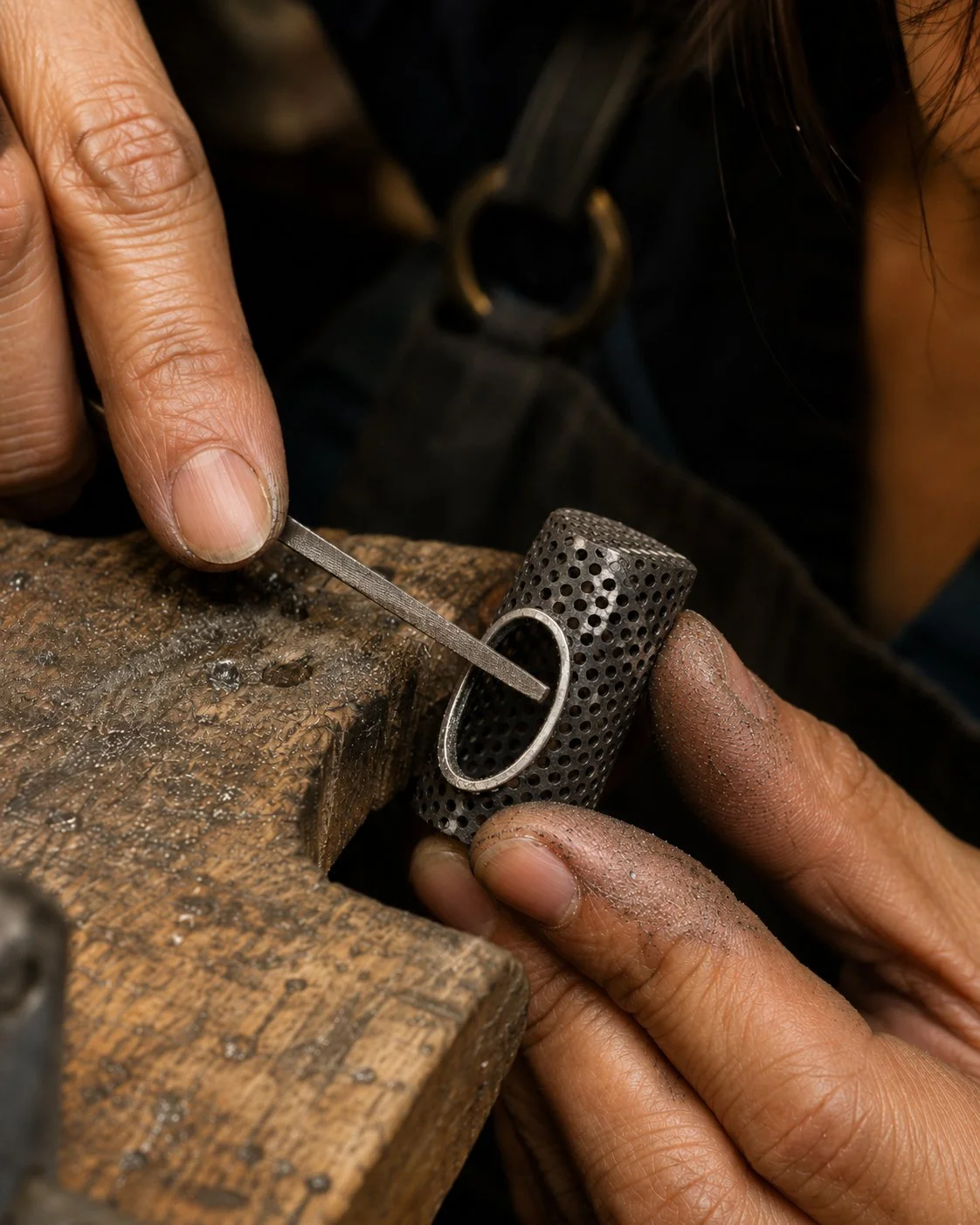
Filing one of the new rings, called “latent lines”
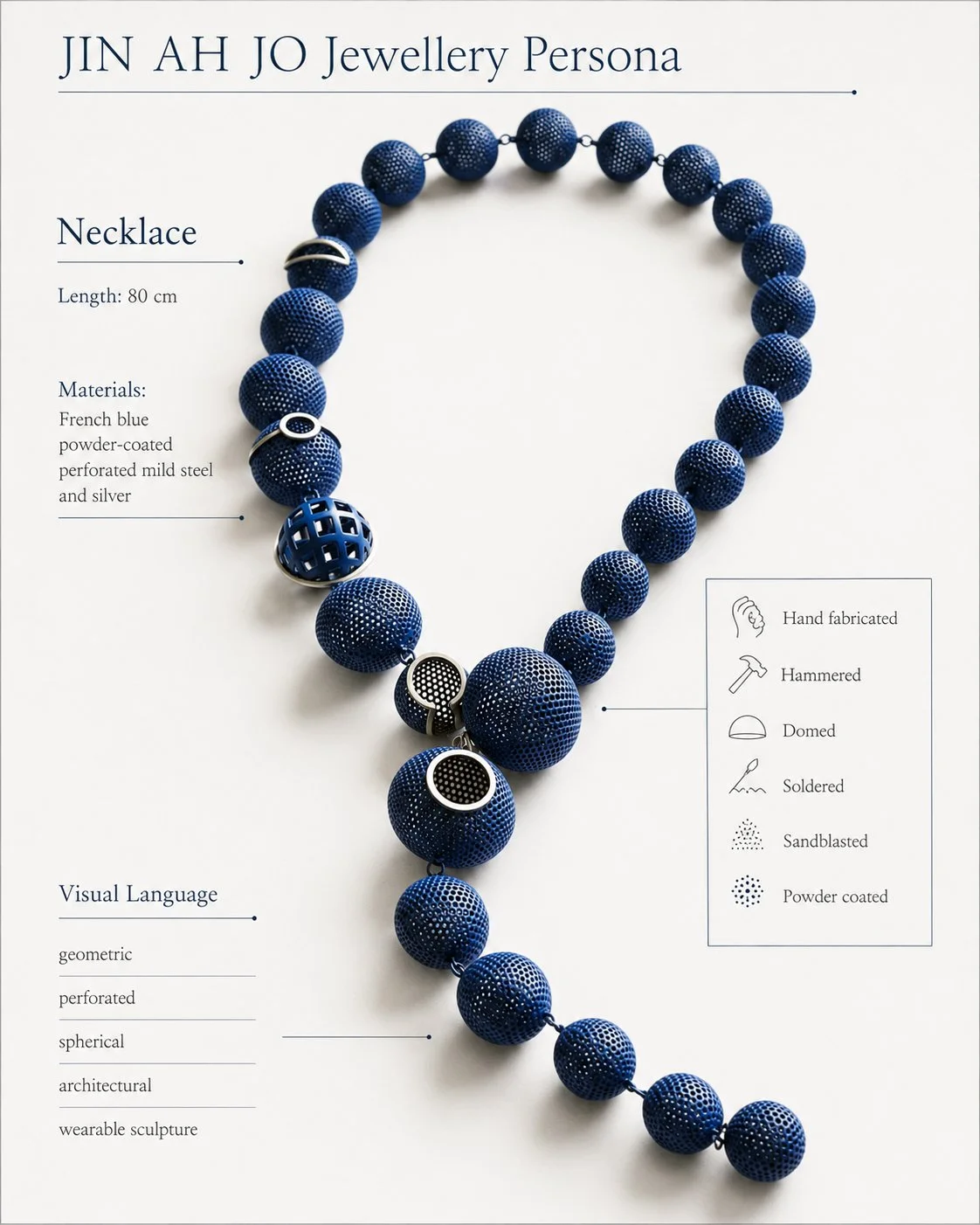
Over time, I developed a language through perforated mild steel, silver, brass, colour, repetition, and geometric form. Much of this knowledge did not arrive through explanation; it developed slowly through mistakes, experiments, failed pieces, and daily repetition. I learned how far steel could be pushed, how a perforated sheet could become a three-dimensional ellipsoid form with depth, how silver could enter the holes as an inlay rather than sit only around the edge, and how a piece changed when it met the body.
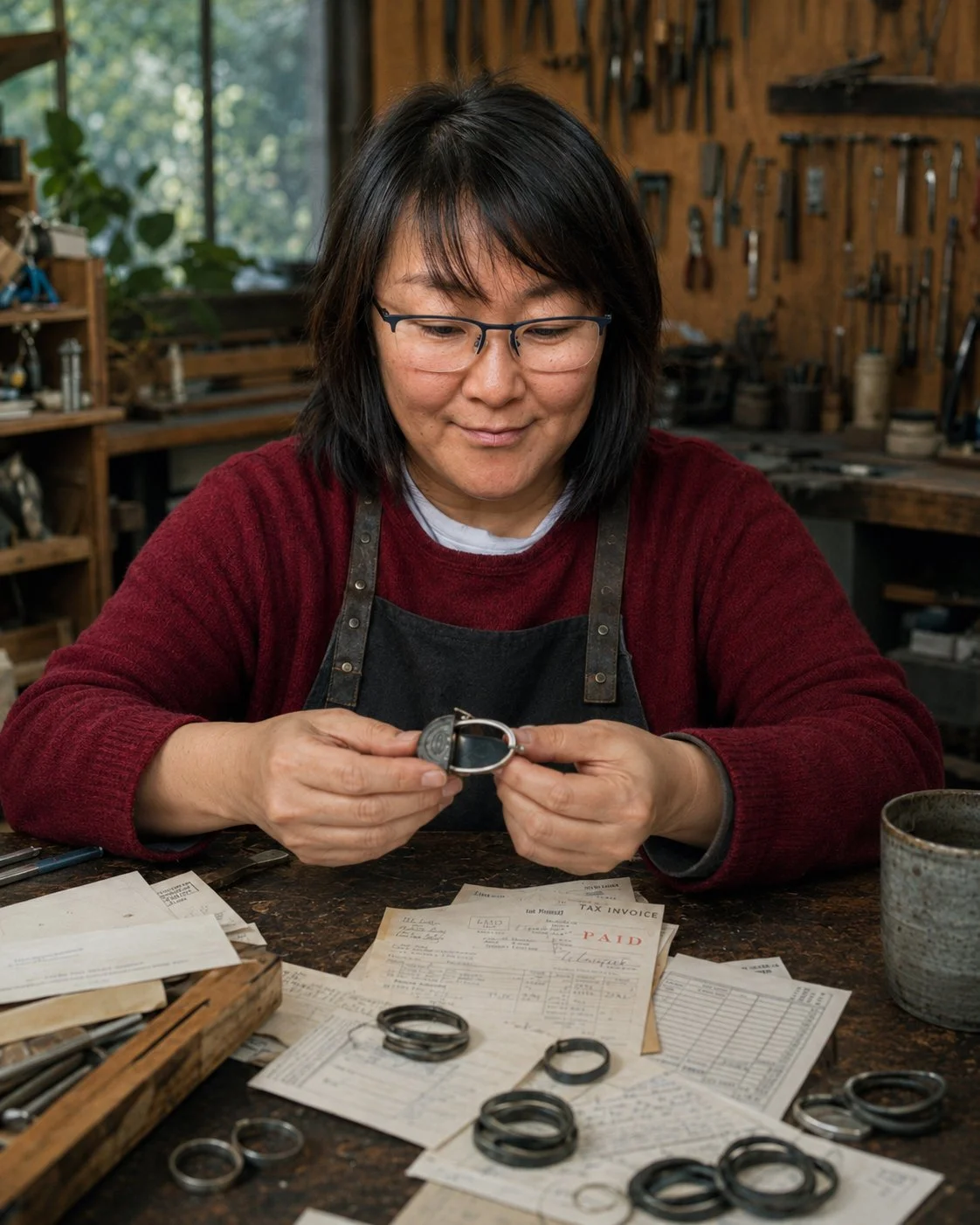
Myself at the bench to play
This was not a straight journey. I built Jin Ah Jo Jewellery while also learning how to survive as an independent artist and maker. Some years were stronger than others; some pieces sold repeatedly, while others remained unnoticed. But I continued. I worked with galleries, prepared stock, and delivered orders, primarily operating under the comfortable but vulnerable division of labor: I make, others sell. When my primary Melbourne stockist suddenly closed to me, I was confronted with a raw vulnerability: my work was scattered across different places with no central archive or record that actually belonged to me. I felt like I was starting again from zero.
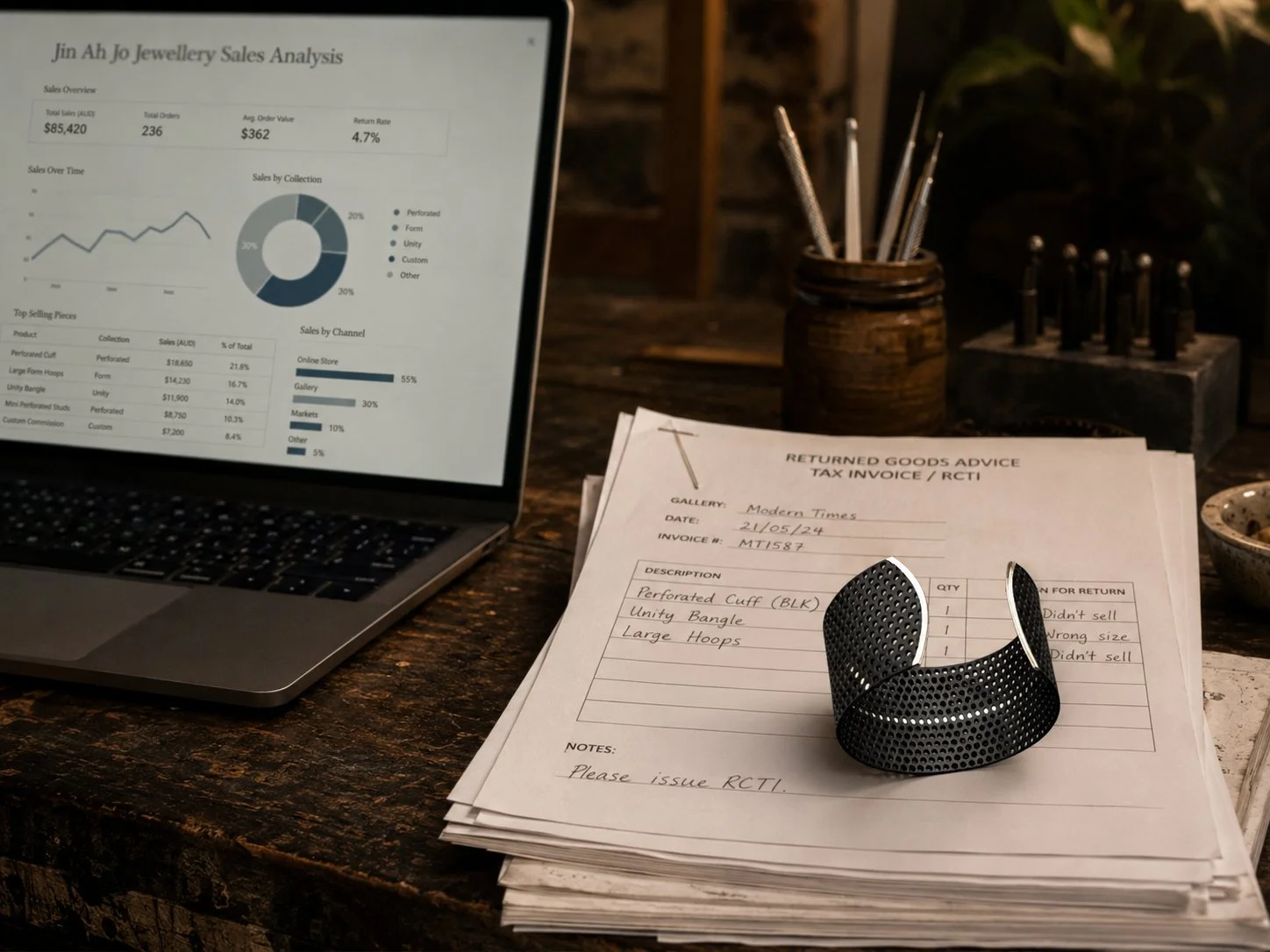
Sales report and the cuff for Hand & Algorithm project
This is the point where the algorithm entered my studio. When the gallery returned my work, they also returned seventeen years of Recipient Created Tax Invoices (RCTIs). For years, I thought those invoices were simply paperwork gathering dust. But through my AI learning journey in the Plus Human course, I began to see them as data. Fed into AI as a studio assistant, this seventeen-year paper trail became a detailed 12-page strategic report mapping my collections, color trends, and strategic discoveries. It mapped the patterns I had repeated without noticing, revealing the "Jin Ah Jo algorithm"—the hidden, mathematical rules of geometry, perforation density, and material preference that have quietly guided my hands.
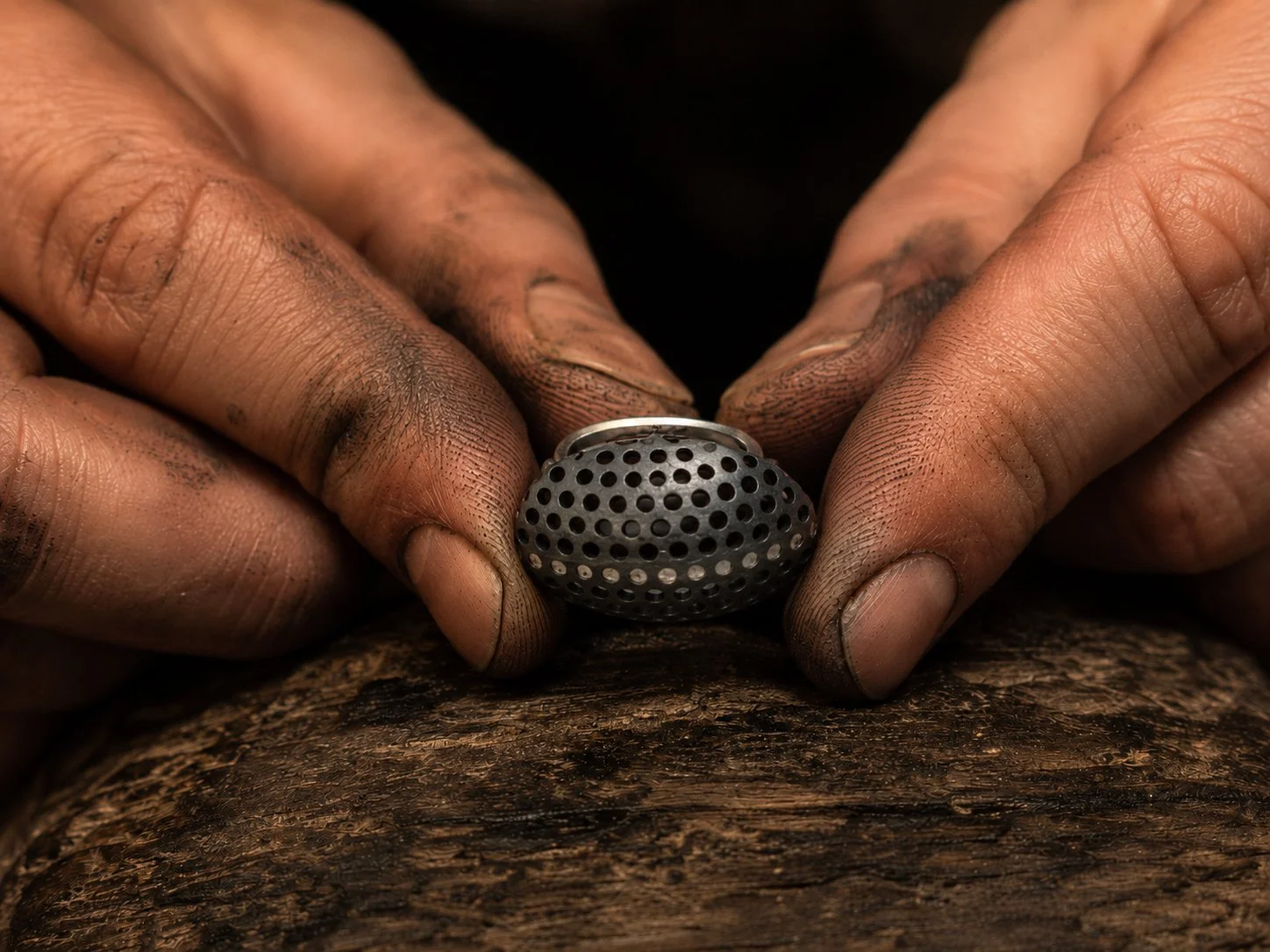
Another new ring from “Latent Lines” collection
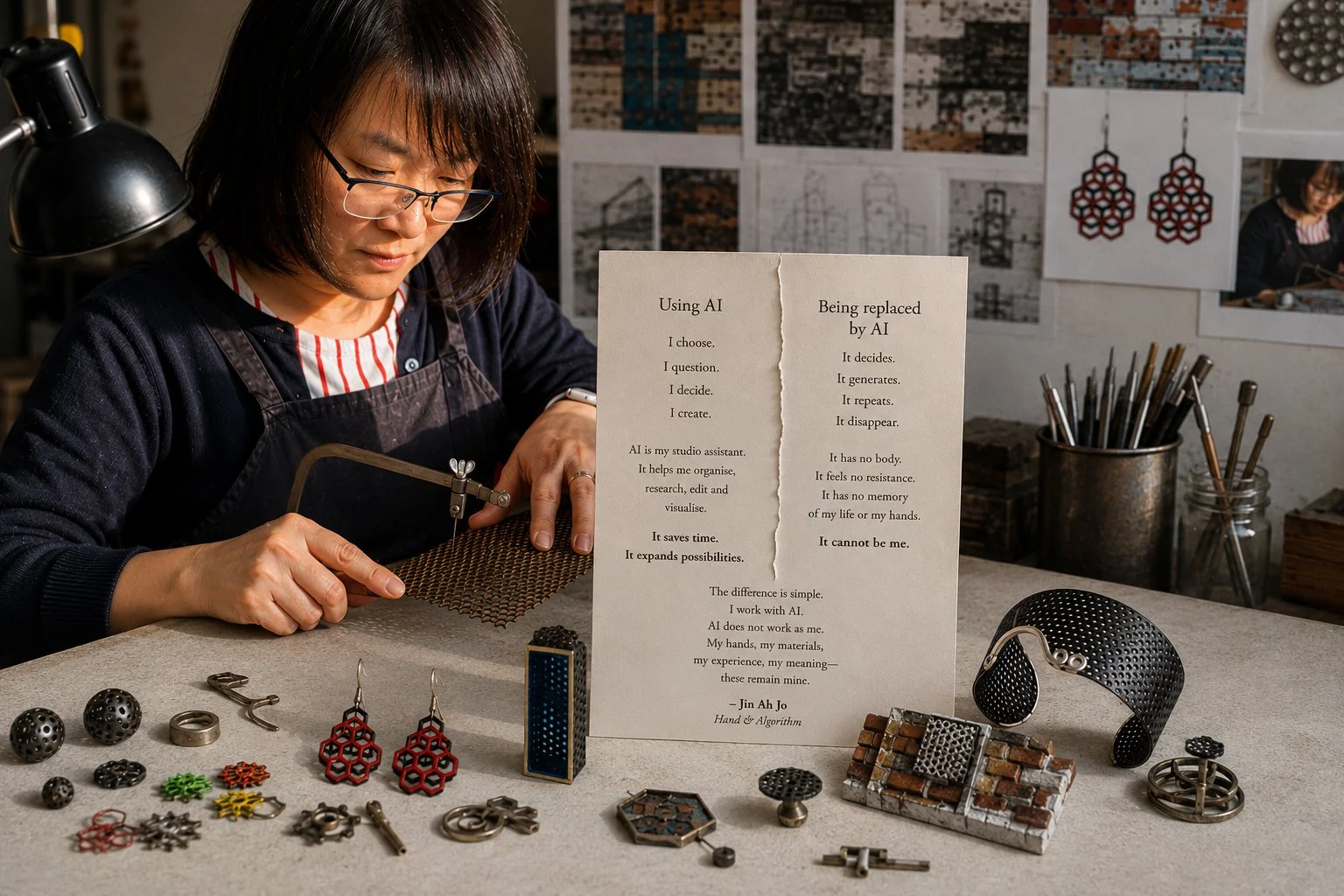
I am not using AI to invent a practice from nothing; I am bringing it into a practice that already contains years of embodied knowledge, visual decisions, material relationships, business history, and accumulated experience. AI may help me organize, analyze, and articulate what I have done, but it did not spend seventeen years learning how steel behaves. It did not experience the satisfaction of a successful piece or the disappointment of work that failed. I did. I want to understand what I am willing to delegate, what I am comfortable sharing, what I need to protect, and what must remain with the hand. Learning before judging does not mean accepting everything. It means building criticism from experience while staying alert to what may be gained—and what may be lost.