DAY 07 · FRI 30 OCT : The City and Its Uncertain Walls: Finding a New Story
DAY 07 · FRI 30 OCT - “Hand & Algorithm — A Nine-Day Online Exhibition”
Chap.6- 48| DAY 07—The City and Its Uncertain Walls: Finding a New Story
Learning 7 — Ideas Come from Lived Experience
When I began exploring AI eight months ago, I never imagined it would lead me towards a new body of jewellery inspired by Melbourne and Haruki Murakami’s novel The City and Its Uncertain Walls.
I thought I was learning new tools. But organising my archive and reflecting on seventeen years of making became unexpectedly personal.
I began thinking about my love of perforated mild steel, industrial structures and architecture. Beneath those interests were memories of migration, people I have met, losing my parents and building a life between two cultures.
What did I want to say through the things I make?
A City That Has Grown with Me
I arrived in Australia from Korea in 2000. From that first year, I travelled into Melbourne’s city centre to visit galleries and exhibitions.
Art became part of how I found my way into an unfamiliar place.
Over the years, I continued those journeys—to study, work, meet people and see what others were making. Streets and buildings became connected to different periods of my life.
Recently, taking on a regular job—what I sometimes call finally getting a “real job”—has given those journeys another rhythm.
I go into the city to work, and then I come home.
That ordinary movement feels meaningful. The city I once entered as a newcomer is now part of my working day, yet I am still discovering it.
Through the window at work, I look at rooftops, concrete walls and exposed pipes. Their awkward connections can be unexpectedly beautiful.
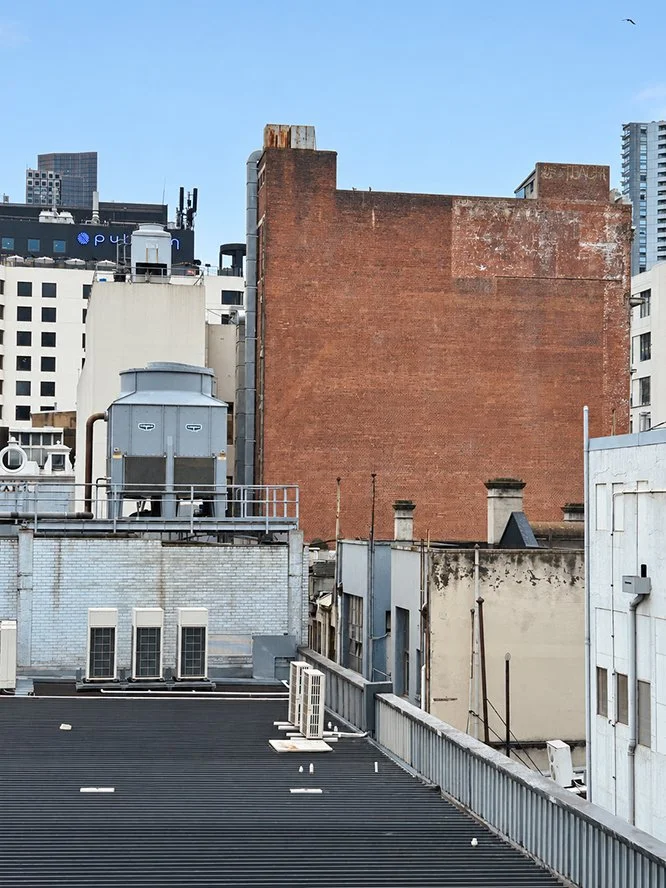
The city through my work window
I began photographing these details. A pipe disappearing behind a wall or a window revealing only part of an interior could suggest the beginning of a story.
The Things I Have Always Loved
My attraction to industrial and architectural forms is not new.
At Mycelium Studios, I was fascinated by the exposed infrastructure around the building. Pipes and mechanical connections gradually became part of my material vocabulary.
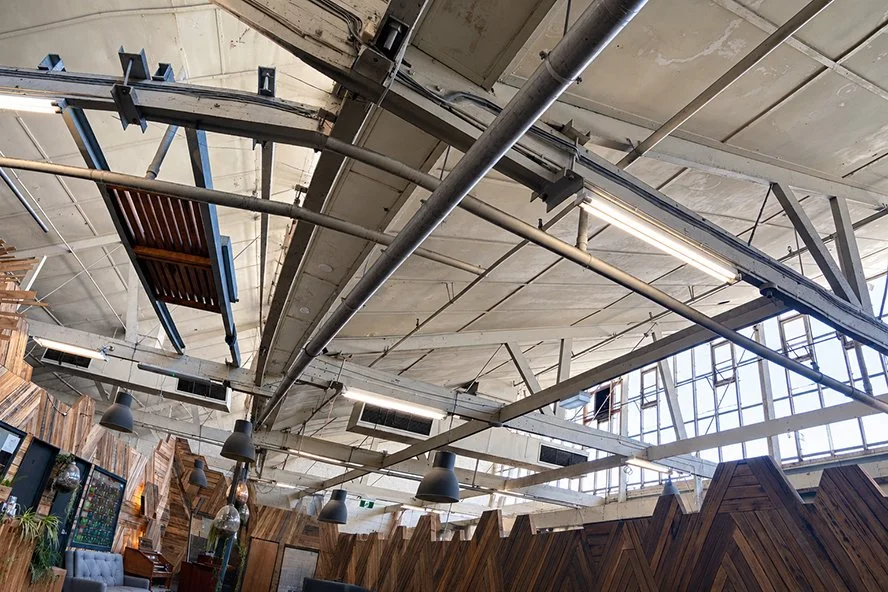
And then there is perforated mild steel.
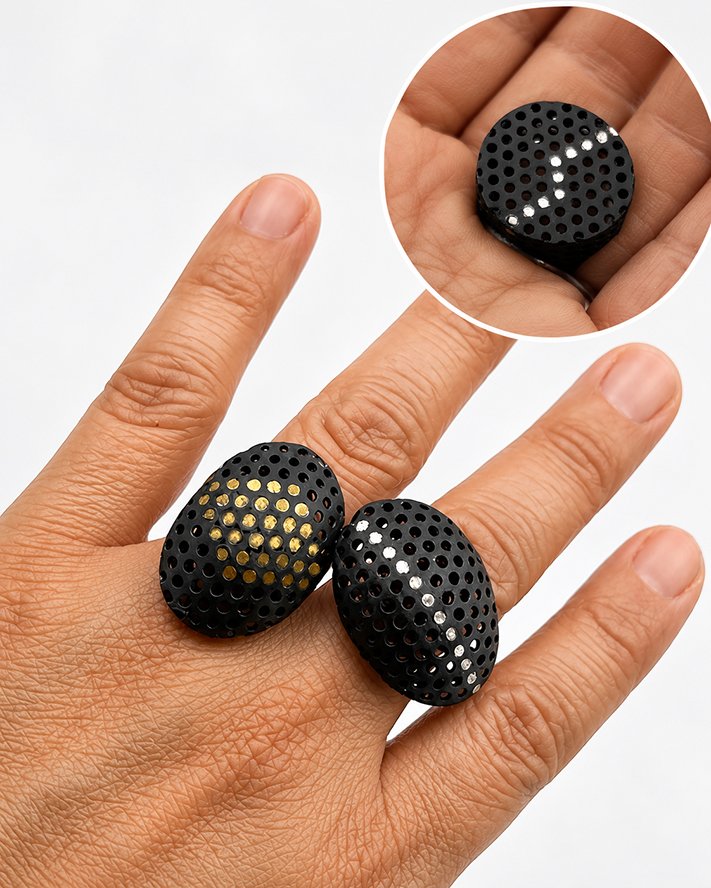
After so many years, I still love its repeated openings, its strength and the way it can be formed and joined. I know it through my hands, but it can still surprise me.
A perforated surface creates a boundary while allowing us to see through it. What appears depends on the light, the angle and what lies behind it.
As I thought about belonging, this familiar material took on another meaning.
Perhaps finding a new direction did not require leaving my visual language behind. I could discover what else it might express. Just like I could find “Latent Lines” for new rings.
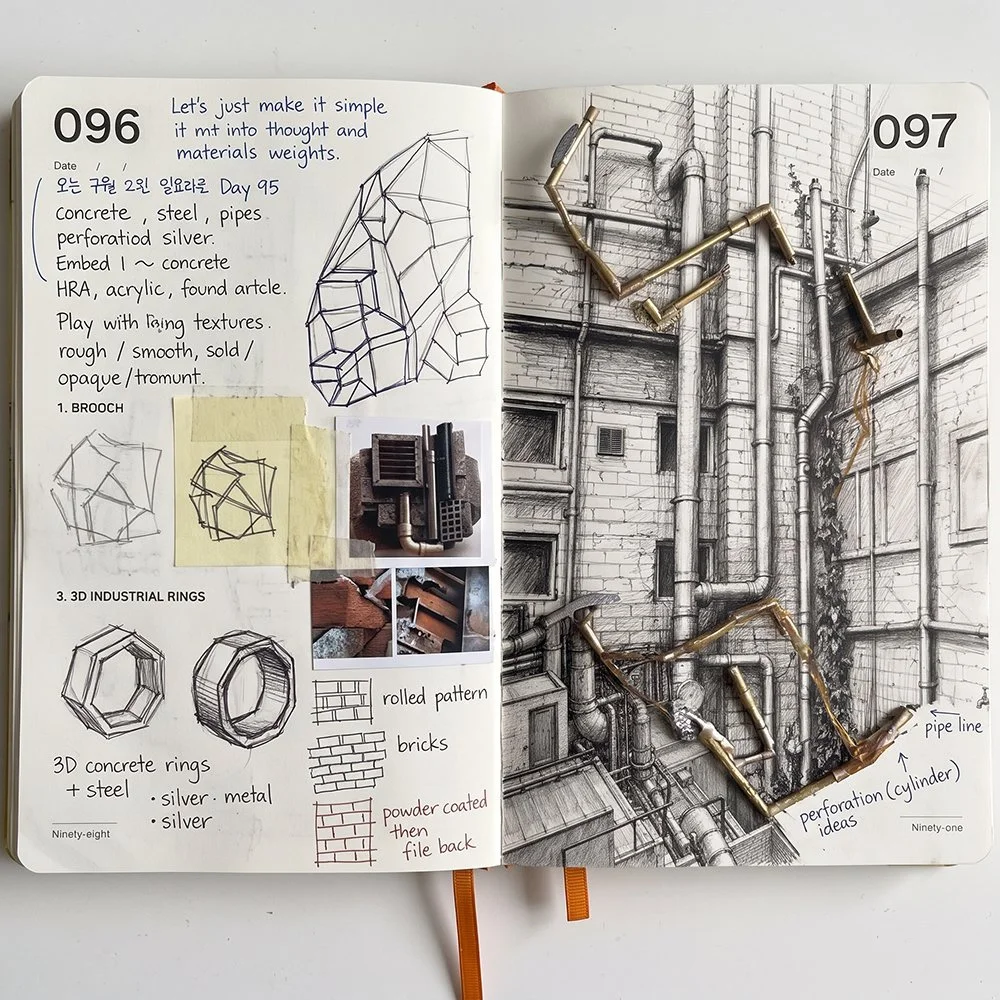
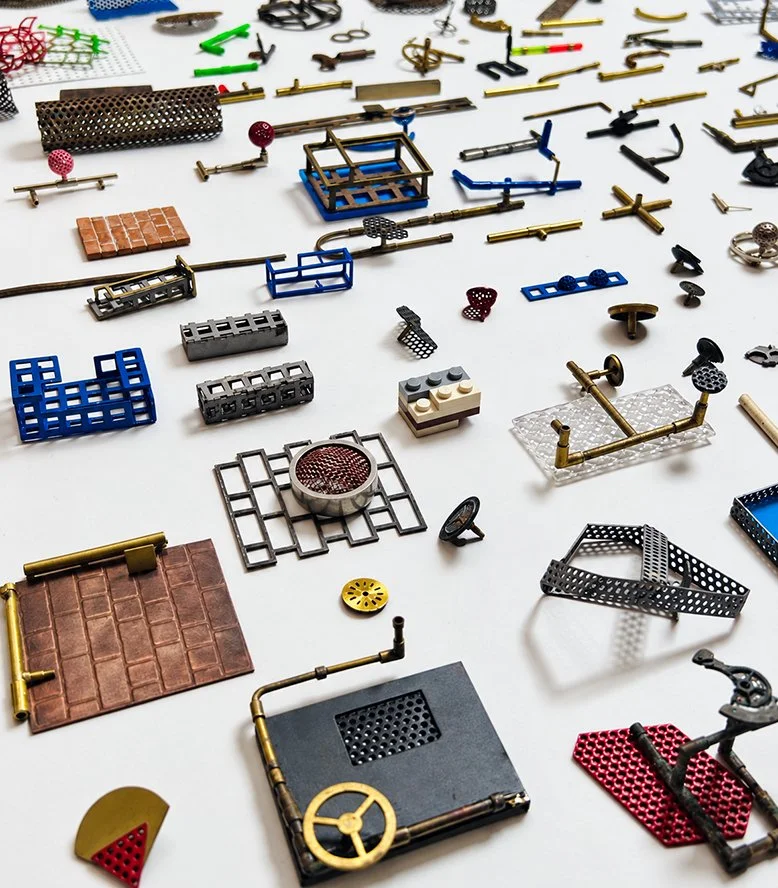
Steel could become a wall. Brass pipes could suggest interrupted connections. Acrylic could reveal, reflect or obscure what lay beyond it.
A Novel That Stayed with Me
Around the same time, Murakami’s The City and Its Uncertain Walls was occupying my thoughts.
I have enjoyed his novels since I was young, reading them in Korean and English. His writing takes me somewhere between reality and imagination.
This novel stayed with me through its questions about identity, memory, separation and belonging.
Melbourne is home. Yet I sometimes still feel I am walking a line between Korean and Australian cultures.
Sometimes I feel connected to both. Sometimes I feel slightly outside both.
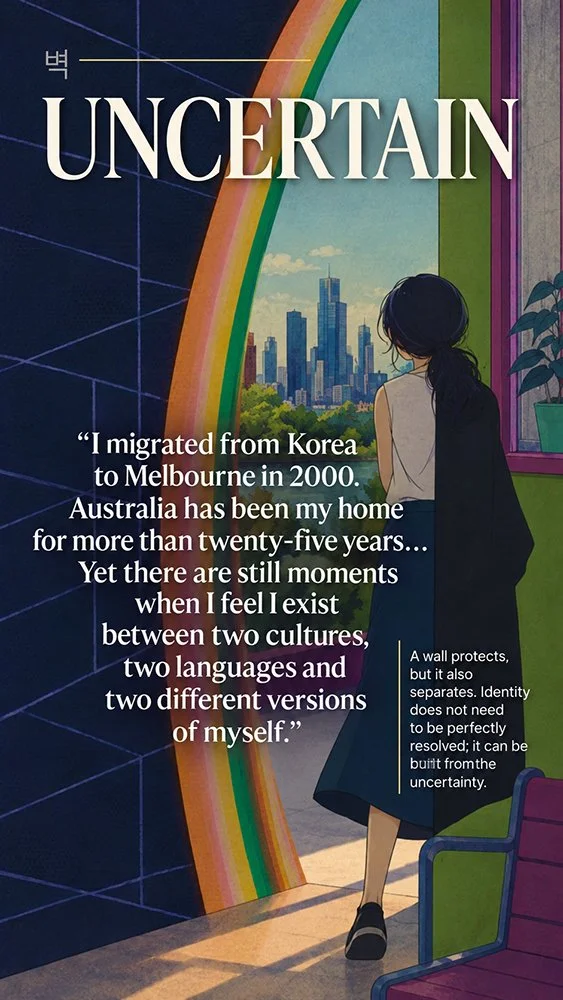
I once thought this uncertainty was something I needed to resolve. Now I wonder whether it is simply part of who I am.
The uncertain wall offered a way to explore that feeling.
Could a wall in my jewellery express both belonging and separation?
What We Carry with Us
Thinking about migration also means thinking about people.
My life here has been shaped by those I have met through study, studios, work, exhibitions and friendship.
Looking through my archive, I remember more than objects. I remember the people and places around their making.
Some connections remain close. Others have changed or become distant.
Losing my parents has brought another kind of distance into my life. A place can remain, while the people who made it feel like home are no longer there.
I do not need every piece to explain grief or migration. But these experiences influence what catches my attention.
An opening. An absence. Two structures almost touching. A connection that no longer reaches its destination.
I began to understand why these forms mattered to me.
Giving These Feelings a Form
I began thinking of Melbourne’s repeated structures and unexpected connections as an urban algorithm.
Its patterns contain interruptions, alterations and traces of earlier decisions. These became starting points for making.
I imagined structures with familiar purposes that no longer worked as expected: a pipe carrying no water, a wall that had moved, a passage leading nowhere.
There was room for playfulness and absurdity alongside the personal ideas.
Concrete, miniature porcelain bricks, acrylic and repurposed mechanical components offered new possibilities.
Concrete could seem permanent yet crack. Bricks could form a solid boundary from separate pieces. A window could reveal something while keeping it out of reach.
I was not illustrating Murakami’s novel literally. I was responding through my own experiences and years of material knowledge.
Where Did AI Belong?
AI helped me examine photographs, recognise relationships and organise my thoughts.
It also helped me notice connections between earlier work and this new direction. Some forms had been present in my practice for years.
But recognising a pattern is different from understanding why it matters.
AI could describe the buildings outside my workplace. It could not know what entering Melbourne felt like in my first year here—or what that journey means now.
Those associations came from living, meeting people, losing people and continuing to make.
AI supported my reflection. I still had to decide which connections mattered enough to follow.
Finding My New Story
This collection grew from things gathering around me for years: a novel, a city, familiar materials and experiences I am still learning to express.
Perhaps that is why Day 7 feels so emotional.
An exploration of technology brought me back to my own life.
An algorithm can help me recognise the structures of a city, but it cannot tell me what that city means to me.
After twenty-six years in Melbourne, I am still discovering my place within it.
These small walls, windows and pipe structures have become one way of exploring that relationship.
Tomorrow, I will share how these ideas took physical form—and what happened when the materials had their own say.
Further Reading
These earlier chapters follow the development of this collection:
Chapter 33 — The City and Its Uncertain Walls: Beginning a New Brooch Collection
Chapter 34 — The City and Its Uncertain Walls: From a Novel to a Brooch
Chapter 35 — A Material Vocabulary: Brick, Pipe, Concrete and Perforated Steel
Chapter 37 — Finding Freedom in New Materials: The First Two Brooches
Jin Ah Jo
Hand & Algorithm — Radiant Pavilion 2026
Inspired by the novel THE CITY AND ITS UNCERTAIN WALLS by Haruki Murakami. This is an independent artistic interpretation and is not endorsed by the author.