Chap. 5-35 : A Material Vocabulary: Brick, Pipe, Concrete and Perforated Steel
Rediscovering Old Components and Their Emotional Value
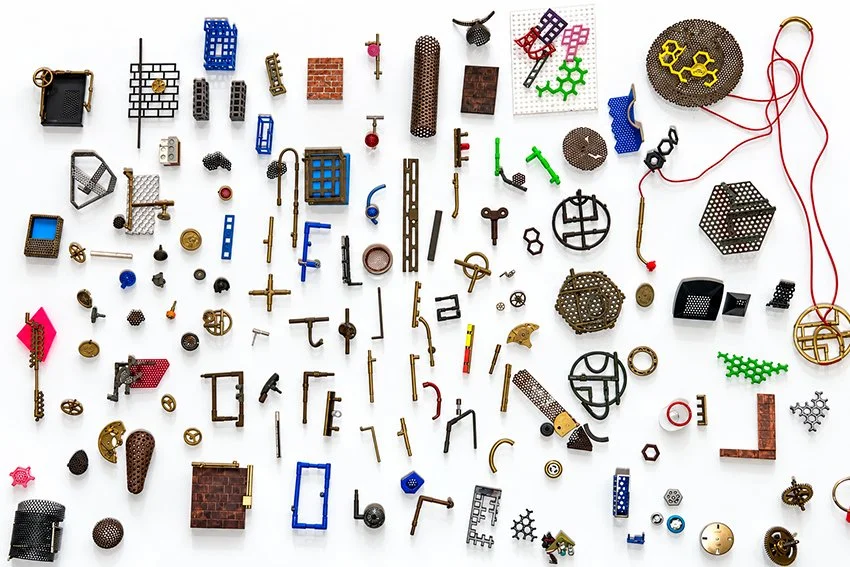
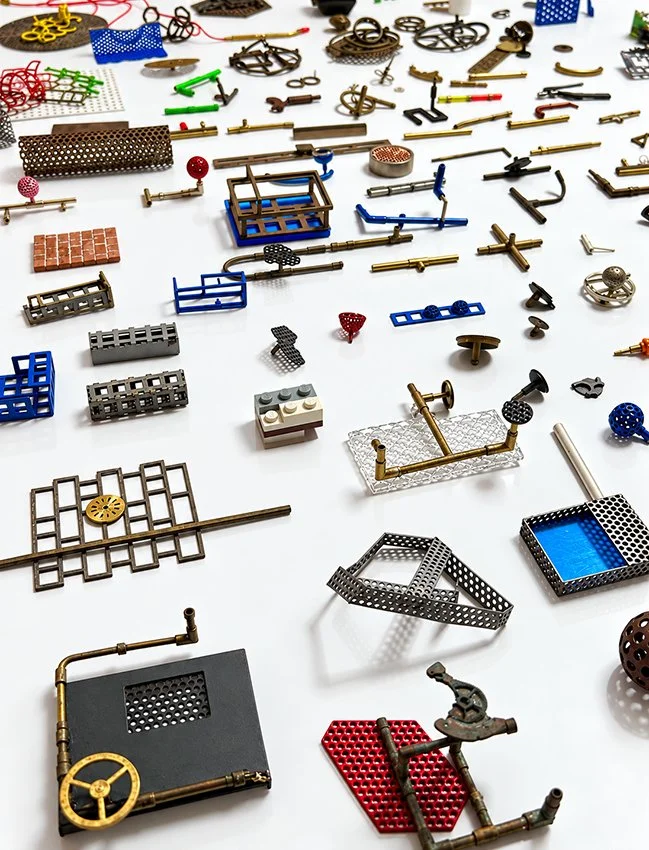
Looking at all the materials and components spread across my workbench, I realise that this new brooch collection didn't really begin this year. Some of its ideas have been developing in my studio for quite a long time.
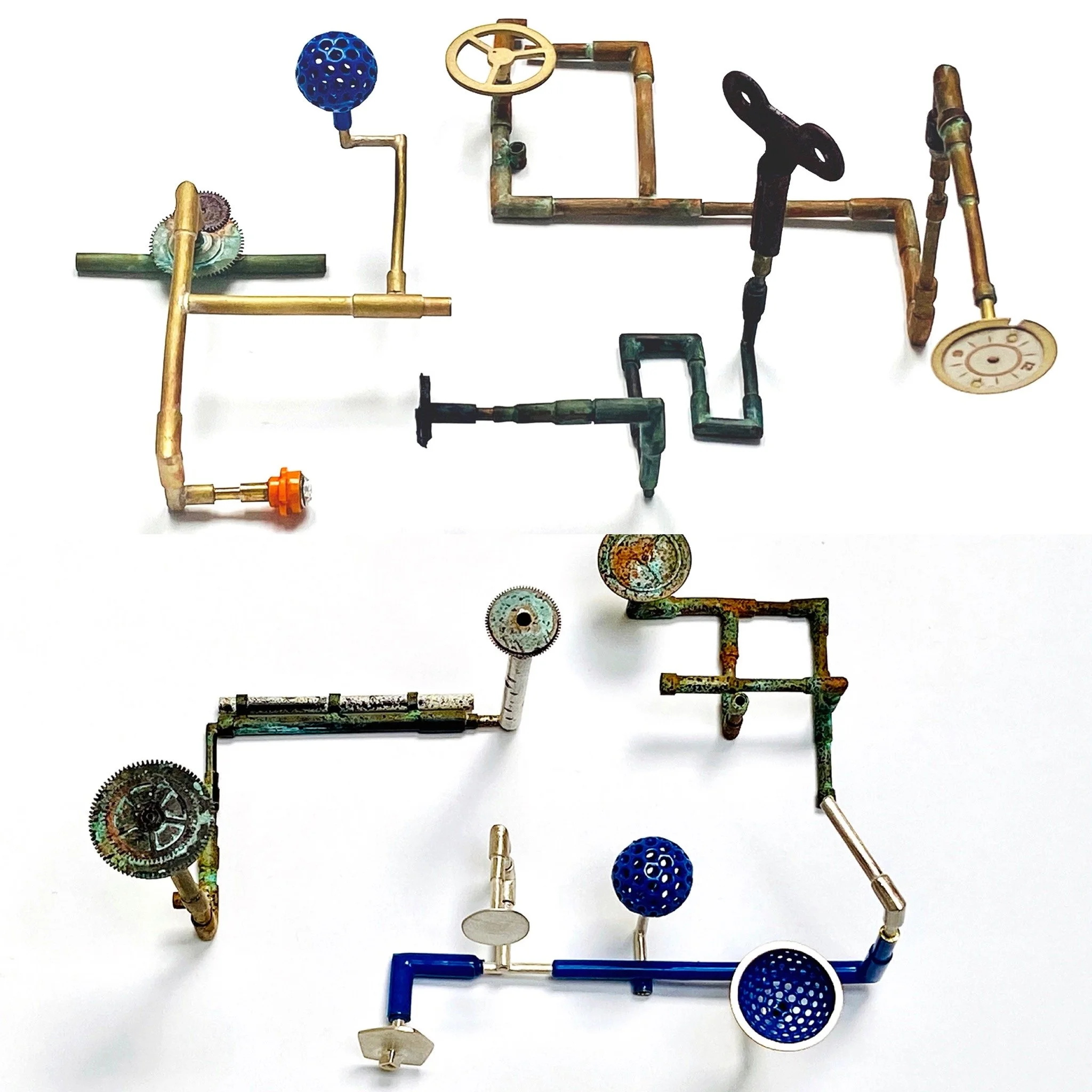
During the COVID lockdowns, I had my workshop at Mycelium Studios, a large old warehouse building in Melbourne. I became fascinated by the pipes running inside and outside the building. Some were still functioning, while others seemed to have been disconnected or abandoned.
What particularly interested me were the controllers, valves and connections attached to these pipes. They were designed for specific functions, such as controlling the flow of water, but some had completely lost their purpose.
I started developing miniature brass pipe structures using my jewellery-making techniques. I cut threads using tap and die, joined different pipes together and experimented with small mechanical connections.
Around the same time, I was also thinking about some old watch components I had inherited from a family member who was a watchmaker.
These tiny mechanical parts had once belonged to functioning watches, but now they carried something else — memories, personal history and emotional value.
I began to see a connection between the discarded pipe controllers and the inherited watch components. Even when an object loses its original function, it doesn't necessarily lose its value.
This became an important part of my thinking.
I documented my experiments through a 100-day blog-writing project, exploring these ideas alongside my making process. Eventually, this body of work received recognition through the PROFILE: Contemporary Jewellery & Object Award at the Australian Design Centre in Sydney.
It was a significant moment in my practice, and I always wanted to take these pipe structures further.
But somehow, I couldn't quite find the right direction.
Finding a New Direction
Several years later, this year while developing The City and Its Uncertain Walls – Brooches, I finally found a way to return to these structures.
The architectural photographs I had been taking around Melbourne reminded me of the warehouse pipes I had studied during lockdown.
This time, however, I wanted to bring in many more materials.
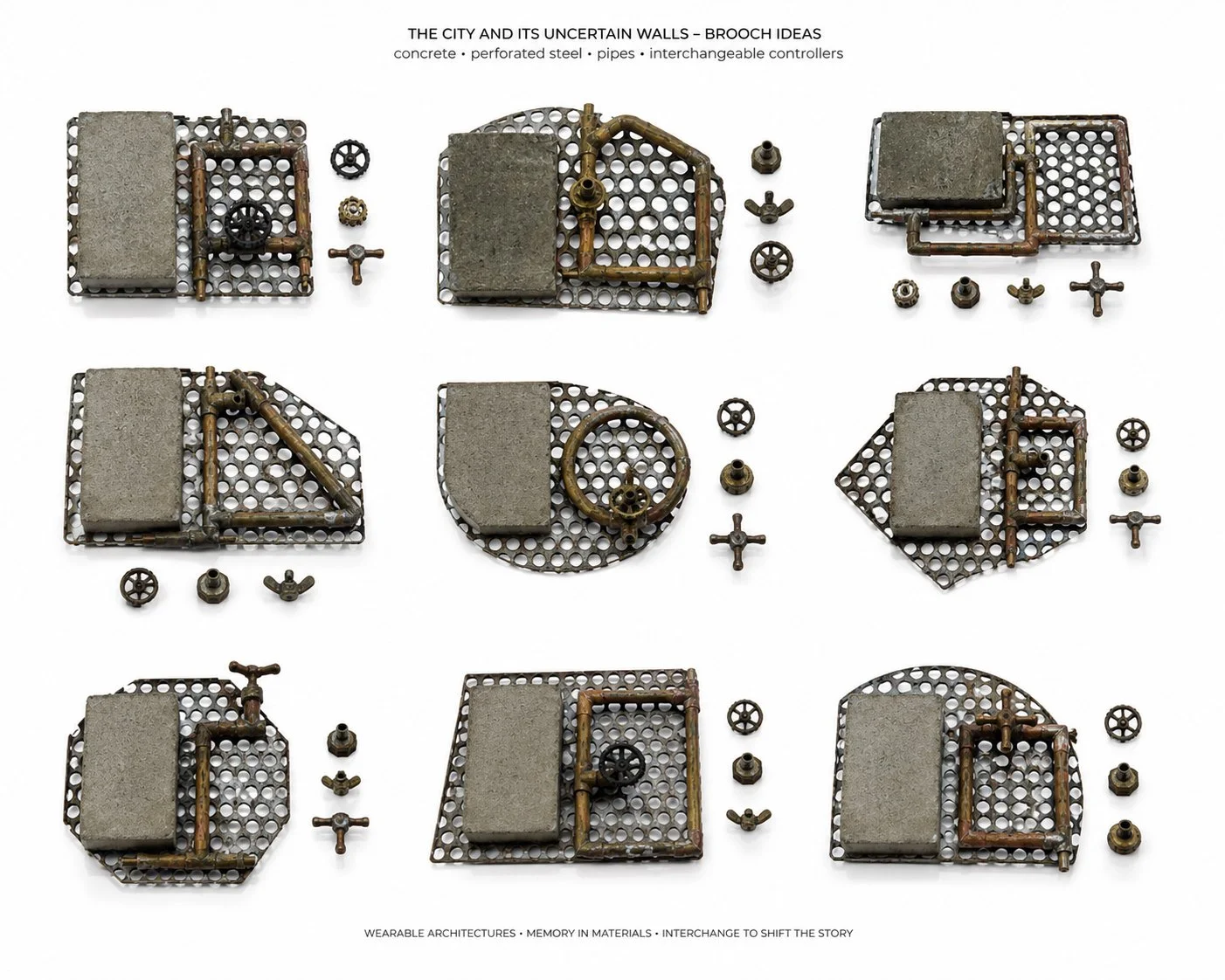
Porcelain bricks, concrete, acrylic, plastic pipes, perforated steel, old mechanical components and various leftover pieces began finding their way onto my workbench.
I have worked with perforated mild steel for many years, so it feels very familiar to me. But alongside concrete, porcelain and transparent acrylic, it starts to take on a different character.
A piece of perforated steel can become a wall or a screen. A porcelain brick can be part of an imagined building. Acrylic can suggest a window, while concrete brings weight, texture and the feeling of something permanent.
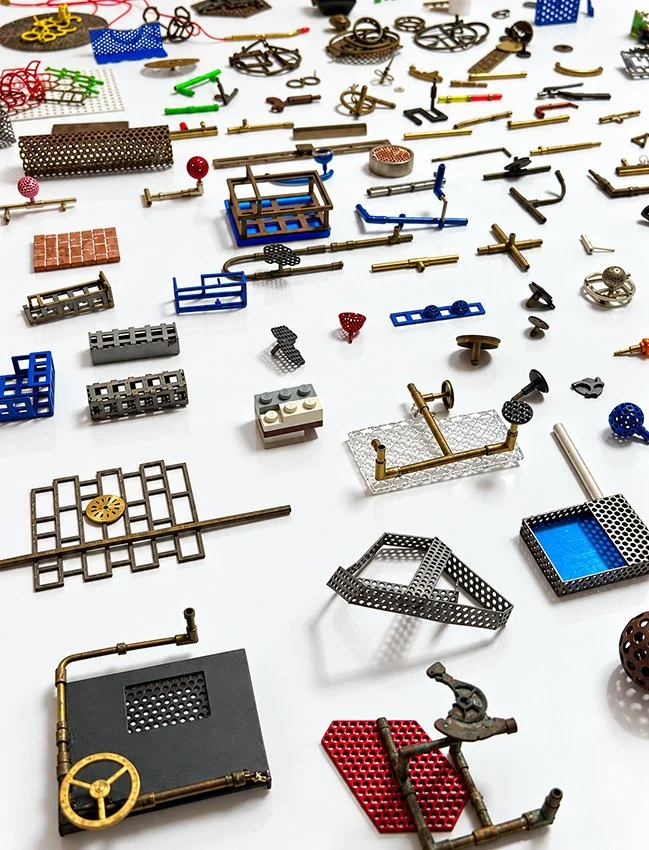
And the brass pipes? They can connect everything together, even when they no longer carry anything.
I love how the original functions of these materials can be changed through making.
Construction, Connection and Interchangeability
One of the techniques I particularly enjoy is using tap and die to cut threads into small brass pipes.
This allows me to create connections that can be assembled, disconnected, adjusted or interchanged.
Interchangeability has become part of my own design language.
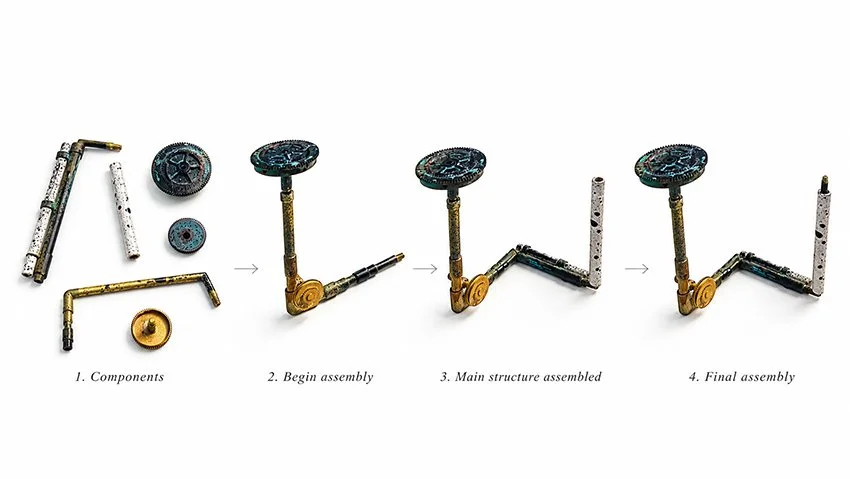
The process of assembly with threaded components
Instead of making every component permanently fixed, I can experiment with different arrangements and discover unexpected combinations.
A pipe can extend beyond a wall, connect to another structure or end without any obvious purpose. Small controllers can become decorative elements while still suggesting their original mechanical functions.
Of course, I still need to consider how these materials connect, how strong the construction is, and how each brooch will sit on the body.
This is where my years of experience as a jeweller become important.
But the unfamiliar materials also challenge me. Concrete behaves differently from metal. Acrylic needs another approach to construction. Porcelain bricks need to be carefully secured.
I love this process of figuring things out.
The Emotional Value of Materials
I have always found it difficult to throw away interesting components.
Some have been sitting in my studio for years, waiting for something. Others are leftovers from previous works, unsuccessful experiments or materials that no longer serve their original purpose.
Perhaps I am attracted to the possibilities hidden in these objects.
I don't necessarily see them as waste. I see their shapes, their histories and what they might become.
The inherited watch components have a particularly personal value, but even ordinary discarded materials can create an emotional connection for me.
I enjoy giving them another purpose, another life and perhaps another story.
For this new collection, I feel much more freedom to explore.
There are so many materials I want to try, so many connections I can construct, and so many possibilities I haven't discovered yet.
Sometimes I begin with a particular structure in mind. Other times, I simply pick up two unrelated components and see how they might work together.
It is exciting, and honestly, I am enjoying every part of it — collecting, experimenting, cutting, drilling, thread cutting, connecting and sometimes taking everything apart to begin again.
What began as a fascination with old warehouse pipes during the COVID lockdowns has finally found a new direction in The City and Its Uncertain Walls – Brooches.
Looking at the components on my bench today, I can see the connection between my earlier work and what I am making now.
The materials have been with me for years. I have just found another way to use them.
In this chapter 5, I would like to introduce the individual brooches, their materials, construction processes and the stories that have emerged through making.
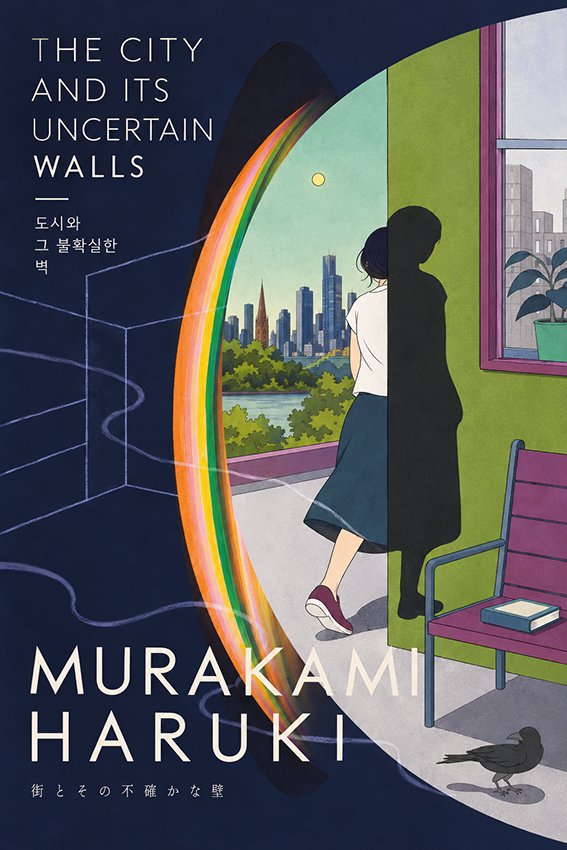
The City and Its Uncertain Walls – Brooches is an independent artistic collection inspired by the novel of the same name by Haruki Murakami. It is not endorsed by the author.
Part of Hand & Algorithm: AI as Studio Assistant in Contemporary Jewellery, Radiant Pavilion 2026.