Chap.5-34 — The City and Its Uncertain Walls: From a Novel to a Brooch
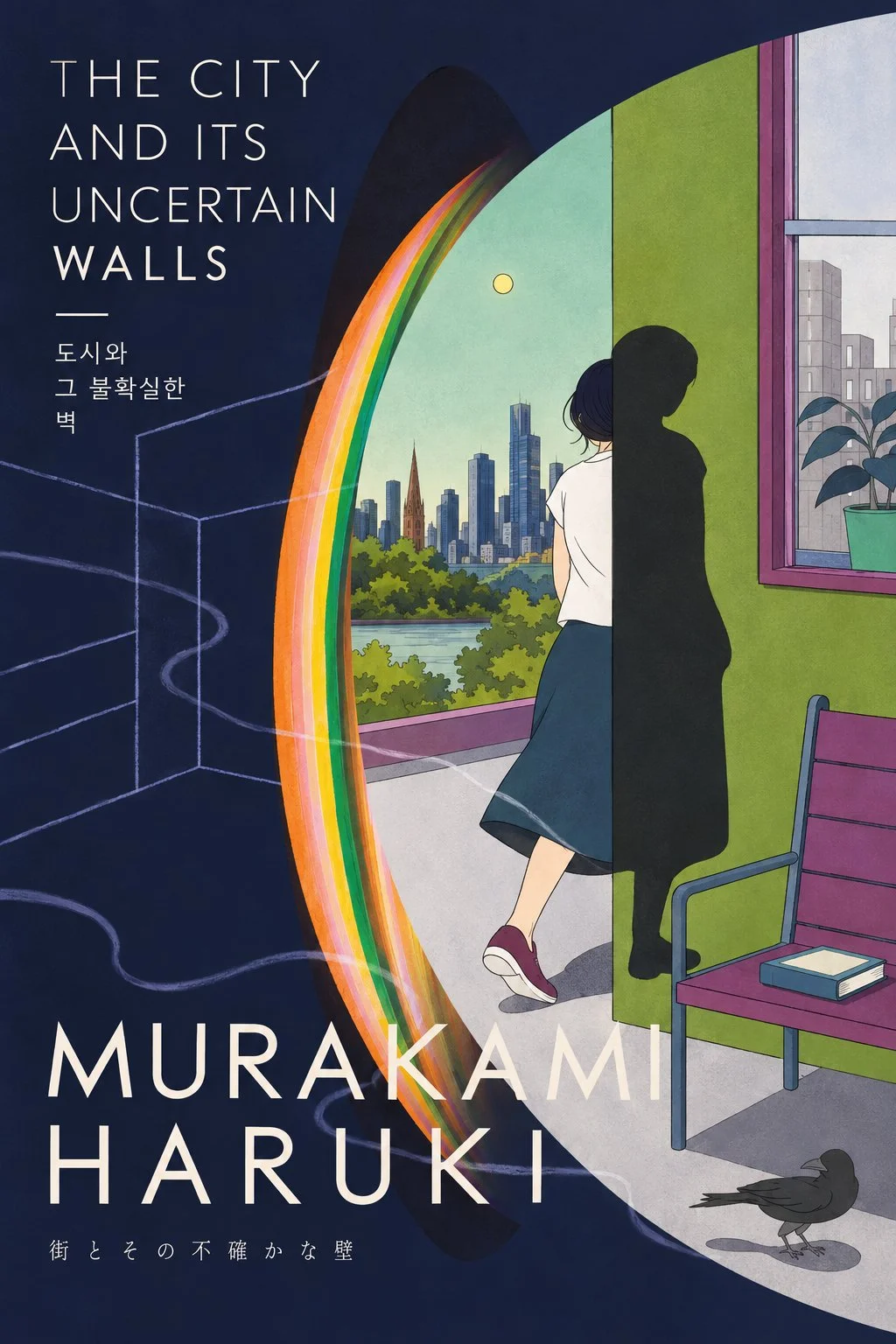
When I began making The City and Its Uncertain Walls – Brooches, I knew that the title was not simply a title I could borrow casually. It came from Haruki Murakami’s novel The City and Its Uncertain Walls, and the book had become an important starting point for this new body of work.
So I contacted Murakami’s literary representatives in New York.
What followed was an exchange of emails about my work, the collection and my intention behind using the title. There were practical questions and explanations, as you would expect, but for me the experience felt strangely significant. I was suddenly describing my jewellery practice to the representatives of a writer whose books had accompanied me through a large part of my adult life.
I have been reading Haruki Murakami since my twenties and thirties, sometimes in Korean and sometimes in English. In a way, I feel that I grew older alongside his novels.
Reading him in two languages is also interesting to me. The story is the same, but sometimes the emotional distance feels different. Korean brings one kind of intimacy, while English creates another space around the words. Perhaps this experience of moving between languages is also connected to why this particular title affected me so strongly.
The City and Its Uncertain Walls moves between everyday reality and a mysterious walled city. It explores love, memory, separation, identity and belonging, while the boundaries between different worlds—and even between different versions of ourselves—become increasingly uncertain.
For me, however, one word kept returning:
Uncertain.
That word felt very familiar.
I migrated from Korea to Melbourne in 2000. Australia has now been my home for more than twenty-five years, but there are still moments when I wonder where exactly I belong.
Am I completely inside Australian society?
Or am I still standing slightly outside it?
Perhaps both are true.
There is an uncertainty that comes from living between cultures. My life is here. My family is here. My studio practice has developed here. I have built a long professional life as an Australian contemporary jeweller. And yet there are moments when language, cultural references or social situations suddenly remind me that part of me comes from somewhere else.
I don't necessarily see this uncertainty as something negative anymore.
It is simply part of who I am.
Perhaps identity itself does not need to be completely resolved.
This is where Murakami’s uncertain wall began to connect with the physical walls I was looking at around Melbourne.
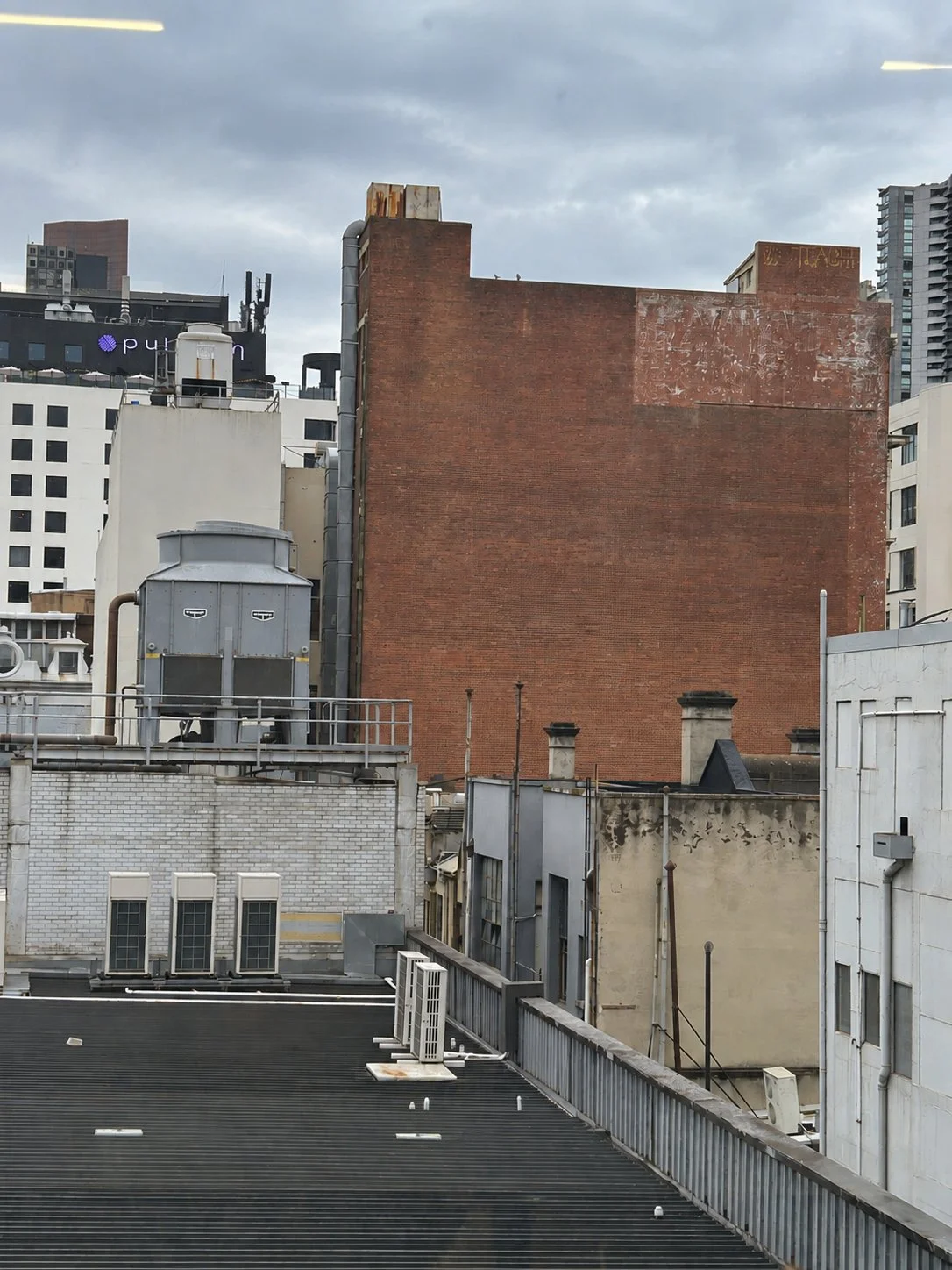
In the previous chapter, I wrote about looking through the window at work and becoming fascinated by the walls of buildings—the pipes, bricks, concrete, structures, interruptions and strange architectural details that we normally pass without noticing.
Once I began photographing them, I started seeing the city differently.
And once I started making the brooches, those physical structures began to carry something more personal.
Perforated mild steel became a wall that was never completely closed.
Bricks became fragments of architecture and memory.
Pipes travelled through and around structures.
Concrete suggested weight, permanence and the built environment.
Threaded components could connect, disconnect and change position.
Openings appeared where something might pass through.
These are industrial materials I genuinely love working with. They are not materials I selected simply to illustrate Murakami's novel. They come from my own history of making—perforated mild steel, brass structures, pipes, construction methods and mechanical connections that I have explored for many years.
That has been the most mesmerising part of this process.
A literary idea gradually entered my own material language.
I didn't want to make illustrations of the novel.
Instead, I wanted to understand what an uncertain wall might mean through my own hands.
A wall can protect us.
A wall can exclude us.
A wall can define where one place ends and another begins.
But a wall can also have holes, cracks, pipes, weak points and openings.
And perhaps identity can be like that too.
During one of the email exchanges with Murakami’s representatives in New York, I attached a group photograph of the brooches I had been developing. I don't know whether that image was shown directly to Mr Murakami, and I don't want to make assumptions about that.
But later in the permission process, an unexpected and very meaningful possibility appeared: if Mr Haruki Murakami would like one of the brooches, I would give one to him as a gift.
I had never offered this myself, so seeing that possibility mentioned was quite moving.
If, at the end of this collection, one of these brooches does find its way to him, it would mean a great deal to me.
I think about the younger version of myself reading Murakami in my twenties and thirties—in Korean and in English—long before I could have imagined that I would one day be living in Melbourne, building a life as a contemporary jeweller, and making a collection inspired in part by one of his novels.
There is something quietly circular about that.
A book enters my life.
Years pass.
I migrate, make jewellery, build a studio practice, struggle with belonging, become older, and keep making.
Then another book arrives.
And somehow its words connect with walls I see outside a window in Melbourne, with the materials sitting on my jewellery bench, and with questions I have carried for many years without necessarily knowing how to express them.
Maybe this is also what Hand & Algorithm has allowed me to discover.
AI helped me analyse photographs, generate possibilities, find language and look again at things I might otherwise have passed by. But the reason these objects matter to me does not come from an algorithm.
It comes from somewhere much older and more complicated:
memory, migration, reading, material knowledge, and the continuing uncertainty of where we belong.
And perhaps I don't need to solve that uncertainty.
I can make from it.