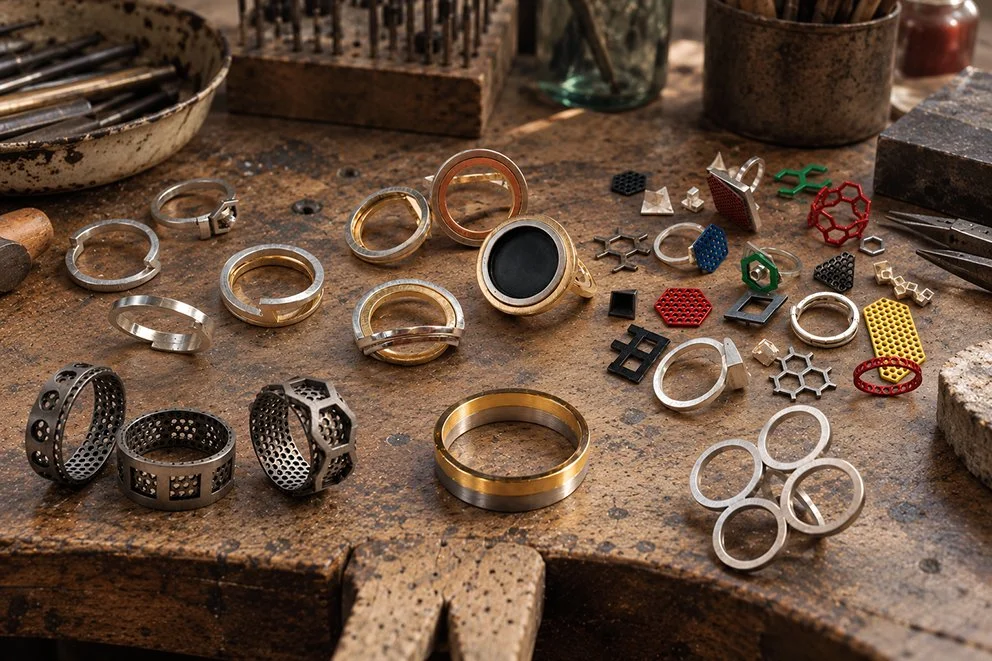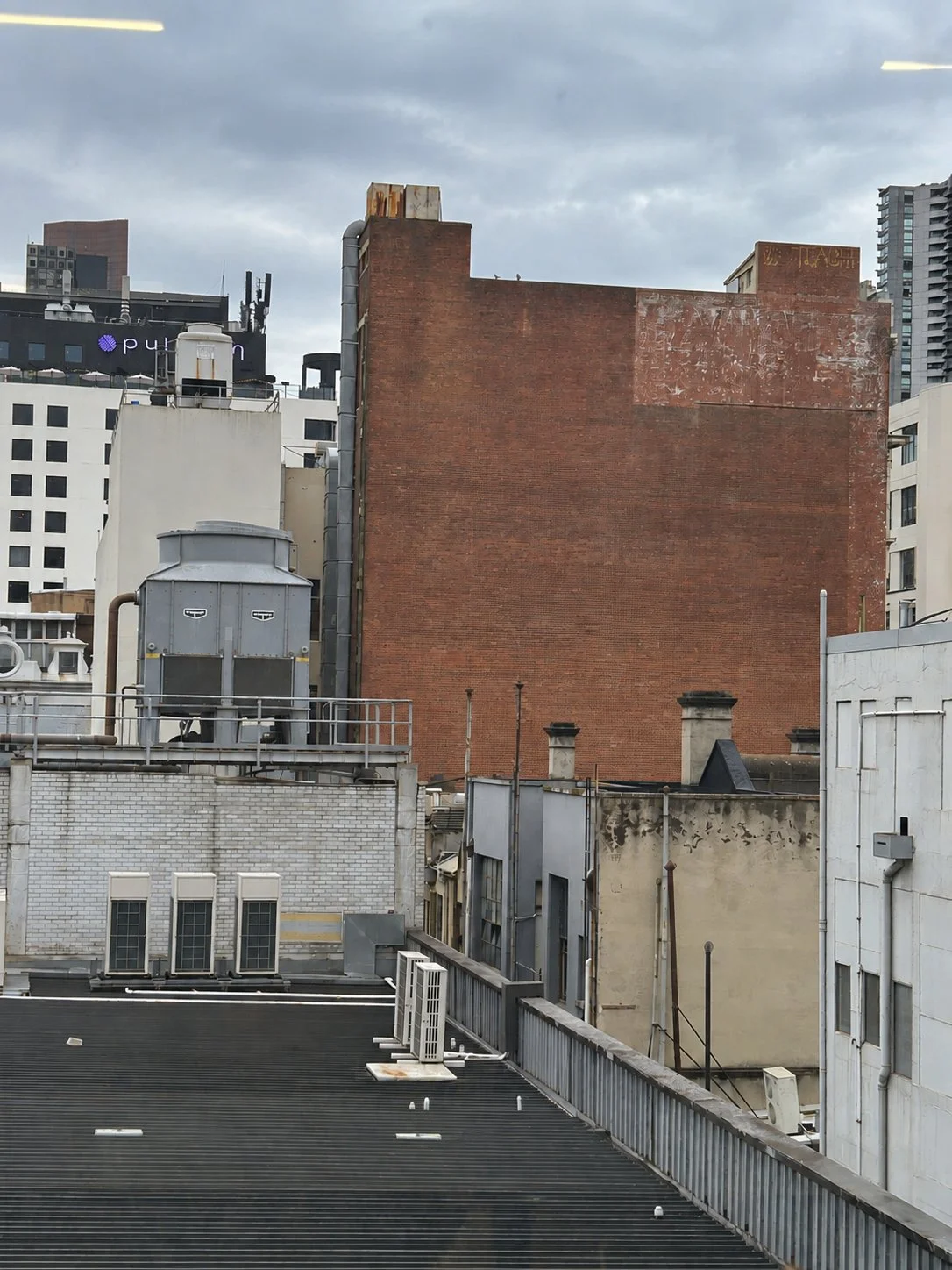
Chap.5-33 : The City and Its Uncertain Walls: Beginning a New Brooch Collection
This new collection began with a window.
While working at Koodak, I often found myself looking outside. It wasn't a particularly beautiful view in the conventional sense. There were building walls, pipes, rooftops, vents, fences and all kinds of structures layered on top of one another. But for some reason, I became mesmerised by them.
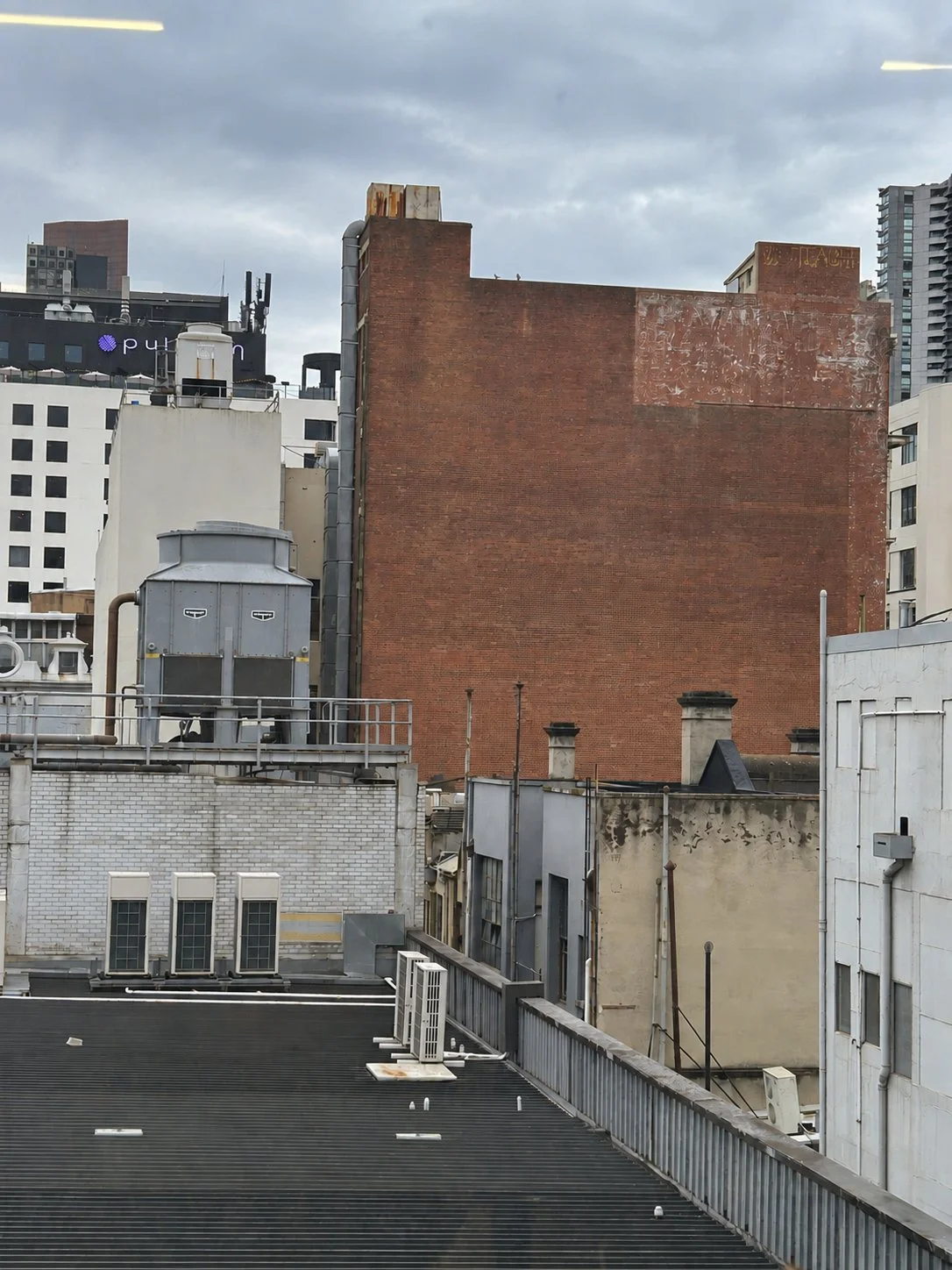
A view of the city walls through the window
I started noticing the lines between buildings, pipes running vertically and horizontally, interruptions in walls, small gaps, connections and things that seemed to lead somewhere but then suddenly stopped.
After work, I went outside and started taking photographs.
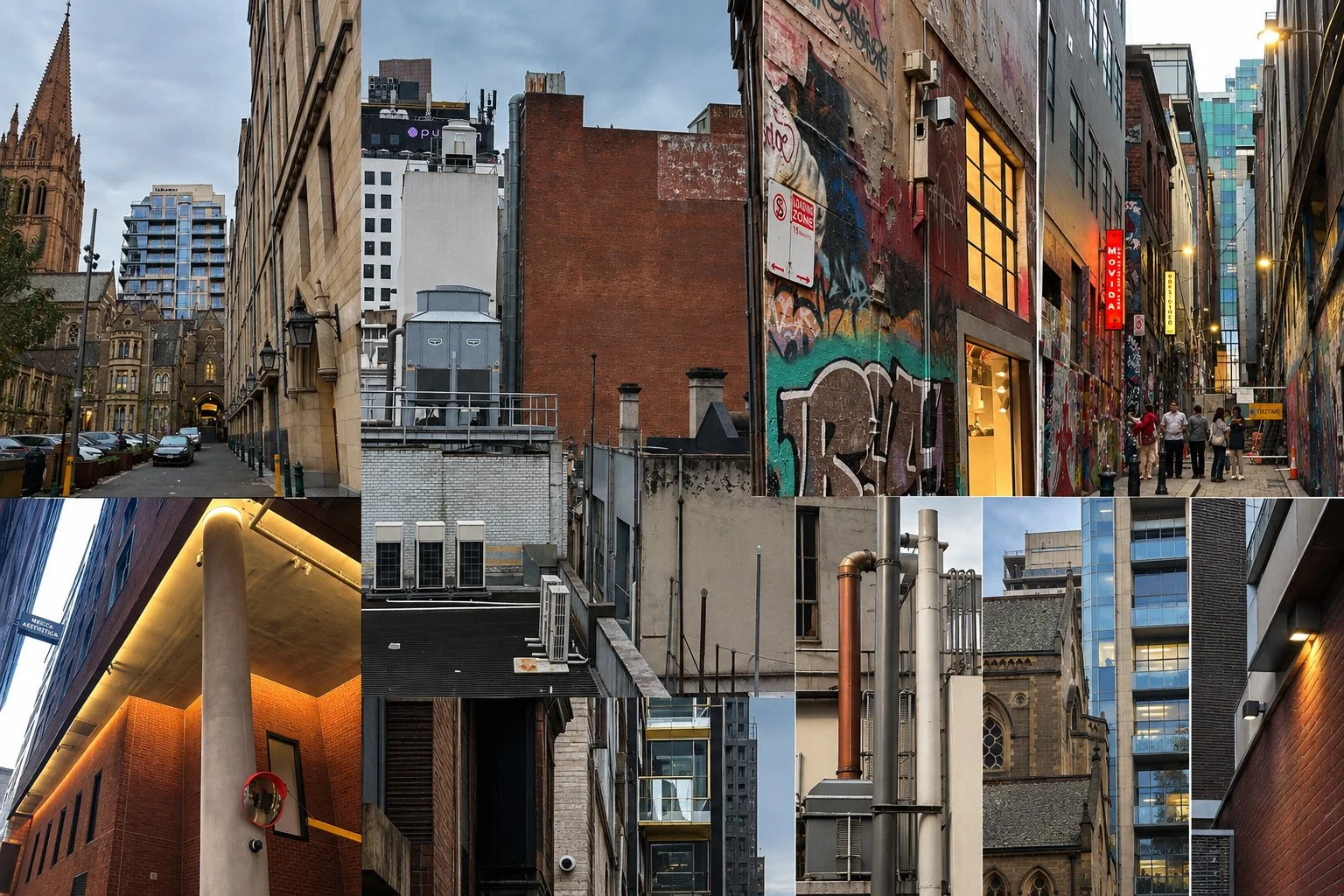
Urban Structures: A Visual Archive
I took lots of them—not carefully composed architectural photographs, but observations. Walls, pipes, corners, construction details, barriers and fragments of the city that I might normally walk past without noticing.
When I looked through these photographs later, I began wondering: could I use AI to read the city differently?
Instead of asking AI to design a brooch for me, I wanted to see whether it could help me extract an algorithm from my own photographs. What patterns kept appearing? What kinds of lines, structures, repetitions and interruptions were already there?
This became interesting because I realised that the visual language I was finding in the city was not completely new to my jewellery practice.
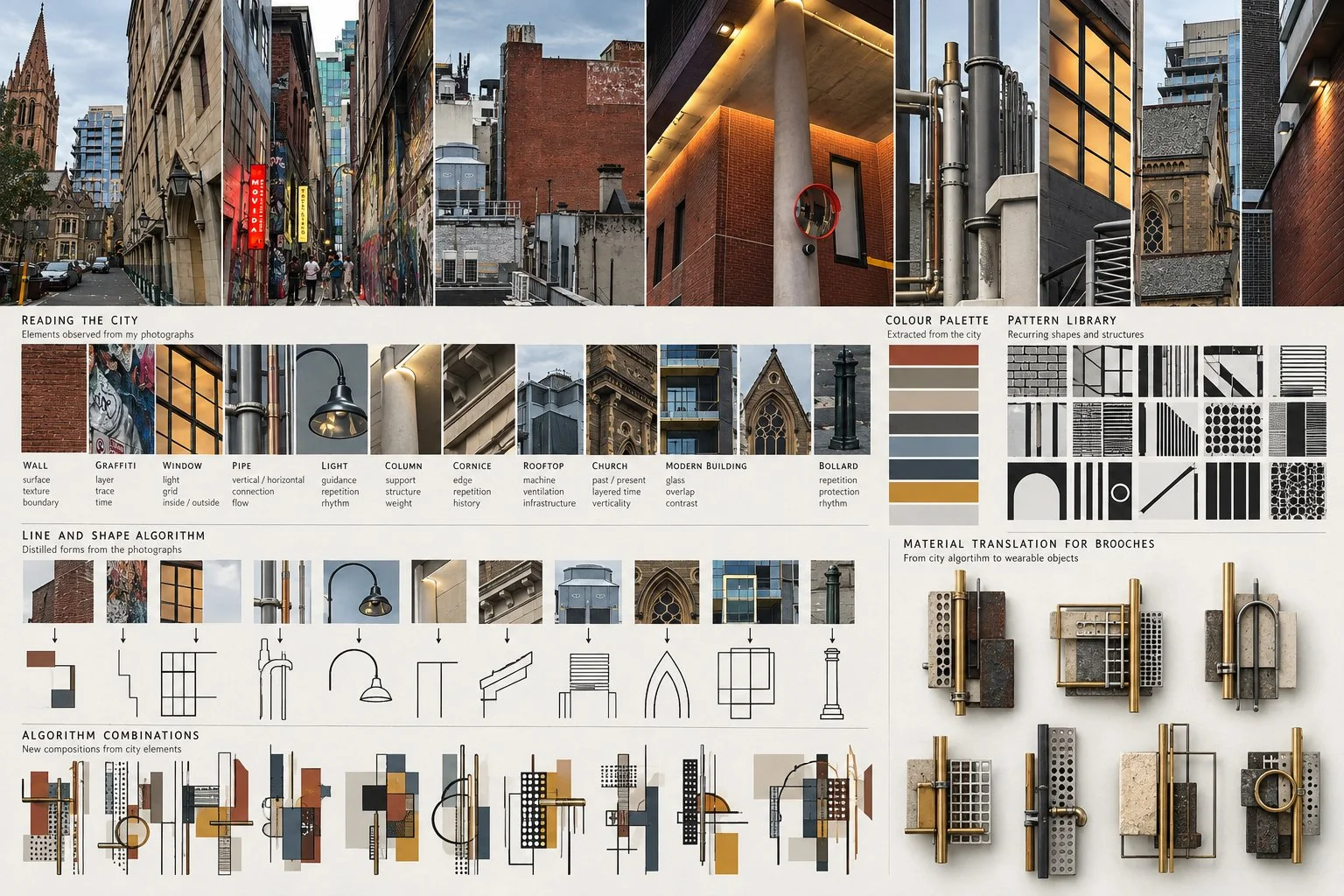
Urban Algorithm
For many years I have constructed small structures from brass and steel pipes. I have used threaded components, cutting the threads myself with taps and dies, so that small parts can be screwed together, removed, repositioned or exchanged. I sometimes think of these threaded pieces as controllers—small elements that appear to control or redirect the structure around them.
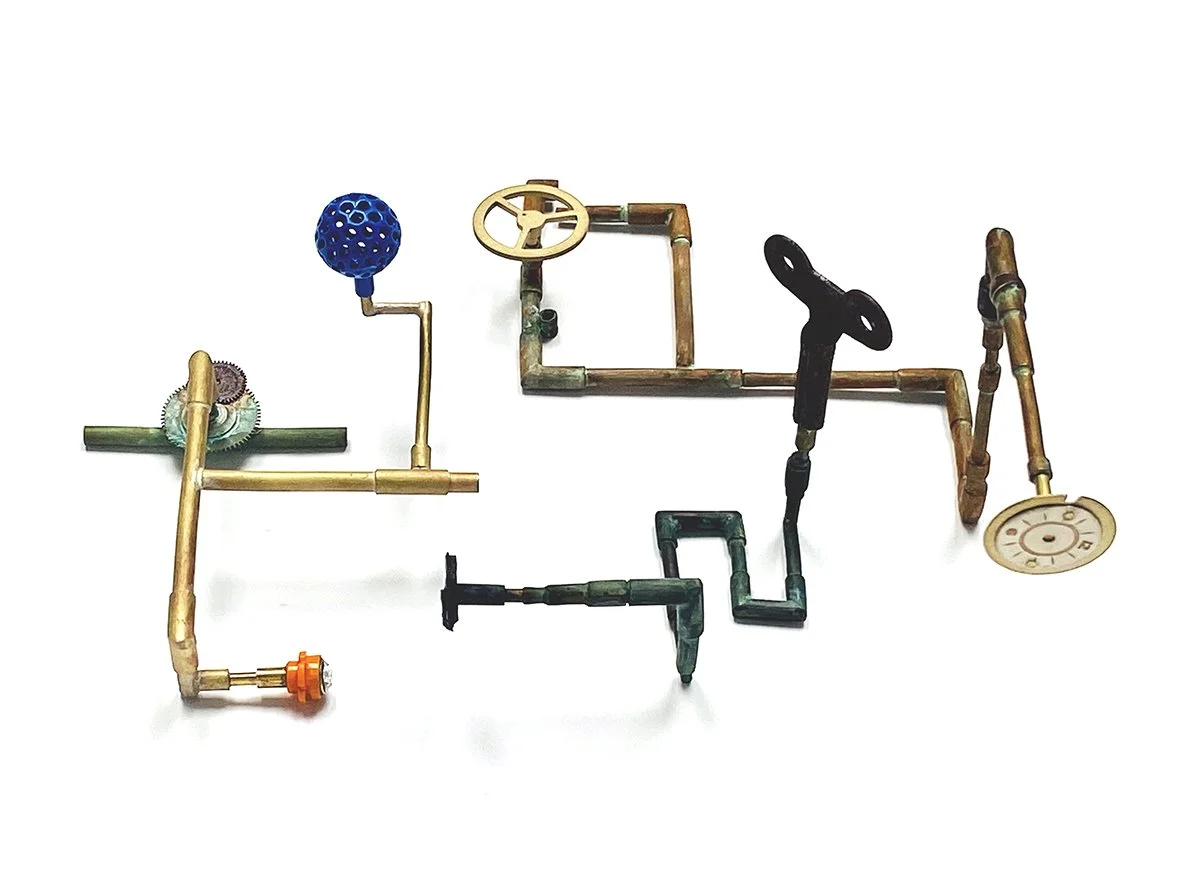
Pipe structures- Part of “Pipe Way” collection made in 2022
Suddenly these techniques began to look different to me.
A brass pipe could become infrastructure.
A perforated sheet could become a wall.
A threaded controller could become a junction, valve or point of intervention.
A gap could become as important as the material surrounding it.
AI was not inventing this language. Much of it had already existed in my work for years. What AI helped me do was recognise a possible system within it.
I began moving back and forth between the photographs, AI conversations and my materials at the bench. Rather than following a single design drawing, I started building small architectural situations—connecting, blocking, extending, interrupting and rearranging forms.
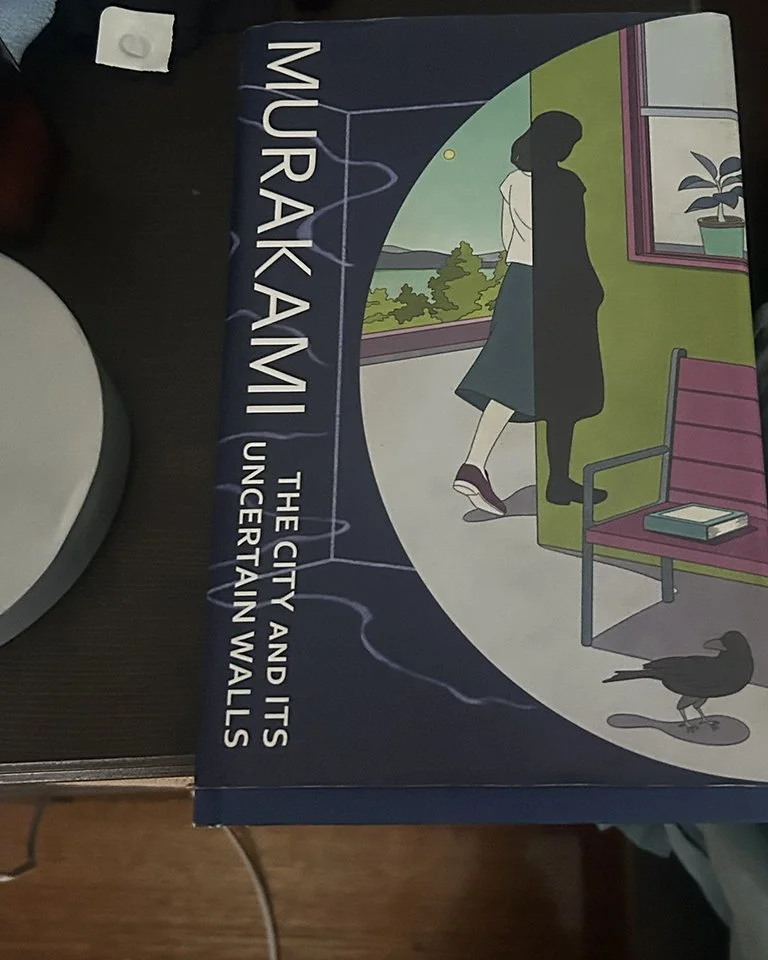
Around this time, Haruki Murakami's novel The City and Its Uncertain Walls stayed strongly in my mind. The idea of a city defined by a wall, and the uncertainty of what belongs inside or outside it, began connecting with what I was seeing and making.
The wall gradually became more than an architectural form.
It could be a boundary, a memory, protection, separation or uncertainty. As someone who moved from Korea to Melbourne and has spent many years building a life and an artistic practice here, the idea of the city also inevitably became personal.
Perhaps that is why I was so mesmerised by that ordinary view from the window.
I wasn't consciously looking for a new collection that day. I was simply looking.
But looking became photographing.
Photographing became analysing.
Analysing became an algorithm.
And the algorithm eventually returned me to my hands and materials.
That became the beginning of The City and Its Uncertain Walls — Brooches.
For me, this is also an important moment in Hand & Algorithm. AI did not begin the work, and it did not make the work. The beginning was curiosity—looking through a window and noticing something I had previously ignored.
AI entered somewhere in the middle.
It helped me look again, identify relationships and expand what I was already seeing. Then I returned to the bench, where those observations had to become physical through cutting, drilling, threading, soldering, constructing and making decisions with my hands.
Perhaps this is where I am beginning to understand my own relationship with AI more clearly.
The algorithm doesn't replace the hand. It gives the hand another way of seeing.