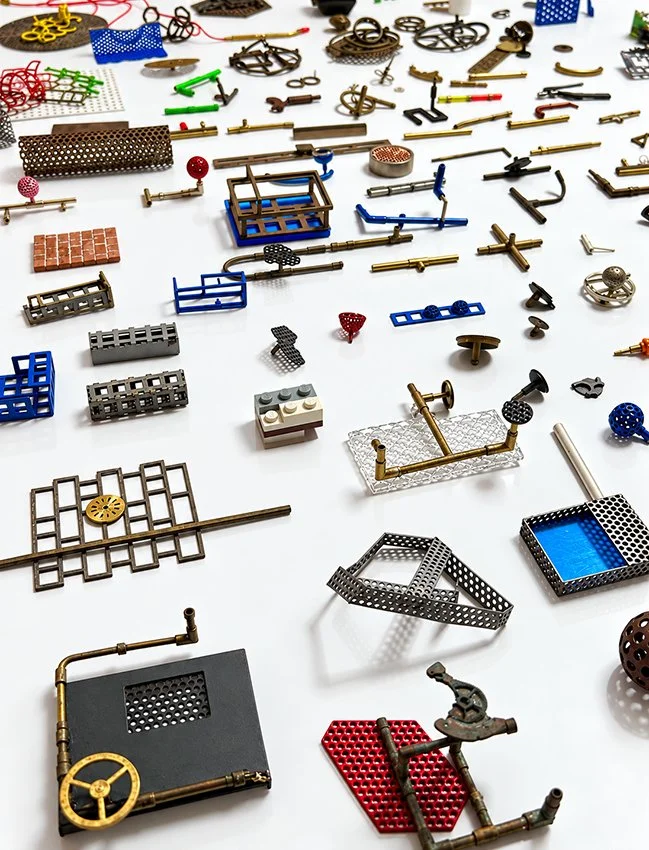
Chap. 5–36 : Can AI Be Intuitive — or Does It Simply Generate?
The City and Its Uncertain Walls — Brooches
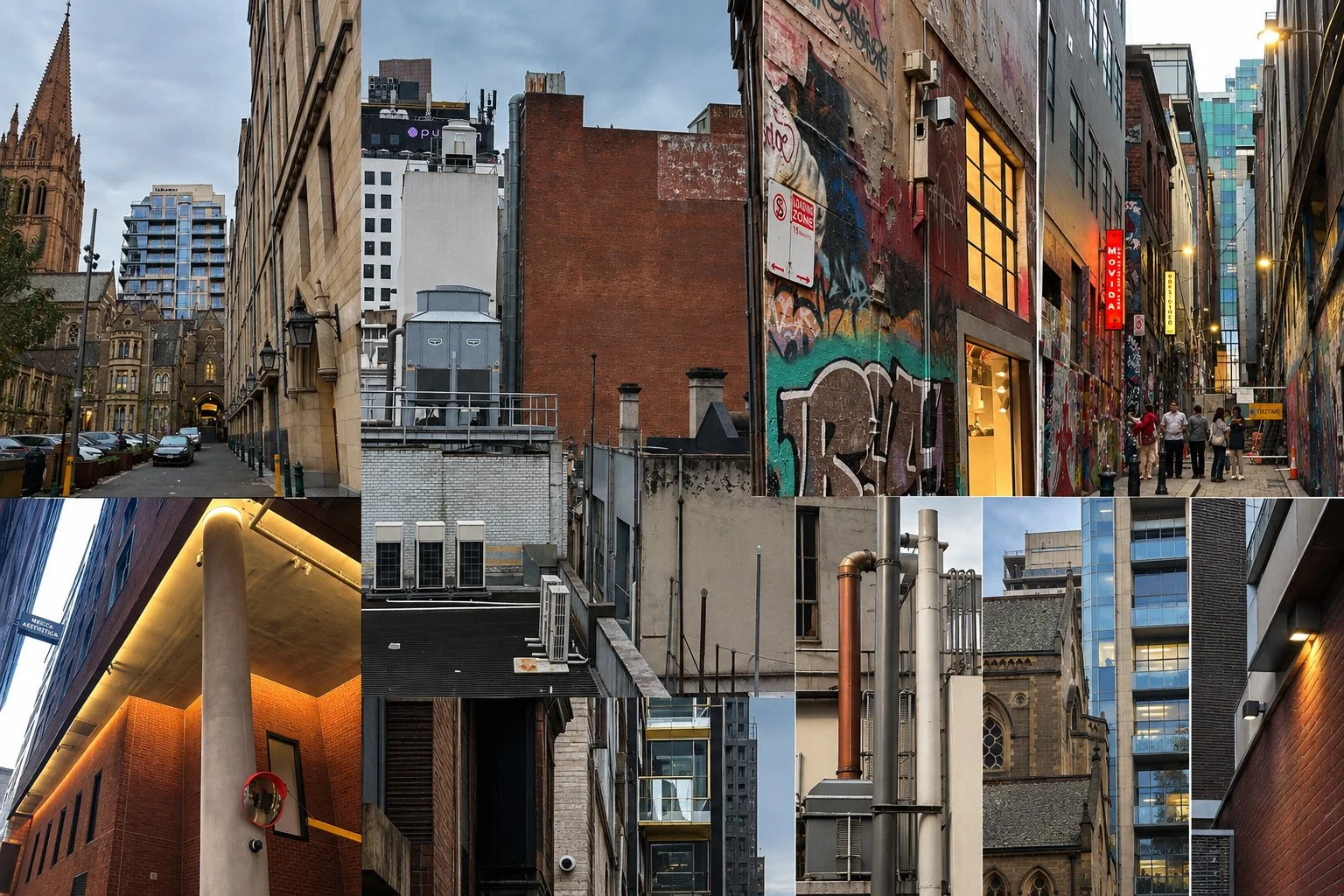
Melbourne City in the photo
When I first began developing this collection, I asked ChatGPT to analyse my photographs of Melbourne’s buildings, walls, pipes and industrial structures, and suggest design algorithms and brooch ideas.
I was quite surprised by the results. Some of the AI-generated designs were remarkably close to what I already had in mind. The arrangements of geometric forms, pipes, perforated steel and architectural fragments felt familiar to my own visual language.
At first, I thought AI and I were thinking in a similar way.
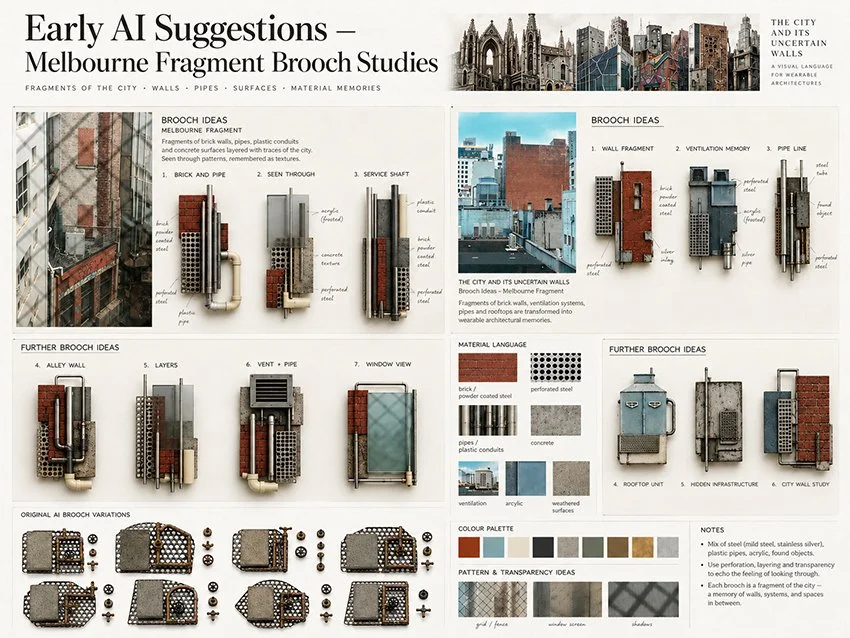
However, as I started making the actual brooches, I realised that many AI suggestions were essentially graphic compositions — small geometric components arranged like digital collages. They looked interesting on screen, but were not necessarily possible as three-dimensional objects.
As a jeweller, I have to consider how materials behave, how components connect, their weight, structural strength and how the finished piece will sit on the body. These decisions come from years of working directly with materials.
When the Handmade Work Comes First
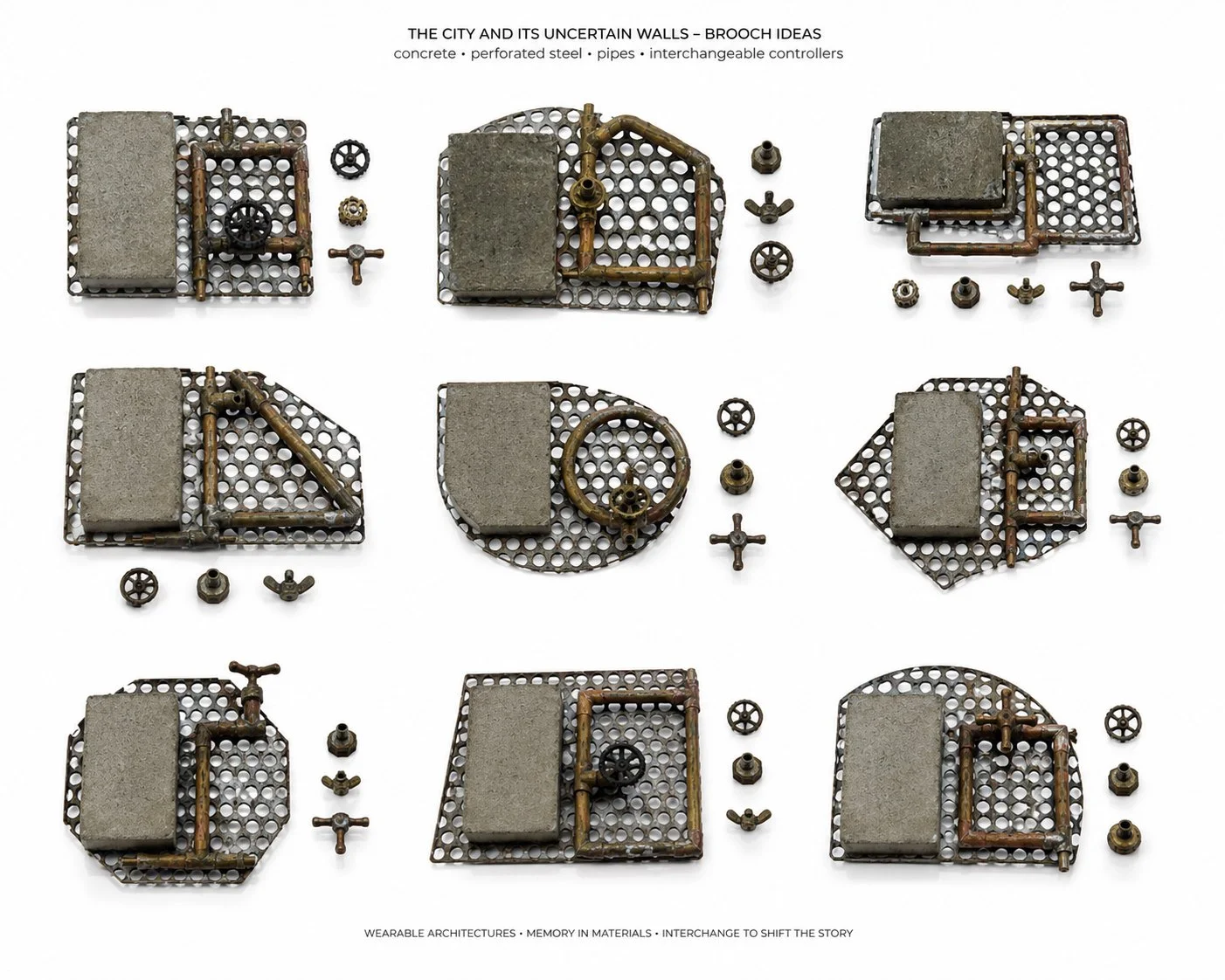
One interesting experiment happened after I completed a brooch combining concrete, perforated steel, brass pipes and small interchangeable controllers.
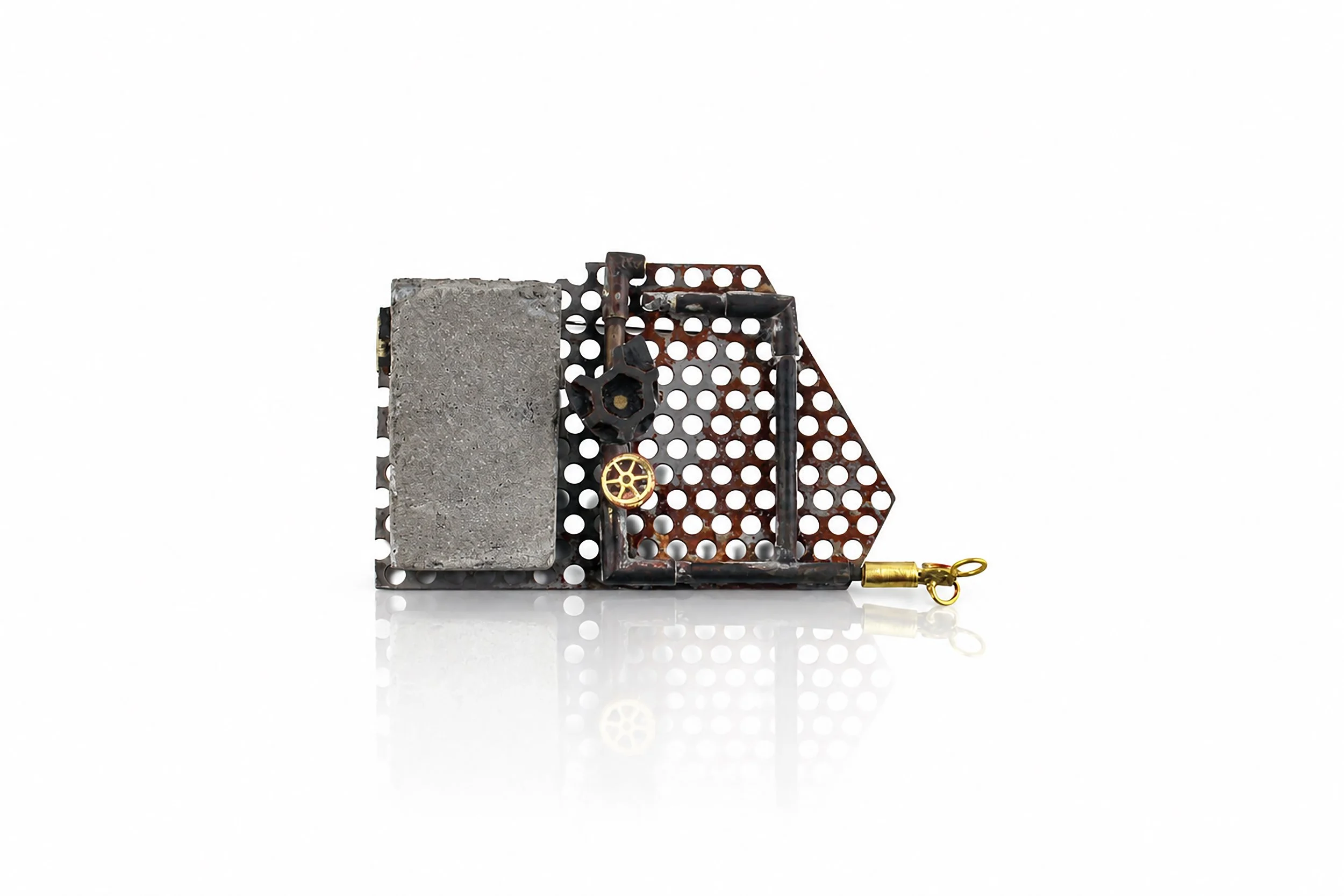
I was particularly happy with this piece. It seemed to capture the architectural structures and material relationships I had been exploring.
Out of curiosity, I asked AI to generate variations based on my finished brooch.
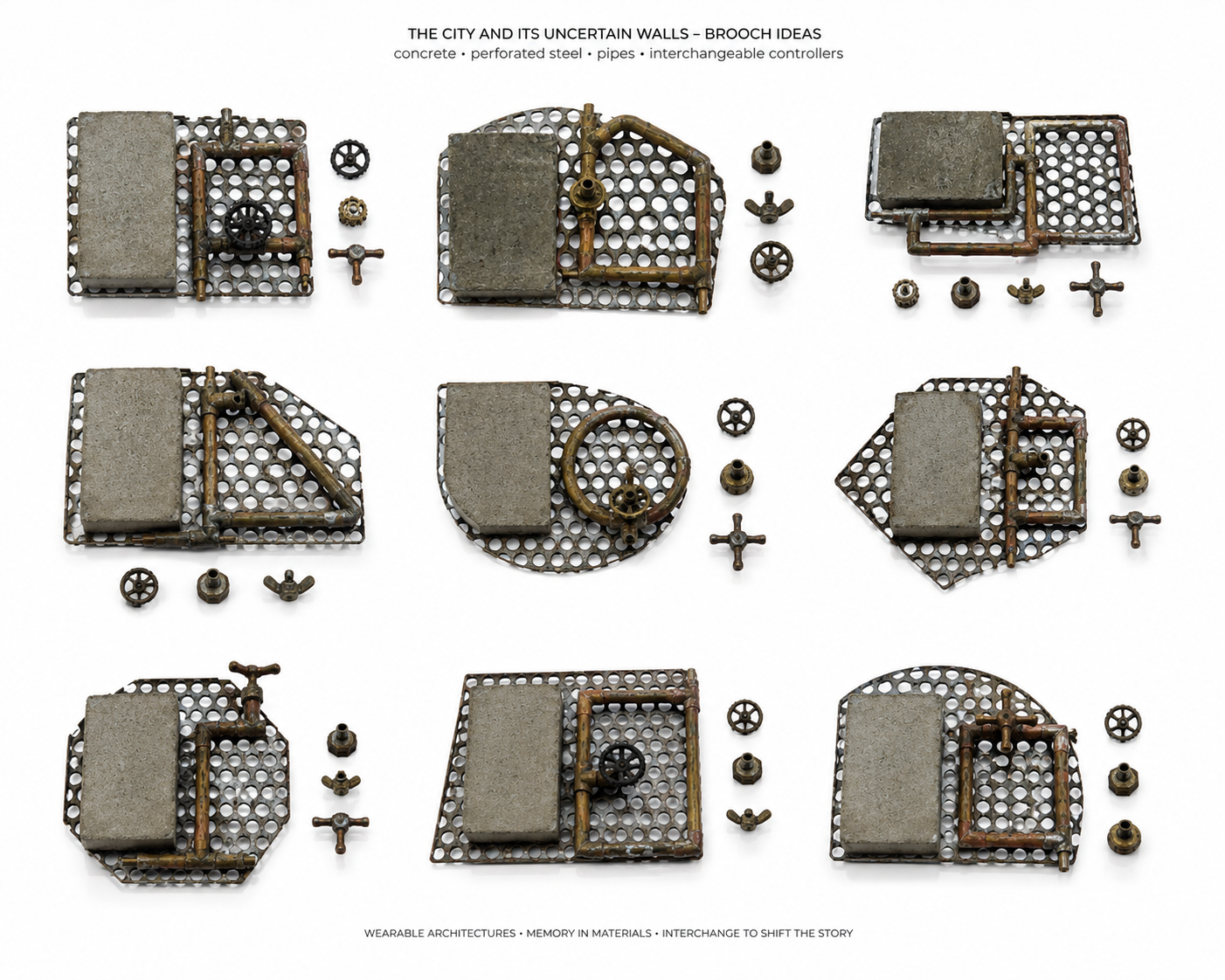
Ai Suggestions
The results were fascinating. AI quickly rearranged the components into different shapes and compositions. Some were visually appealing, while others seemed to be simply alternative arrangements, without much consideration of how they could actually be constructed.
This time, the handmade brooch came first, and AI followed. Rather than generating an original design, AI was responding to my completed work and extending its visual possibilities.
However, to me, most of the variations still feel quite superficial. Apart from the bottom-left suggestion, where the tap/faucet-like element is used in an interesting way, I do not find the others particularly convincing. They seem to imitate the appearance of the work without really understanding its material logic, construction, or emotional value. Yes! I think I find the right words- Not Convincing!
Where Intuition Takes Over
As the collection developed, I found myself relying less on AI's design suggestions and more on my own instinct, experience and aesthetic judgement.
When I hold an old watch component, a porcelain brick or a small brass pipe, I see more than its shape. I think about its original function, its history and the emotional value it might bring to the work.
Sometimes I cannot explain why one component belongs with another. It simply feels right.
Can AI be intuitive? At this point, I don’t think so. It doesn’t hesitate either. But can generative AI develop something that looks like intuition? This is where more questions begin to emerge.
Generative AI can appear intuitive, because it can make unexpected connections, produce variations quickly, and sometimes arrive at outcomes that surprise us. But that is not the same as human intuition.
Human intuition is shaped by lived experience, bodily knowledge, memory, emotion, taste, hesitation, failure and years of making. In your case, when you decide that a pipe should sit slightly off-centre, or that a brooch needs more tension or imbalance, that judgement comes from accumulated experience with materials and from your own aesthetics.
AI does not experience that. It predicts and recombines patterns based on what it has learned from data. It can imitate the appearance of intuition, but it does not have a feeling of this is right or something is wrong here.
A maker often pauses, changes direction, doubts a decision, or leaves something unresolved. That hesitation can actually be part of the creative process. Generative AI usually produces an answer immediately. It does not naturally sit with uncertainty in the same embodied way.
AI can suggest combinations and variations, but the physical making process often takes me somewhere unexpected. Technical challenges, material behaviour, memories and intuition all influence the final outcome.
Looking back, I realise that AI was most useful as a tool for visual exploration and reflection. It helped me see possibilities, sometimes confirming my ideas and sometimes showing me what I did not want to make.
AI could rearrange the forms, but my hands, experience and emotional connection to materials determined what the brooches became.
Hand & Algorithm: AI as Studio Assistant in Contemporary Jewellery — Radiant Pavilion 2026