DAY 05 · WED 28 OCTOBER : When AI Makes My Jewellery Too Perfect
DAY 05 · WED 25 OCT - “Hand & Algorithm — A Nine-Day Online Exhibition”
Chap.6- 44 | DAY 05— When AI Makes My Jewellery Too Perfect
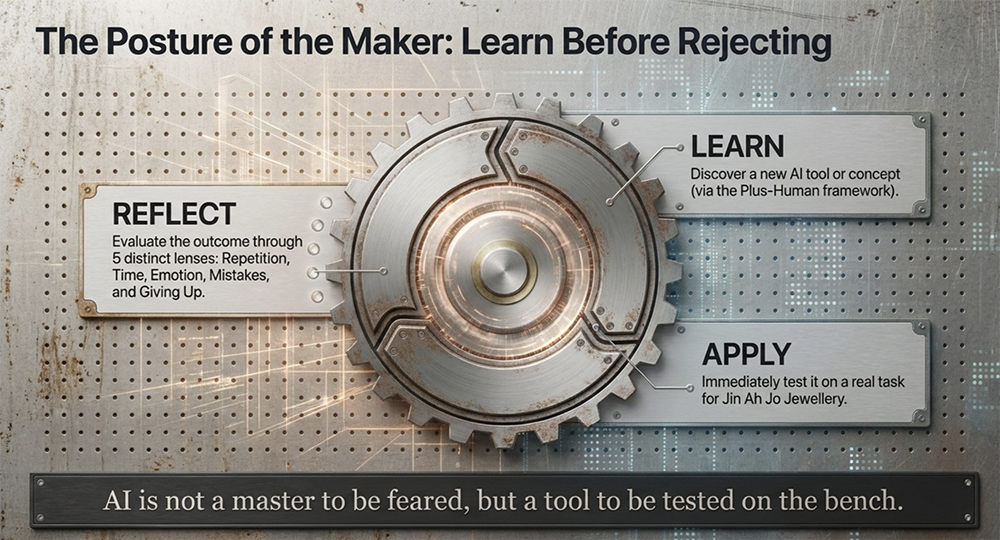
Learning 5 — Between Imagination and Authenticity
How far can I go with AI-generated images and videos without losing the authenticity of my handmade work?
One of the most exciting parts of Hand & Algorithm has been experimenting with visual AI tools.
I have always photographed my jewellery, but creating professional promotional images, videos and presentations requires additional equipment, technical knowledge, time and money.
Suddenly, with a few prompts, I could experiment with possibilities that previously seemed beyond my reach.
Here are some of the tools I explored.
Gemini and Nano Banana — Images and Imagination
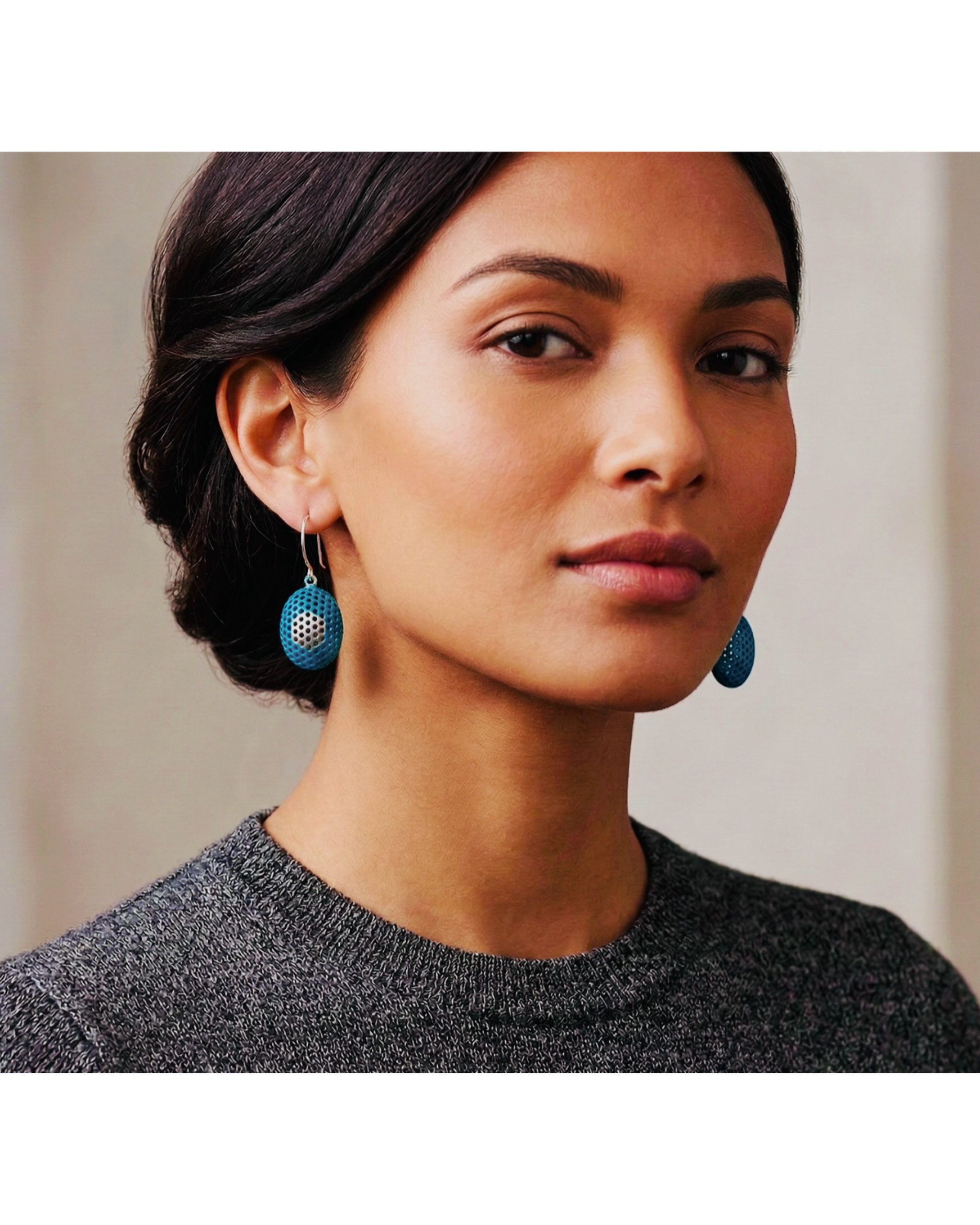
I experimented with Gemini and Nano Banana to create new backgrounds, visualise jewellery on models, explore compositions and develop promotional images from photographs of my actual work.
Sometimes I was amazed by the results. Other times, AI changed the shape, proportions, materials or construction of the jewellery itself.
A beautiful image is not necessarily a truthful representation of a handmade object. However, I think the earrings shown in the video above are one of the best results I achieved with Gemini AI. The earrings sold not long after the video was made.
Flow — Turning Ideas into Moving Images
Using Google’s Flow, I experimented with text prompts and reference images to generate short videos.
I wanted to visualise inspiration, materials, imagined environments and the processes behind making my jewellery.
The video on the Day 05 welcome page combines two of these experiments. I used prompts to see how AI might interpret the process of making contemporary jewellery.
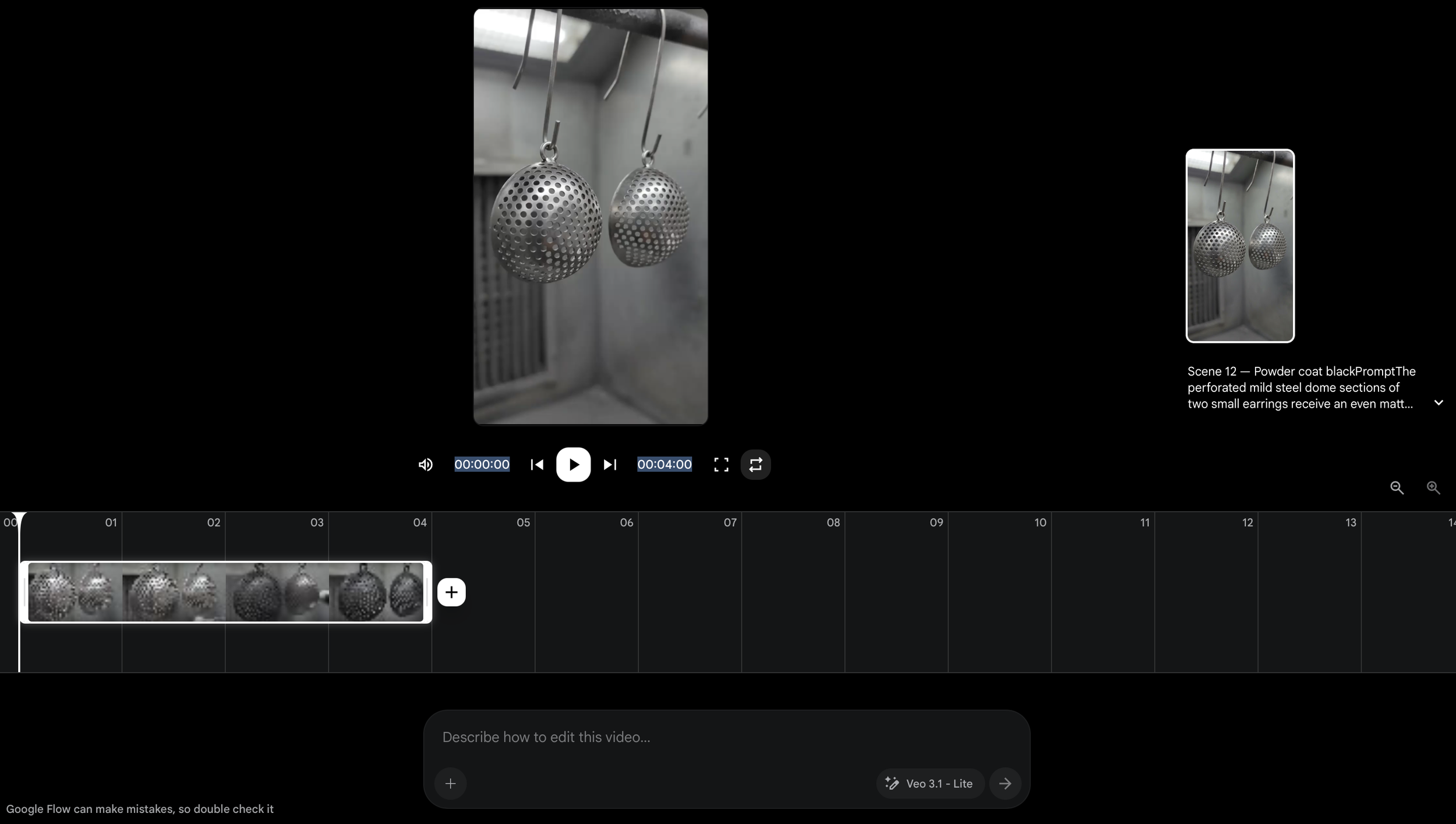
prompt, images then video- Google Flow screenshot for my project
The results are awkward, exaggerated and not quite true to how I work at the bench. Some movements and techniques are amusingly incorrect, revealing how difficult it can be for AI to represent the physical knowledge involved in craftsmanship.
Yet I can also see possibilities in these imperfect experiments. With more learning and exploration, perhaps I could use this kind of video to tell stories about my work in new ways.
Before learning about AI, I would never have imagined creating something like this myself. And despite all its mistakes, I have to admit: it was undeniably fun.
Vrew — Video Editing and Storytelling
I explored Vrew to edit videos, add captions and organise visual stories.
I also began experimenting with short sequences showing the ingredients of a piece, its construction, the finished object and how it might be worn.
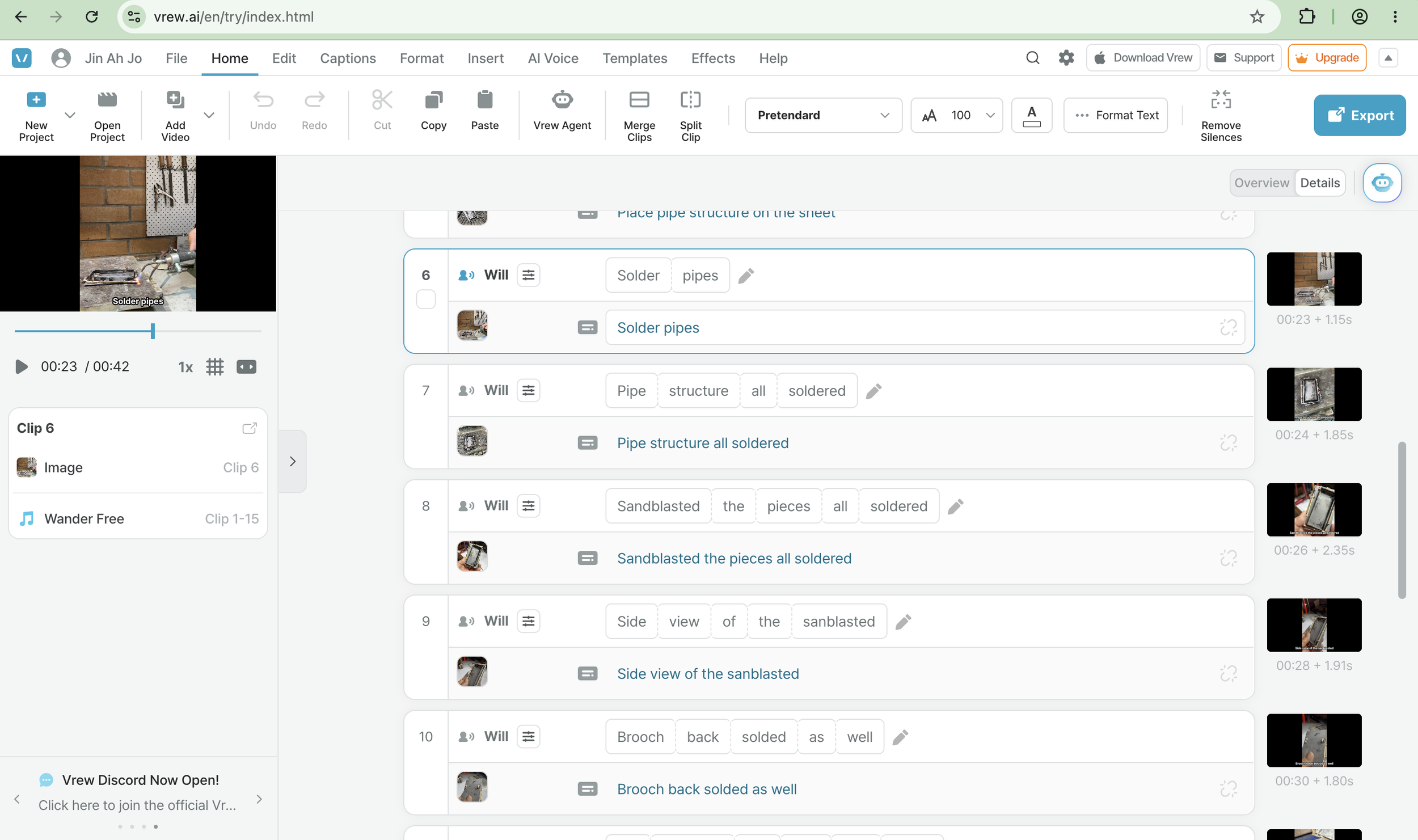
The prompts used to create a video from images, with audio and subtitles.
Video became another way of communicating the many decisions hidden within a finished piece of jewellery.
YouTube and Instagram — Testing the Results
YouTube and Instagram became places to experiment with the videos and Reels I produced.
I tested different formats, lengths, music, captions and presentation styles.
I began to see how one piece of jewellery could be presented through several different stories: the inspiration, the making, the final object and the experience of wearing it.
Photoshop and AI Image Editing (Capcut, Edit) — Returning to Reality
I also used Photoshop and AI-assisted image editing to improve photographs, clean backgrounds, adjust compositions and prepare promotional materials. Surprisingly ChatGPT has Adobe Photoshop in their projects that I can use. However, I still had to use the subscribed Photoshop for the details.
I experimented with asking AI to identify dimensions and create measurement guides from jewellery photographs.
But measurements inferred from photographs are only estimates, and image editing must not distort the actual work.
I continually returned to the original jewellery to check what was real.
Between Imagination and Authenticity
What is authenticity in contemporary jewellery?
For me, it is not simply whether something is handmade or digitally generated. It is also about the relationship between the maker, the object, the creative decisions and the story being communicated.
My jewellery carries the physical evidence of making: the resistance of mild steel, the careful placement of perforations, soldered connections, surface finishes and countless adjustments made by hand.
Sometimes an unexpected result or slight imperfection is precisely what makes a piece interesting.
AI does not understand these experiences in the same way I do. It can recognise visual patterns and generate convincing appearances, but it does not know why I chose one construction method over another.
What Have I Learned?
AI has opened a new visual world for me. I can experiment with images and videos that I would never have imagined creating independently.
Yet this freedom comes with responsibility.
My jewellery is made by me, with my hands. AI helps me communicate and present it.
I do not want a more perfect digital object to replace the imperfect, physical reality of my handmade work.
Perhaps the most valuable discovery is not how beautiful AI can make something look, but how much more clearly I now understand what makes the original object mine.
Explore the Original Chapters
Chapters 3–21 to 3–25 — AI Image Editing, Video Experiments and Visual Storytelling
Chapter 3-24 : Trying Again- Can Flow Learn to Make My Jewellery More Accurately?
Related experiments — Flow, Vrew, Gemini, AI-generated models and promotional videos
Visit the original chapters to discover the actual images, videos, experiments and unexpected results behind this presentation.