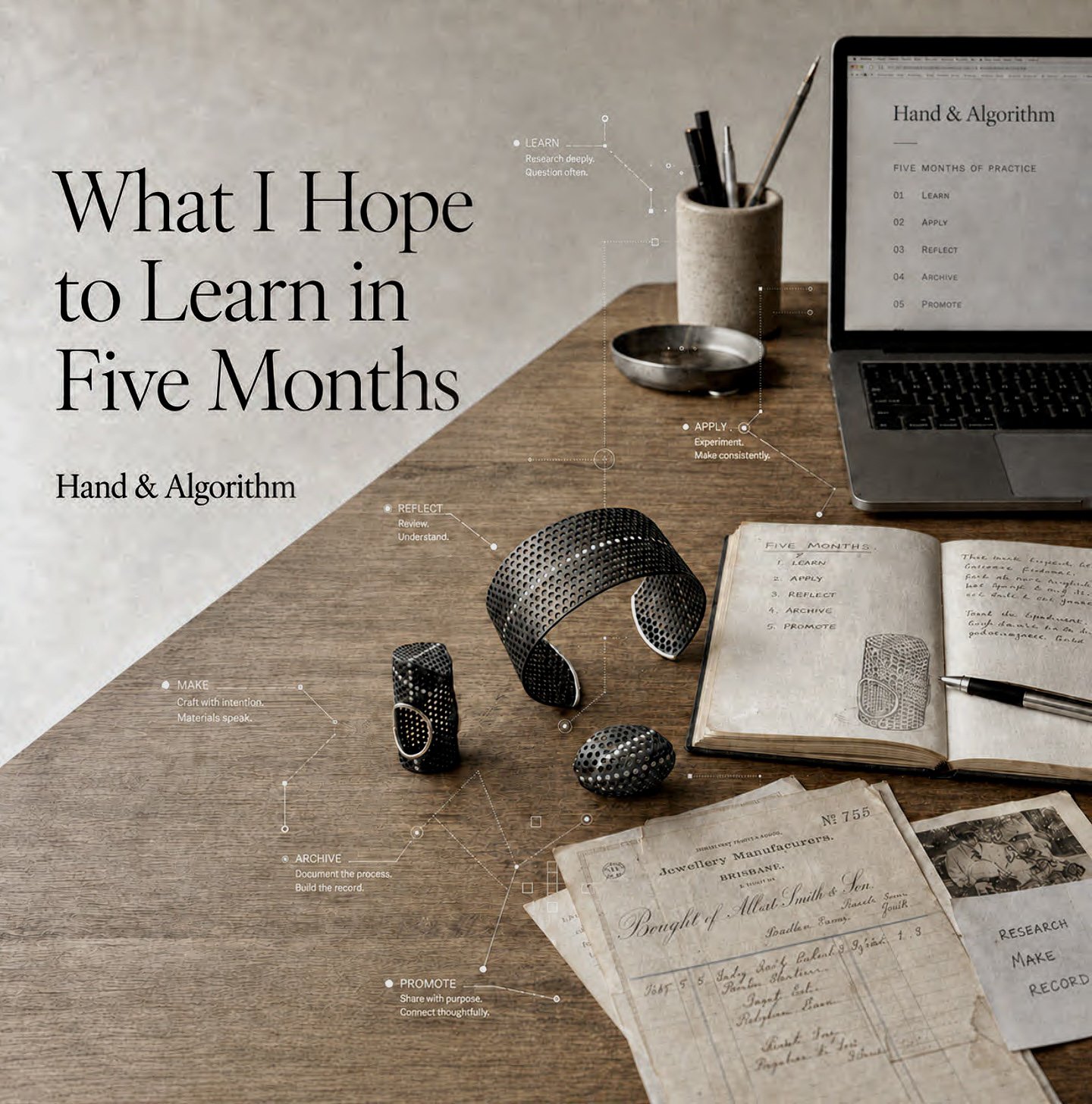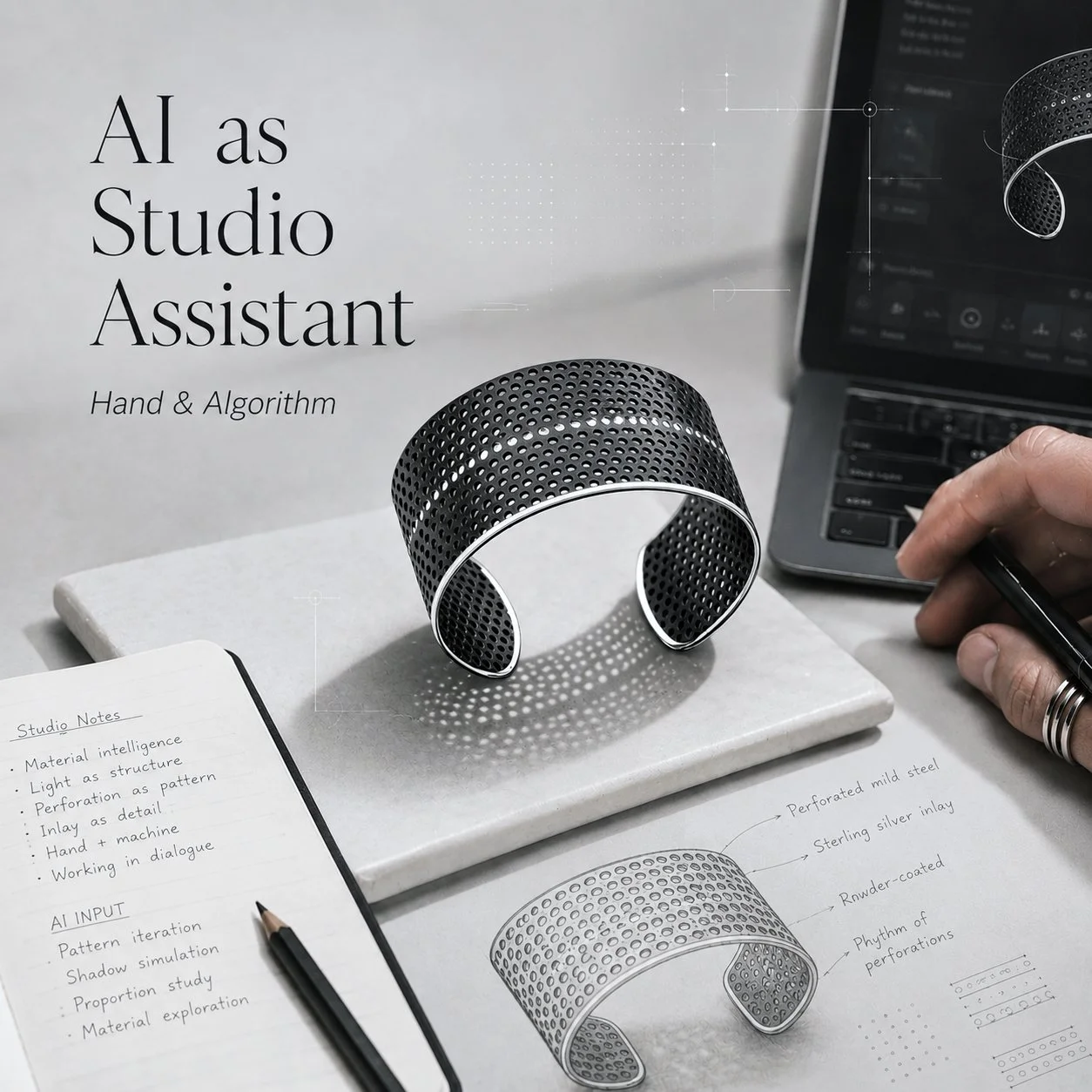
Chap.1-5 : What Does “AI as Studio Assistant” Actually Mean?
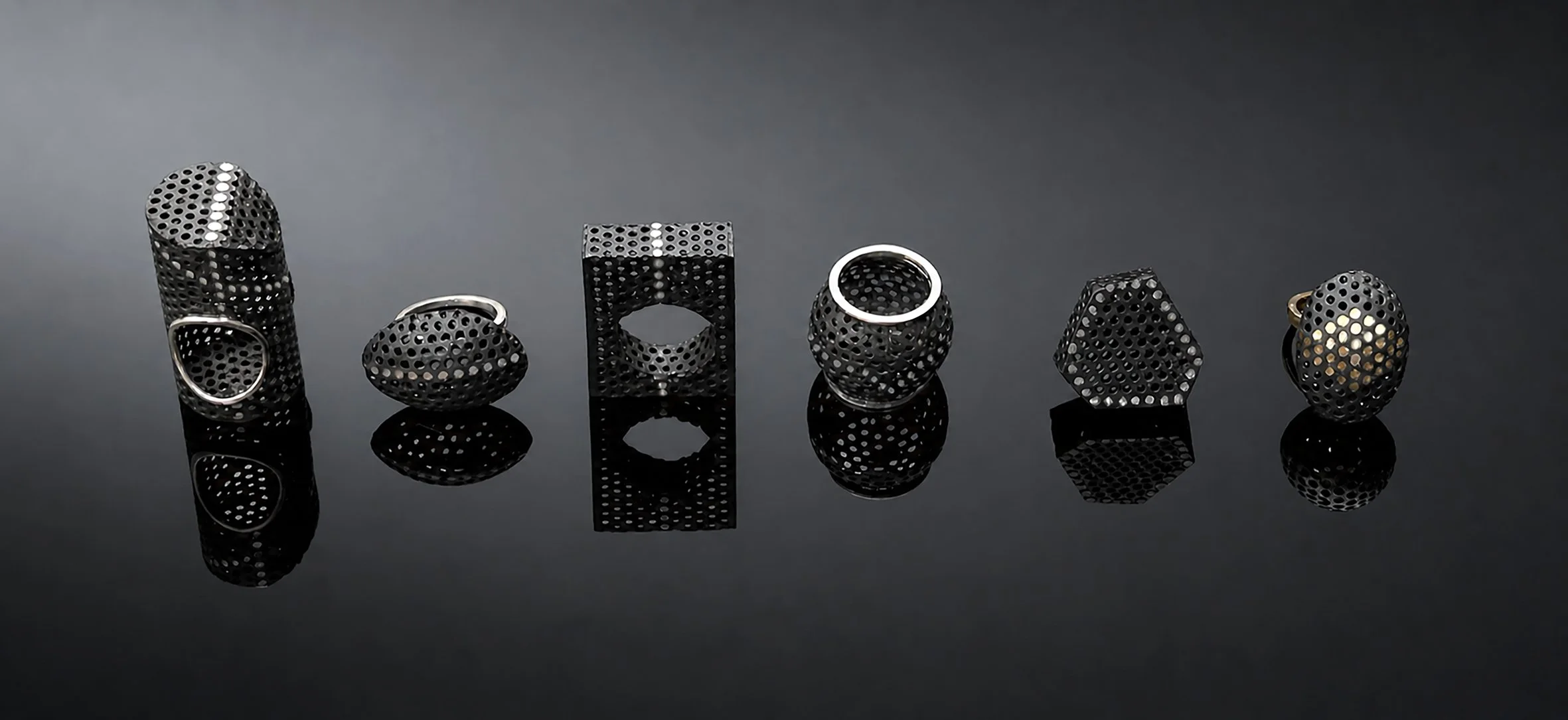
New Rings: “Latent lines”
1. Language, Images and Communication
When I first described AI as a studio assistant, I did not mean that it would design or make jewellery for me.
I meant that it could support the many tasks surrounding my practice: writing, research, image-making, planning, promotion, business analysis, archiving, reflection and the early development of new ideas.
As English is my second language, one of the first ways I used AI was for proofreading. It helps me clarify what I want to say without removing my own voice. This has been especially useful for emails, artist statements, applications, captions and blog writing.
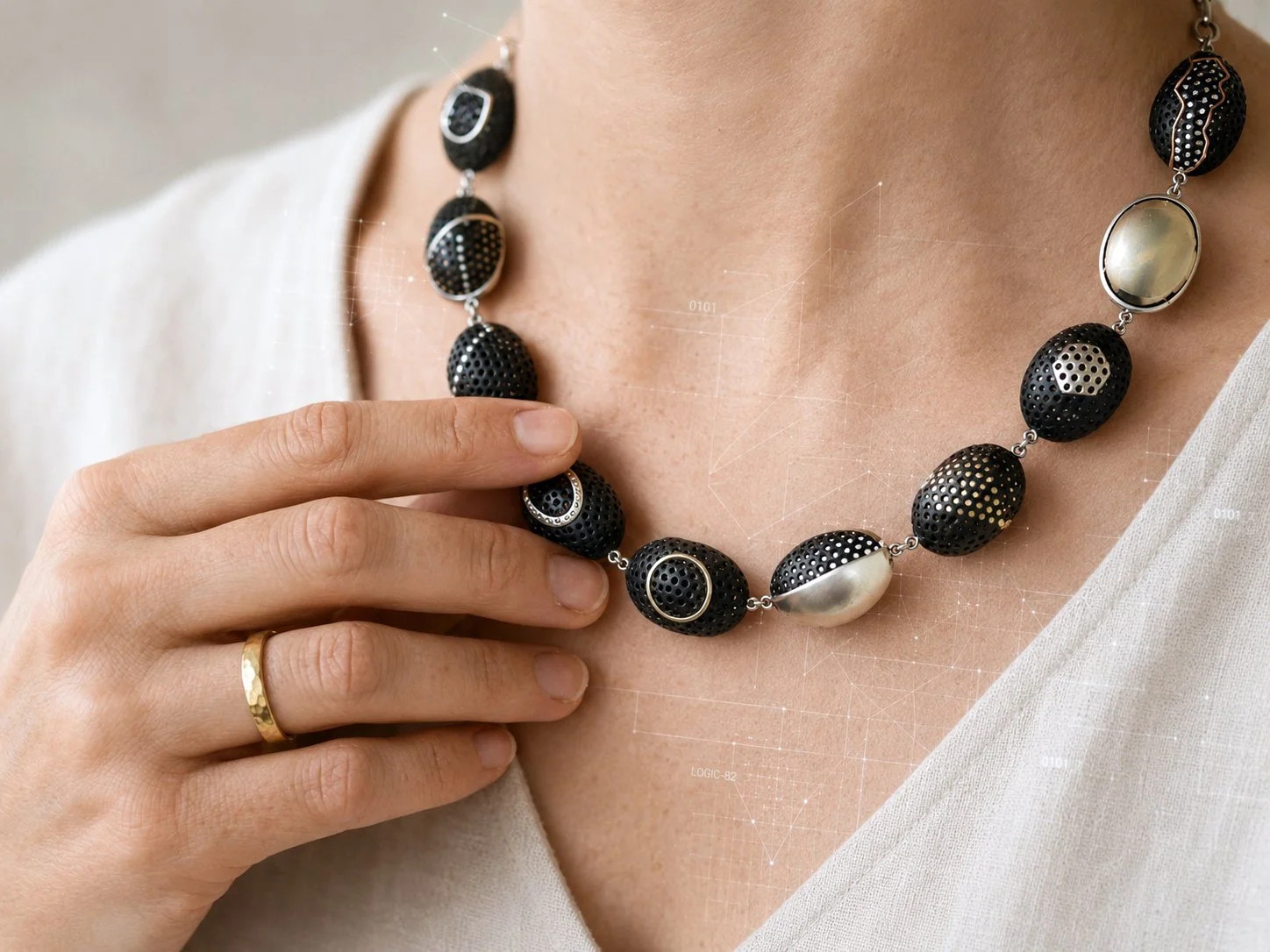
I have also used AI for photo editing and image creation. It can help me clean backgrounds, improve presentation, combine photographs and imagine how jewellery might look when worn by a model. Sometimes the results are useful, and sometimes AI misunderstands the structure, scale or perforation of my work. Even then, the mistakes help me recognise what is visually and materially important.
2. Moving Images and New Project Development
Video has opened another area entirely.
I have used AI to edit promotional videos of my jewellery, but I have also begun creating videos using language alone. Being able to describe a scene in words and see it transformed into moving images feels like entering a completely new world. It is exciting, but it also raises questions about reality, authorship and representation.
AI has also become part of project development.
It helped me shape Hand & Algorithm for Radiant Pavilion 2026 and supported the early development of another project, The City and Its Uncertain Walls. It has helped me organise ideas, develop questions, plan stages of work and identify connections between materials, narratives and research.
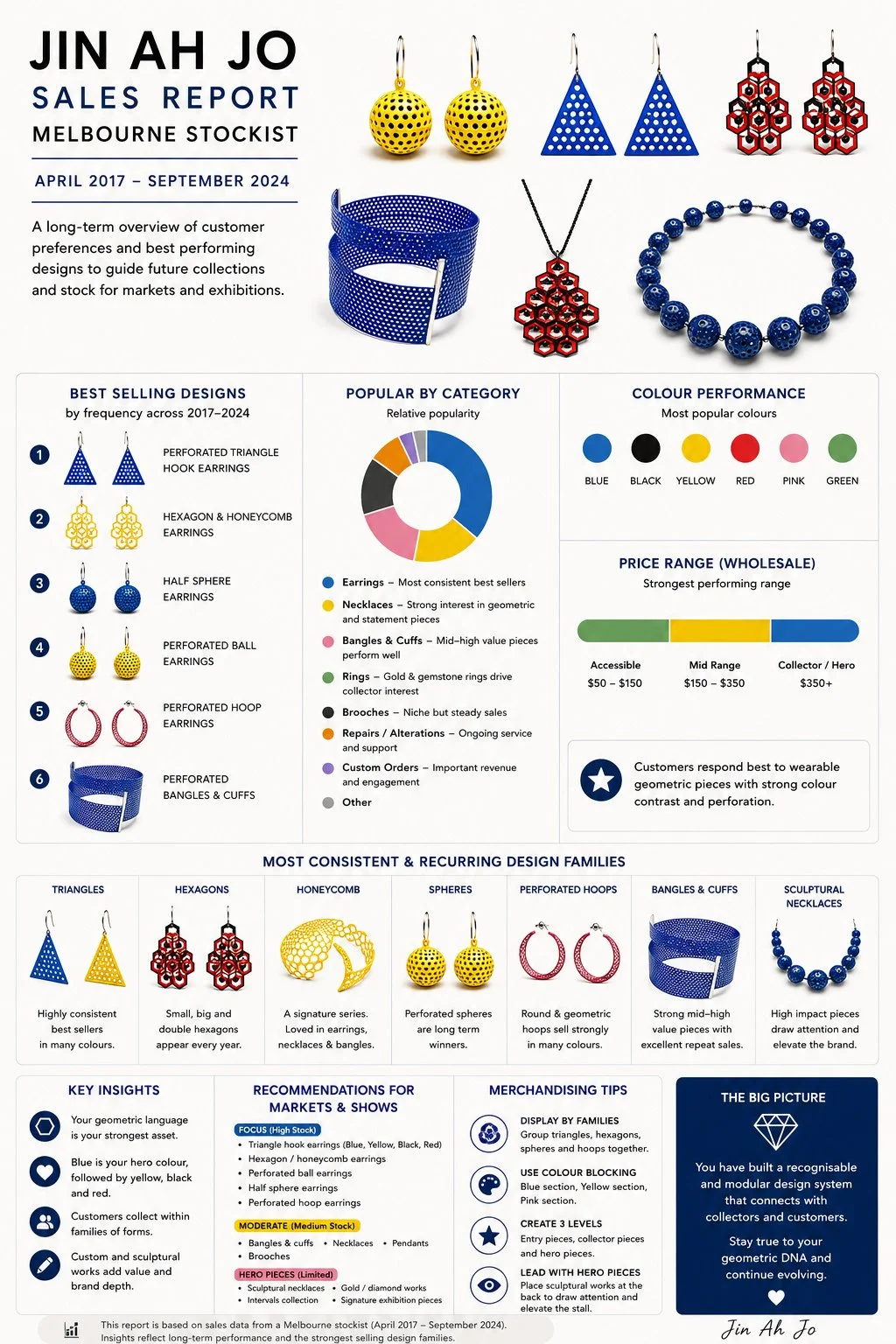
Sales report for 17 years of practice
3. Looking Back Through Data
Another significant use has been looking back at my own history.
AI helped me analyse sales reports from my seventeen years with e.g.etal. It allowed me to identify recurring patterns across products, colours, forms and customer responses. This did not simply show me what had sold. It helped me see my practice as an archive and understand how it had developed over time.
It has also helped me organise sales campaigns, plan email communication and think more clearly about how to follow up with customers and audiences. These are necessary parts of an independent jewellery practice, but they can easily become overwhelming when I am also trying to make work.
I have also begun using AI to analyse a group of rings made over many years.
By recording their forms, materials, perforations, geometry and construction, I can look for repeated decisions and hidden preferences. From this, I have started developing a kind of “Jin Ah Jo algorithm”—not a computer program, but a set of creative rules that may help me see what could be designed next.
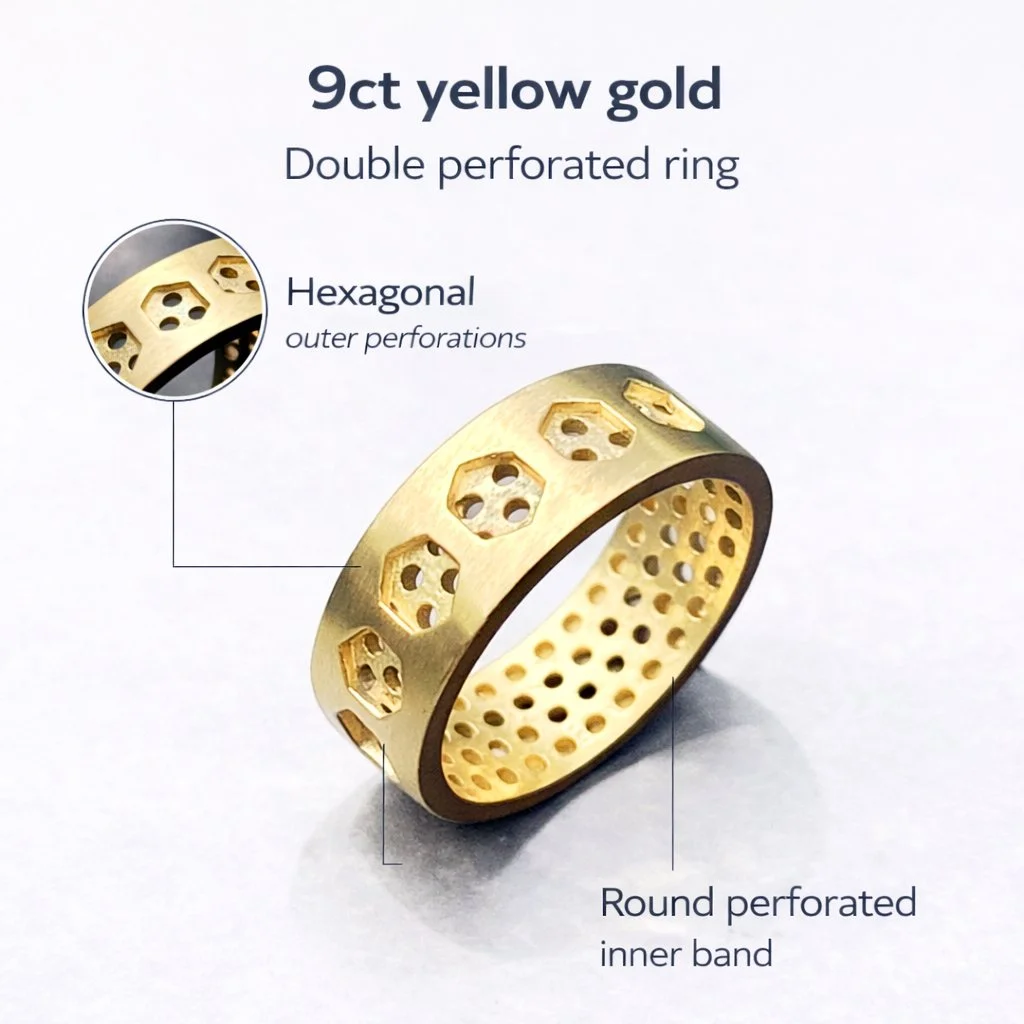
Jin Ah Jo Jewellery persona
4. Creating a Living Archive
Another important part of this process has been creating the Jin Ah Jo Jewellery Persona.
By gathering my history, materials, techniques, exhibitions, ideas and values into one organised body of information, AI has helped me archive my practice in a more complete way. It allows me to see the many layers of what I have built, rather than viewing each collection, exhibition or business decision separately.
This has been unexpectedly emotional.
I arrived in Australia as an immigrant and began with very little. Over time, I built a studio practice, developed my own material language, created thousands of pieces, worked with galleries, exhibited, sold, failed, continued and changed.
Seeing all of this gathered together has made me understand the complexity of my practice more clearly. It has also made me feel proud of what I have built from the beginning.
The persona is not simply a branding exercise. It is becoming a living archive—a way of recognising my own journey, preserving what I have learned and giving structure to the knowledge that has accumulated through years of making.
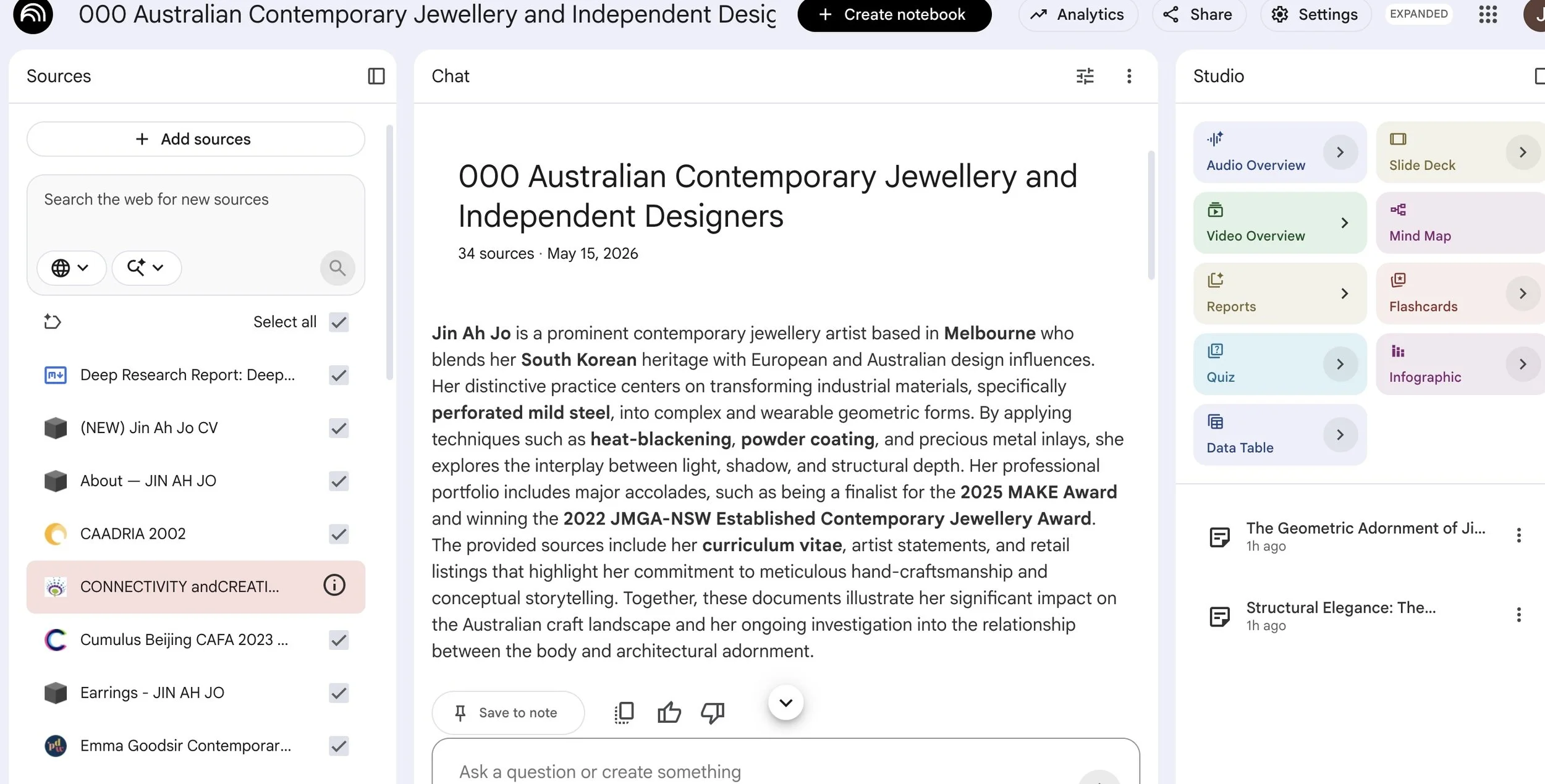
Notebook LM for Deep Research
5. A Support System, Not the Maker
Research is another important part of AI’s role.
I have used it to explore how artists and makers are responding to artificial intelligence, particularly in art, craft, handmade practice and contemporary jewellery. This gives me a broader context for my own experiments and helps me understand that I am not simply learning new tools. I am also questioning what making, knowledge and authorship mean now.
For me, AI as a studio assistant is not one single tool.
It is a support system that can move between language, images, video, research, planning, sales analysis, promotion, archiving and design development.
But it is not the maker.
It does not understand material through touch. It does not know when steel is too heavy, when a form is uncomfortable or when a small adjustment changes the emotional character of a piece.
The hand still tests.
The material still resists.
I still decide.
So far, the most useful role of AI has not been to replace any part of my practice. It has been to help me see, organise, analyse, archive and communicate it more clearly—and sometimes to reveal possibilities for what might come next.
That is what “AI as studio assistant” currently means to me.