Chaper 1: Learning Before Judging. 4: Why I Chose to Learn AI Before Judging It
Chaper1:Learning Before Judging-4:Why I Chose to Learn AI Before Judging It
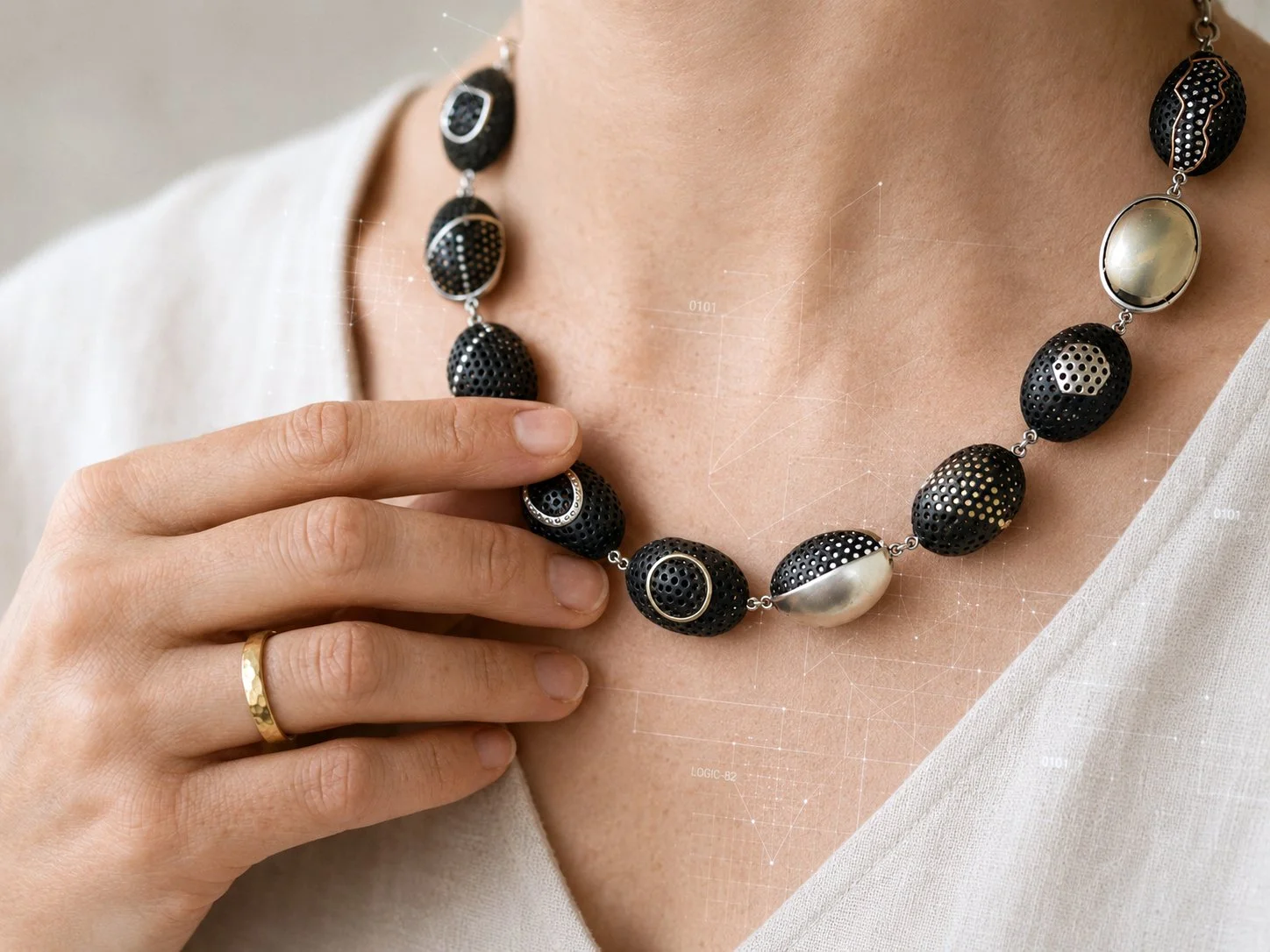
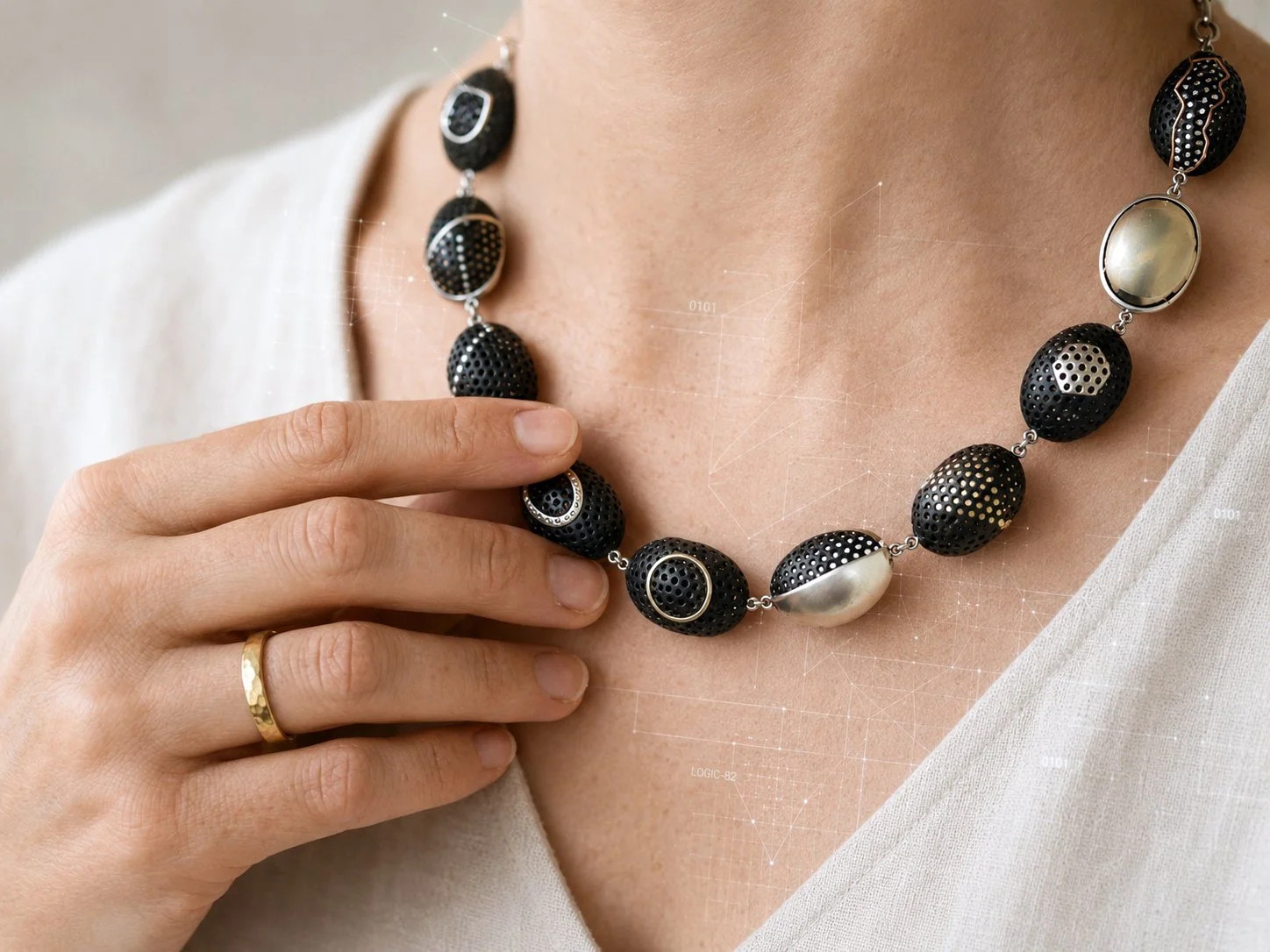
Hand touching my handmade necklace, “Not Everything Is As It Seems”
When artificial intelligence began appearing everywhere, I did not immediately know how to feel about it.
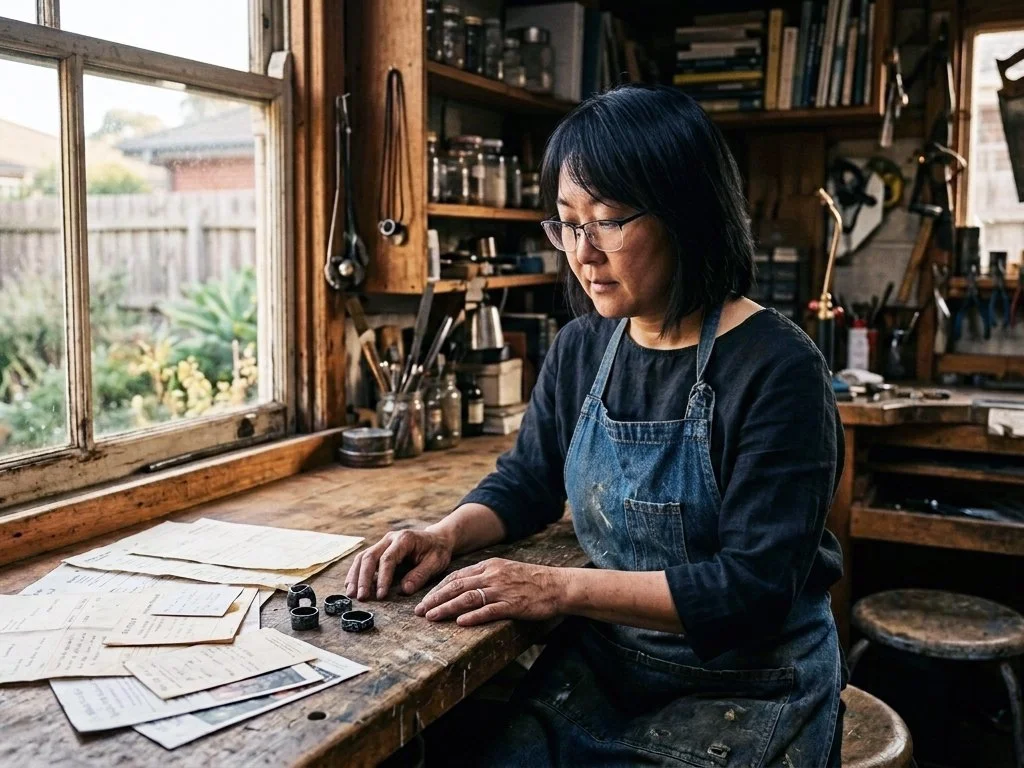
As a contemporary jewellery artist, I have spent more than seventeen years developing knowledge through my hands. I understand materials through cutting, heating, drilling, filing, soldering, sand blasting, forming, and repeating. I know how mild steel resists, how silver behaves, and how even a small change in weight or scale can affect wearability.
Because of this, AI initially felt very distant from the physical reality of my work. I thought they can’t replace my handmade jewellery and I am safe in that sense.
It could generate an image in seconds, but it could not feel whether a ring was too heavy. It could suggest a form, but it could not know whether that form could actually be made in steel. It often misunderstood perforation, changing the spacing, structure, or character of the work.
So my first response could easily have been rejection.
But I realised that judging AI without properly learning it would leave me with only assumptions. So I decided to take a different position:
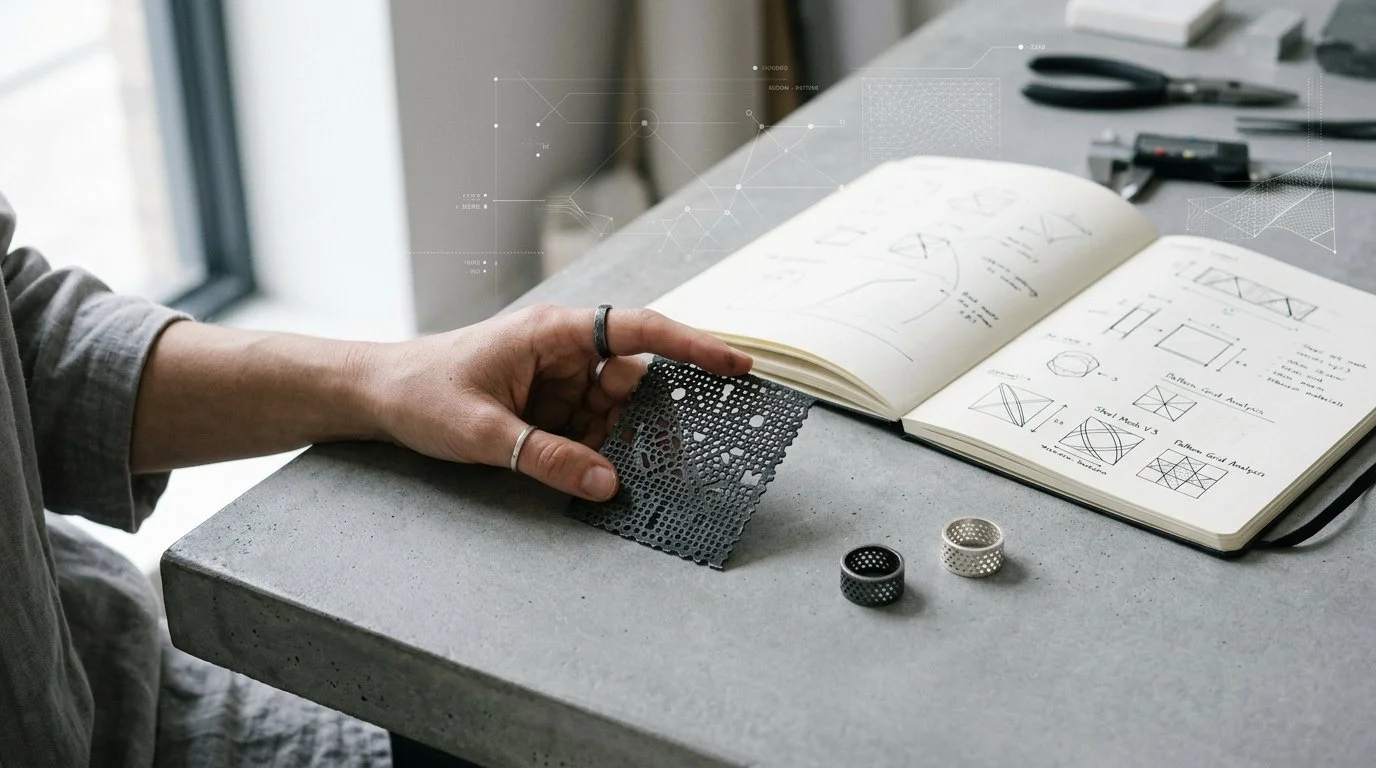
Hand with perforation - Judging the possibilities
Learn before rejecting.
Through the Plus Human course, I began learning about prompting, image generation, writing, research, video, and digital communication. I started asking how these tools might be translated into Jin Ah Jo Jewellery.
That question became the beginning of Hand & Algorithm.
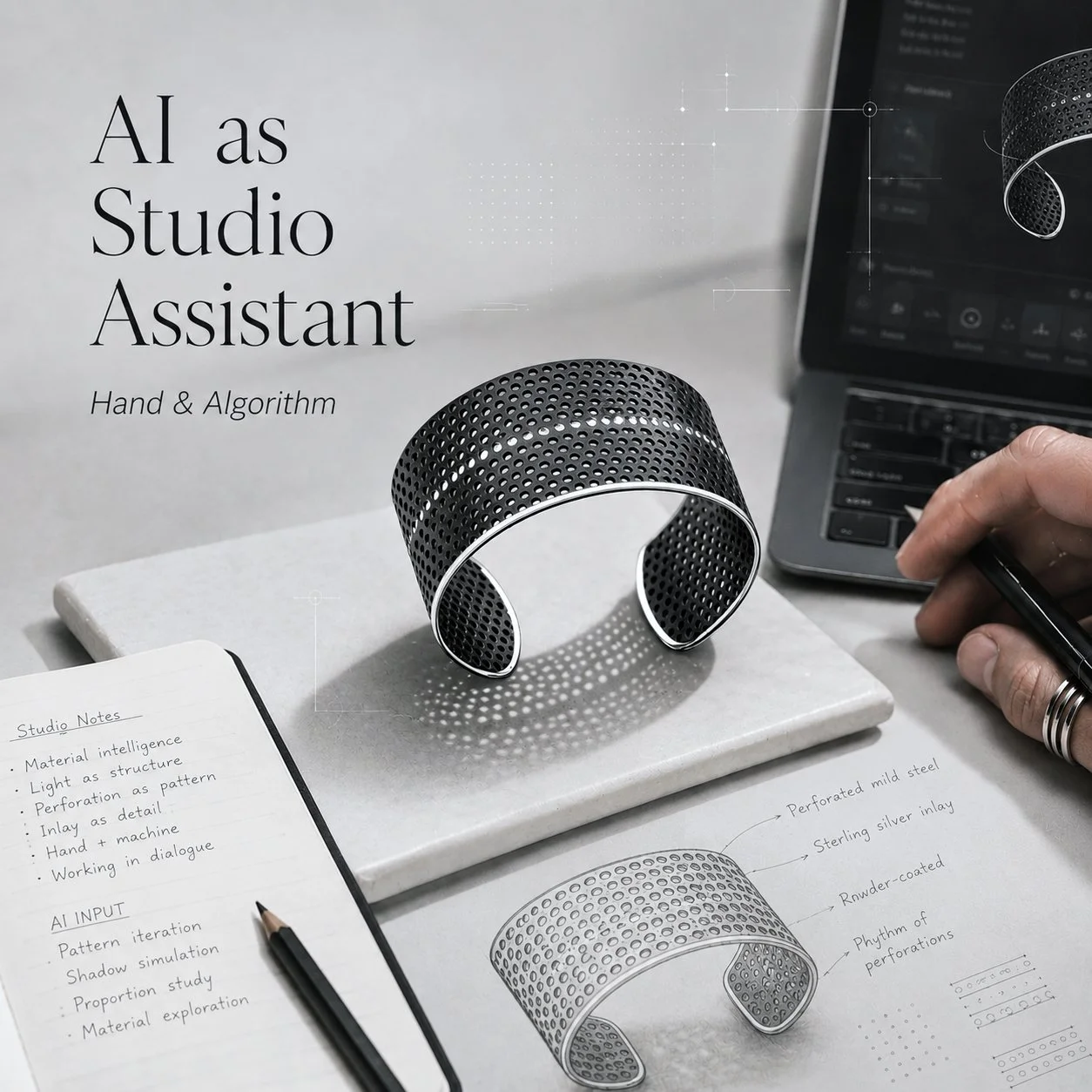
Rather than asking AI to make jewellery for me, I began using it as a studio and business assistant. I asked it to help me organise ideas, analyse past work, improve writing, develop questions, present my jewellery visually, and support deeper research.
I have genuinely enjoyed parts of this process. AI has helped me see new possibilities in how I present my work and communicate my ideas. It has also supported research in ways that would otherwise take much longer.
At the same time, I feel uneasy.
People like me share what we know through conversations with AI. We explain our techniques, material behaviour, failures, decisions, and years of experience. Knowledge that once belonged closely to the maker can begin to feel like a public resource.
My expertise in materials, my hands-on experience, and my passion for making were built slowly over many years. They came through repetition, mistakes, observation, and physical effort. The possibility that this knowledge could be absorbed, generalised, and redistributed in the AI era is both exciting and frightening.
I know that sharing knowledge can be generous and useful. It can help others learn and contribute to a wider creative community. But I also wonder where the boundary should be.
What knowledge should remain with the maker?
What can be shared?
What deserves protection?
And what happens when embodied experience is separated from the person who earned it?
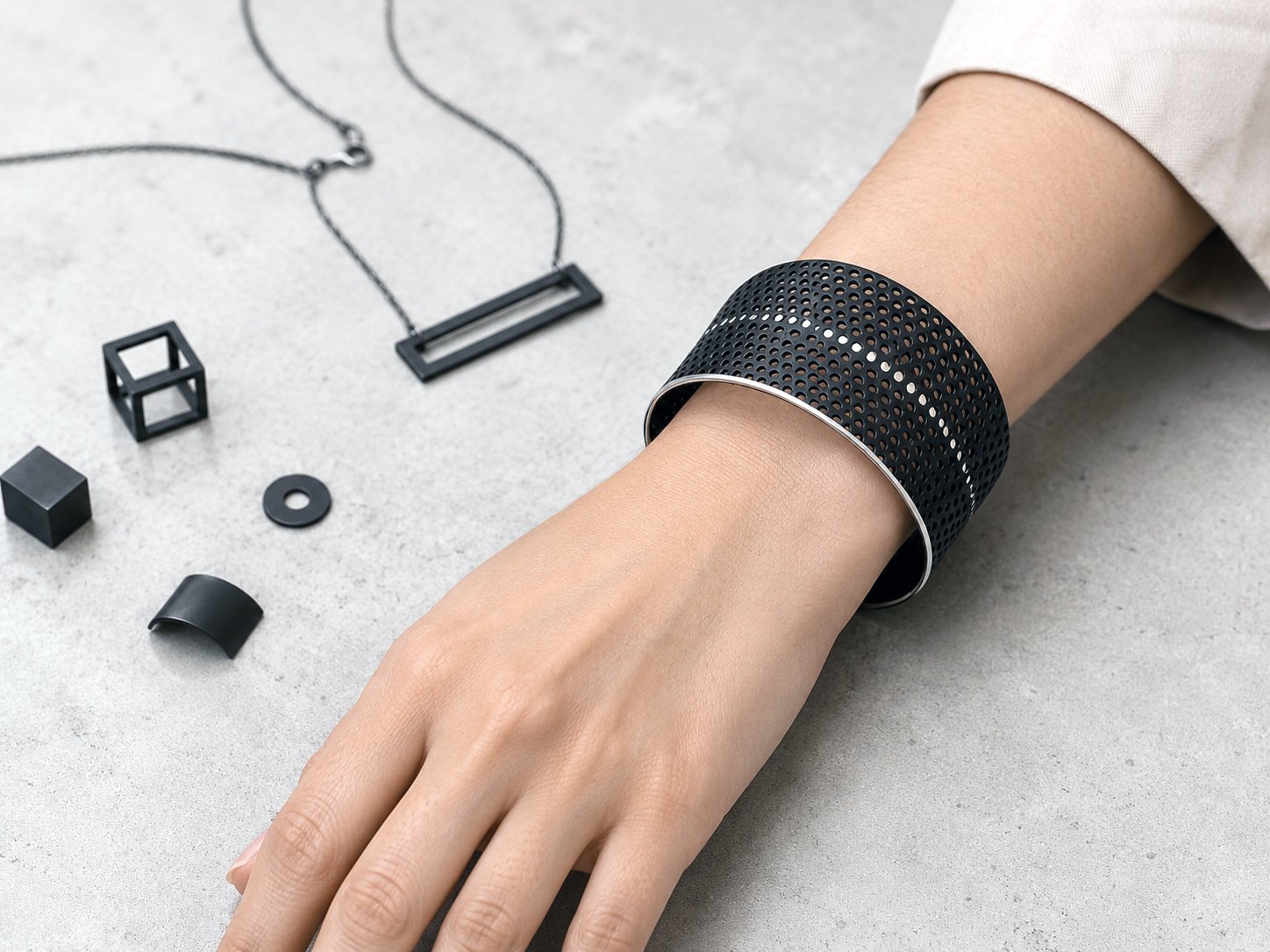
Perforated mild steel cuff with silver inlays
These questions have become part of the project.
Some AI results have been helpful. Others have been inaccurate or unusable. But even the failures have taught me something. When AI misunderstands my jewellery, I have to explain more clearly what matters. When it ignores material thickness, changes the perforation, or produces an unwearable form, I have to identify why the result is wrong.
In this way, AI is not simply giving me answers. It is helping me articulate knowledge that had previously remained inside my hands.
My process is now simple:
Learn → apply immediately → reflect.
I learn one idea or tool, test it within my practice, and then consider what it changed, what it failed to understand, and whether it has real value.
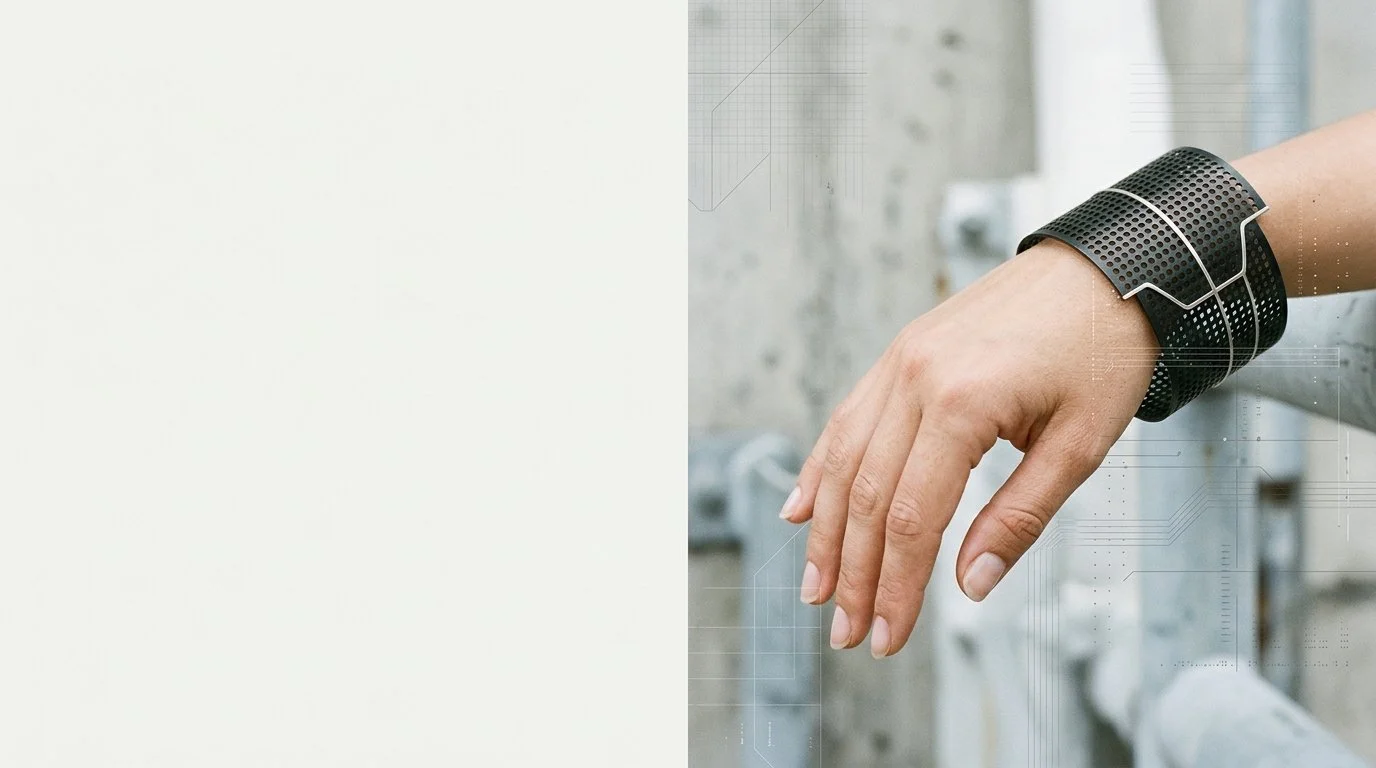
AI created design
I am not trying to become an AI expert.
I am trying to become a more conscious maker.
I want to understand what I am willing to delegate, what I am comfortable sharing, what I need to protect, and what must remain with the hand.
Learning before judging does not mean accepting everything.
It means building criticism from experience while staying alert to what may be gained — and what may be lost.
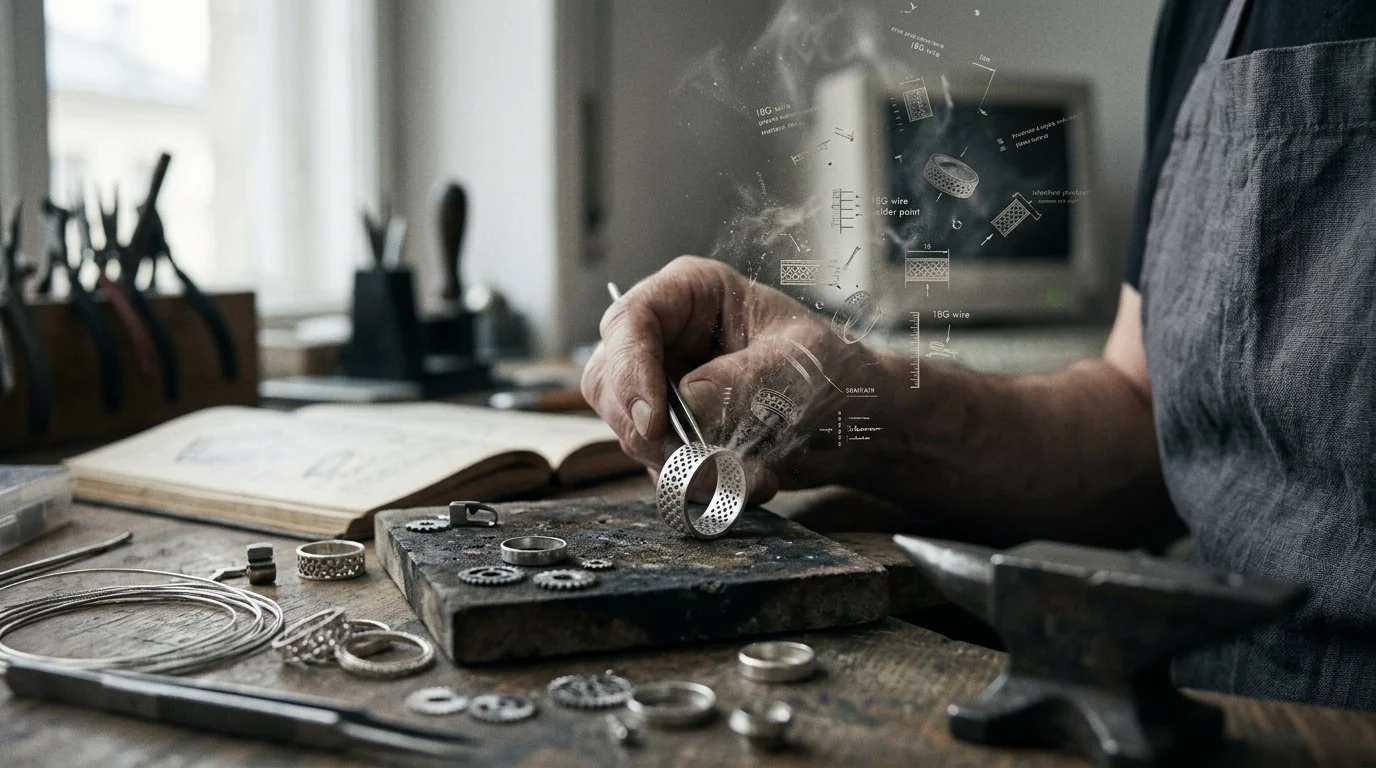
Silver perforated ring from my ring design archive