Chap.3-26: What Became Faster—and What Became More Work
After experimenting with Flow and Vrew, I started thinking about something beyond whether the videos were successful or accurate.
Has AI actually made my work faster?
In many ways, yes.
But strangely, I also feel busier.
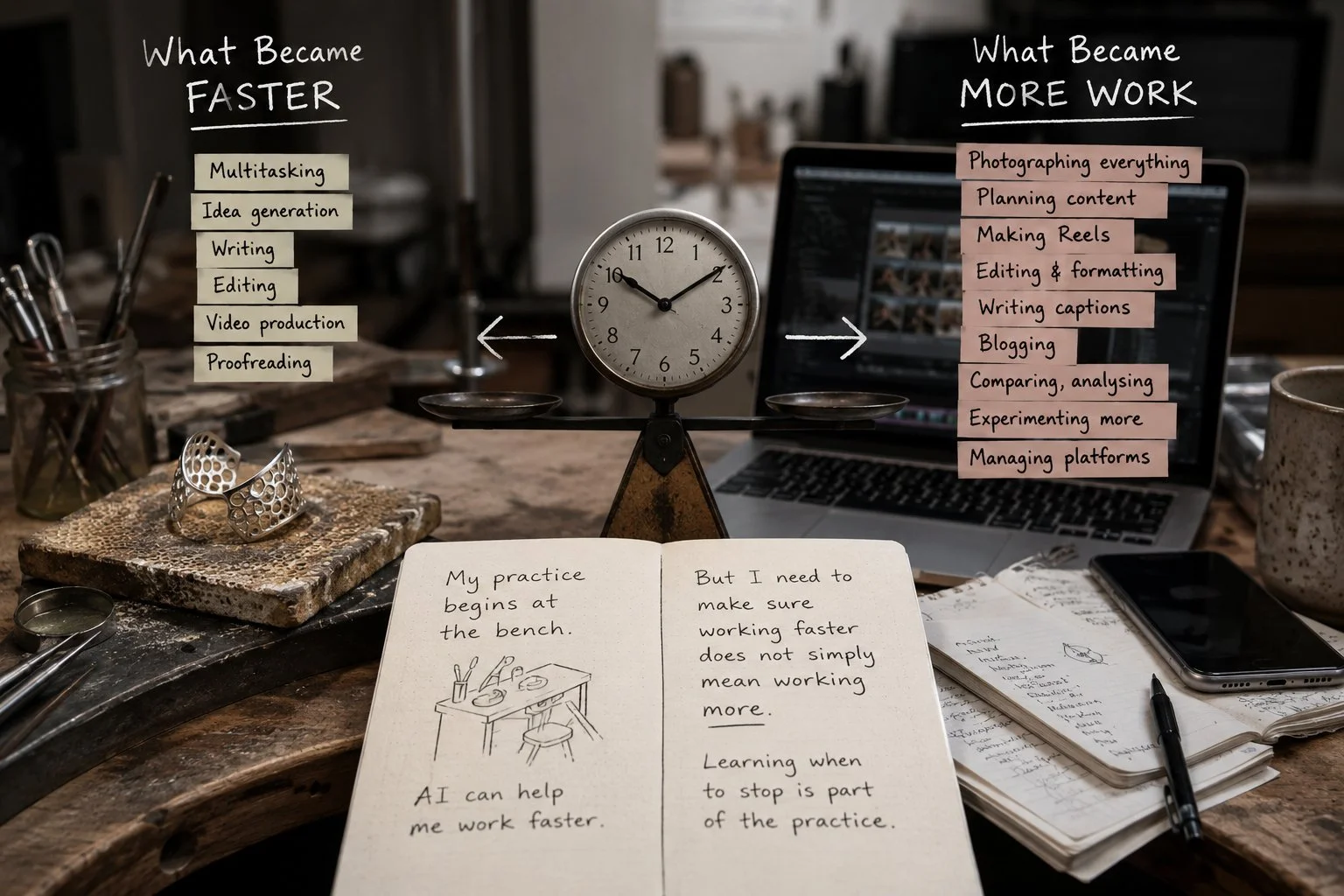
What Became Faster: Multitasking
One of the biggest changes AI has brought to my practice is the ability to multitask.
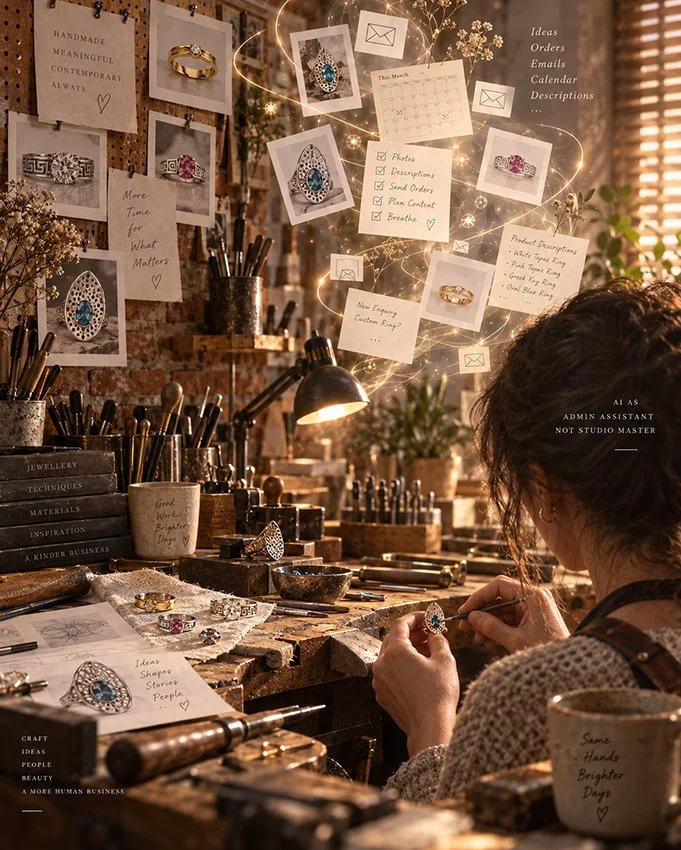
My jewellery practice has always been based around making at the bench. When I am sawing, soldering, filing, drilling or setting stones, my hands are occupied. Traditionally, many of the other jobs around my practice had to wait until I finished making.
Writing was separate. Editing photographs was separate. Planning social media was separate. Making a video was another completely separate job.
AI has started to change this.
Now I can photograph something I am making, explain what I am doing, and ask AI to help me develop a caption, blog structure or video prompt. I can generate ideas for the next stage while continuing with another physical task. I can quickly proofread something instead of leaving it until someone else has time to help me.
Vrew also showed me how much faster some parts of video production can become. Tasks that once felt like an entirely different skill—organising scenes, subtitles, timing and turning material into short-form content—can be approached much more quickly.
So yes, certain things have definitely become faster.
And I can do more things at the same time.
But Faster Does Not Mean Less Work
This is where I started noticing a contradiction.
Because I can do more, I actually do more.
I make the jewellery.
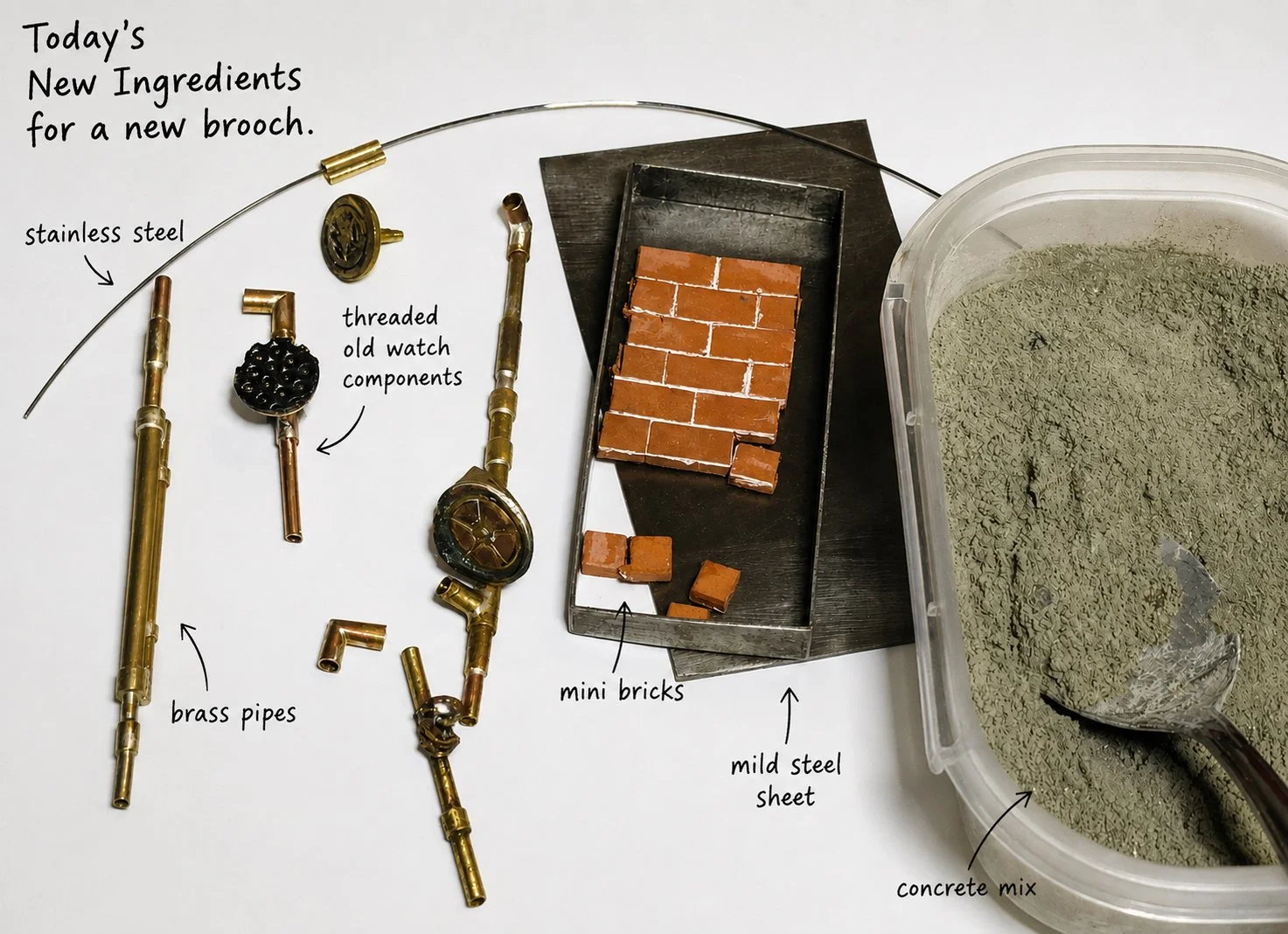
Then I photograph the materials.
Then I photograph the process.
Then I think about how the process could become a Reel.
Then perhaps I experiment with Flow or Vrew.
Then I edit the result.
Then I write an Instagram caption.
Then I write about what happened for Hand & Algorithm.
Then I compare the AI version with what actually happens at my bench.
One piece of jewellery can suddenly produce an entire chain of additional tasks.
AI has not necessarily removed the work. In some ways, it has expanded the possibilities around the work.
My Practice Still Begins at the Bench
This is particularly important for me because my practice is fundamentally based on physical making.
AI cannot solder the silver for me.
It cannot feel when a drill bit is beginning to catch in the metal. It cannot decide through touch whether a surface needs another ten minutes of filing. It cannot physically experiment with a piece of perforated steel and discover something unexpected because the material behaved differently from what I imagined.
I still have to be at the bench.
This means the digital work is mostly being added around the physical work rather than replacing it.
That is where I sometimes feel a kind of work overload.
There is the jewellery practice, and then there is an increasingly large digital practice surrounding it.
The Strange Paradox of Efficiency
This may be one of the most interesting things I have discovered through Hand & Algorithm so far.
AI gives me efficiency, but efficiency creates possibility.
Possibility creates more ideas.
More ideas create more experiments.
And more experiments create more work.
Before, I might simply make a pair of earrings and photograph the finished piece.
Now I can imagine documenting the ingredients, filming the making process, generating an experimental AI version of that process, editing a Reel, writing a blog about what went wrong, and sharing the comparison.
The individual tasks have become faster.
But the practice itself has become bigger.
Perhaps this is the paradox I am beginning to understand: AI does not automatically give a maker more time. It gives us the capacity to do more with the same time.
Whether that is freedom or simply another form of workload depends on how we choose to use it.
Learning When to Stop
So perhaps my next lesson is not about learning another AI tool.
It is learning when not to use one.
Not every piece of jewellery needs to become a video. Not every process needs to become content. Not every AI possibility needs to become an experiment.
My bench practice still needs empty space—time for making without documenting, prompting, editing or posting.
AI can help me work faster.
But I am beginning to realise that I also need to make sure that working faster does not simply mean working more.
That might be one of the most human decisions I have to make in this experiment.