Chap. 2–16: Choosing a New Body of Work – The City and Its Uncertain Walls
Chap. 2–16: Choosing a New Body of Work – The City and Its Uncertain Walls
Moving Towards a New Question
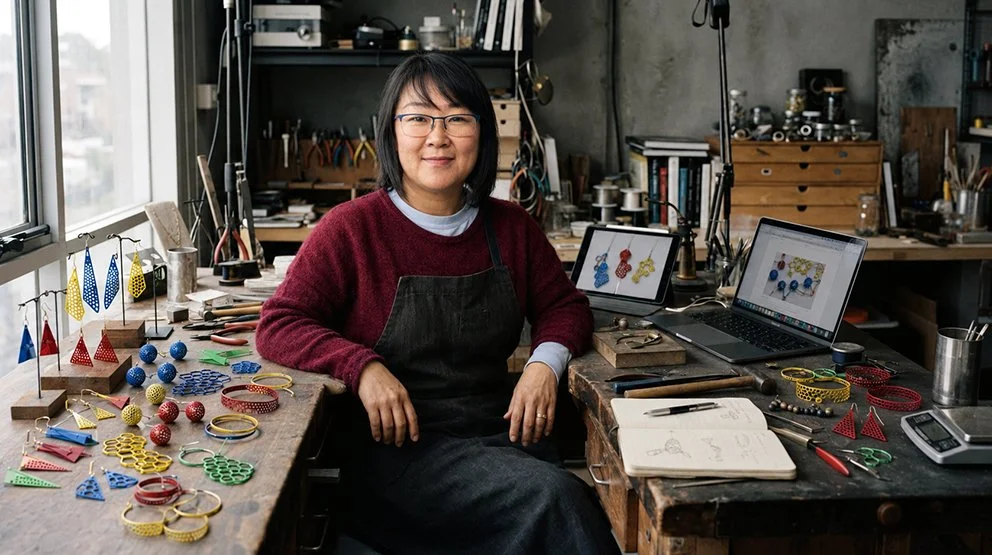
My sales records showed me what had connected with customers, but they could not tell me what I should make next. Rather than allowing past success to direct my future, I wanted to return to the bench with uncertainty—to begin something without knowing what the finished objects would look like or whether they would sell.
This decision led me towards a new body of work: The City and Its Uncertain Walls.
How the Series Began
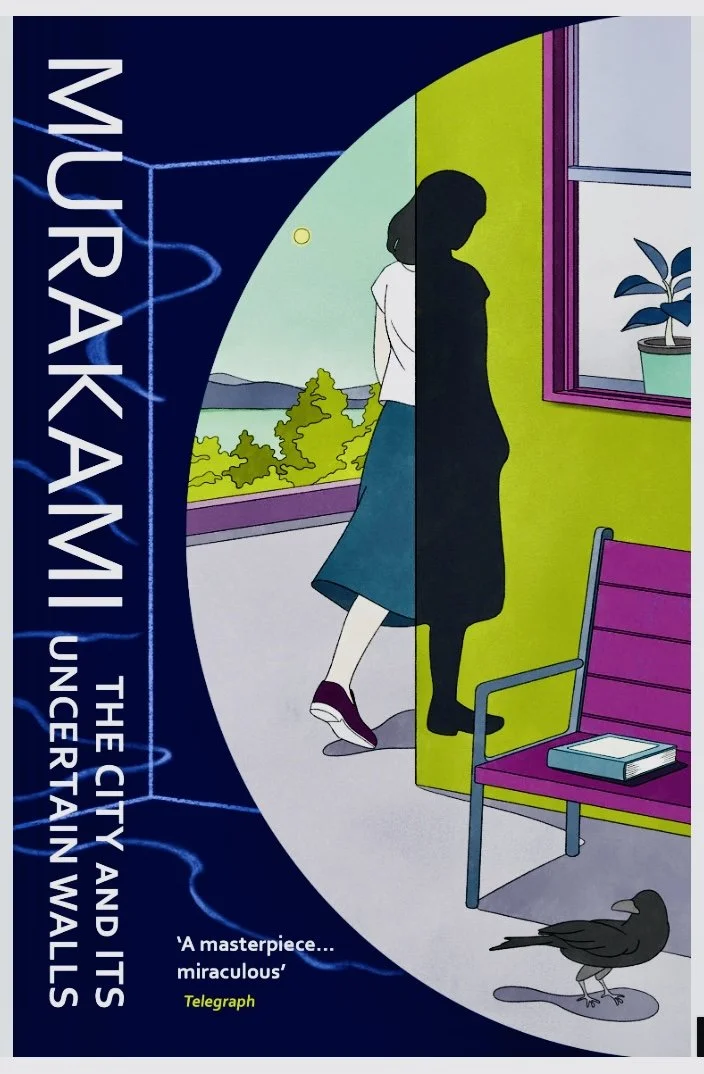
The title was inspired by Haruki Murakami’s novel The City and Its Uncertain Walls. Before I had developed the jewellery itself, I was drawn to the three words: city, walls and uncertain.
A city appears solid and permanent, but it is constantly changing. Buildings are demolished, windows are blocked, pipes disappear behind walls, and damaged surfaces are repeatedly repaired. People arrive and leave, carrying memories of places that may no longer exist.
A wall can protect us, but it can also separate us. It creates a boundary between inside and outside, safety and danger, belonging and exclusion. Some walls are physical; others exist within memory, language, relationships and identity.
The word uncertain unsettled this apparent stability.
An uncertain wall might be incomplete, damaged, shifting or partly imagined. It might contain a closed opening or conceal something that cannot be seen. Perhaps uncertainty also describes this stage of my practice. After seventeen years of making jewellery, I have developed a strong knowledge of materials, techniques and form. But I do not want that knowledge to become a limitation.
Choosing this series meant choosing uncertainty deliberately.
Beginning With the City
I began by observing walls around Melbourne and considering how architectural structures could be translated into jewellery. I photographed grids, pipes, windows, concrete surfaces, blocked openings, repairs and industrial fragments. With AI, I examined recurring shapes and imagined how they might become brooches.
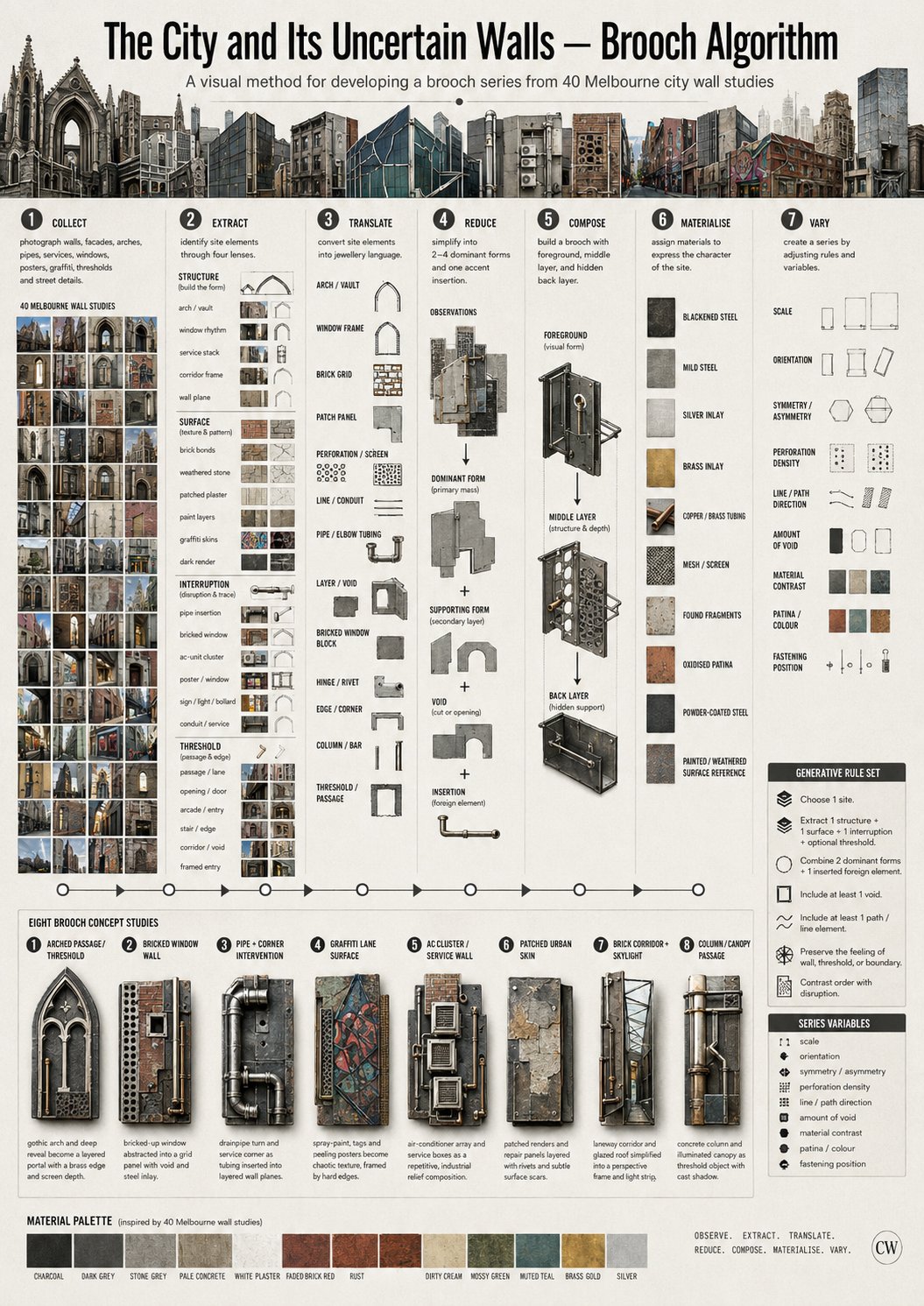
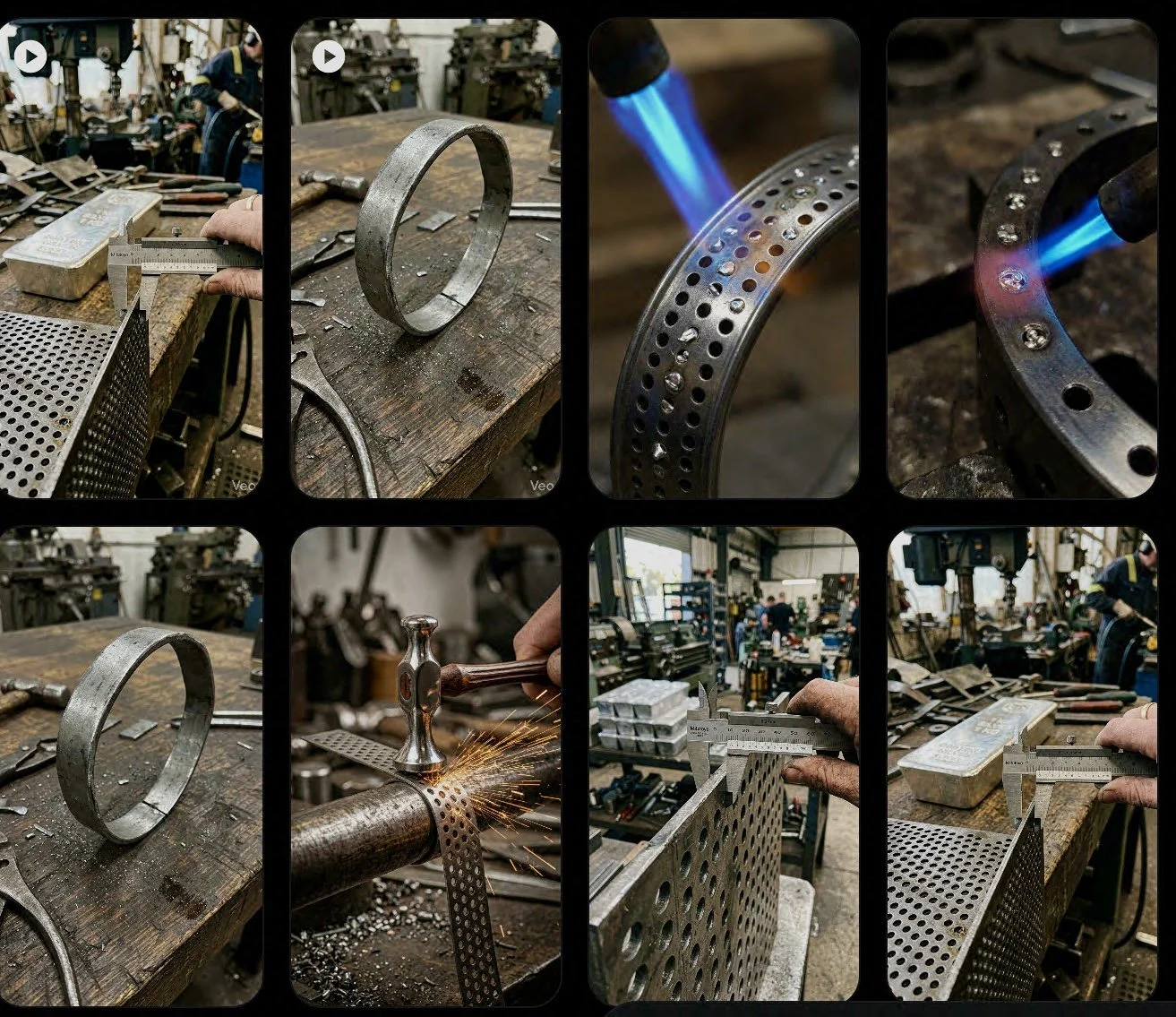
The first works began with materials already familiar to me: perforated mild steel, blackened metal, silver, brass and repeated geometric forms. I then introduced concrete, porcelain bricks, plastic tubing and found industrial objects.
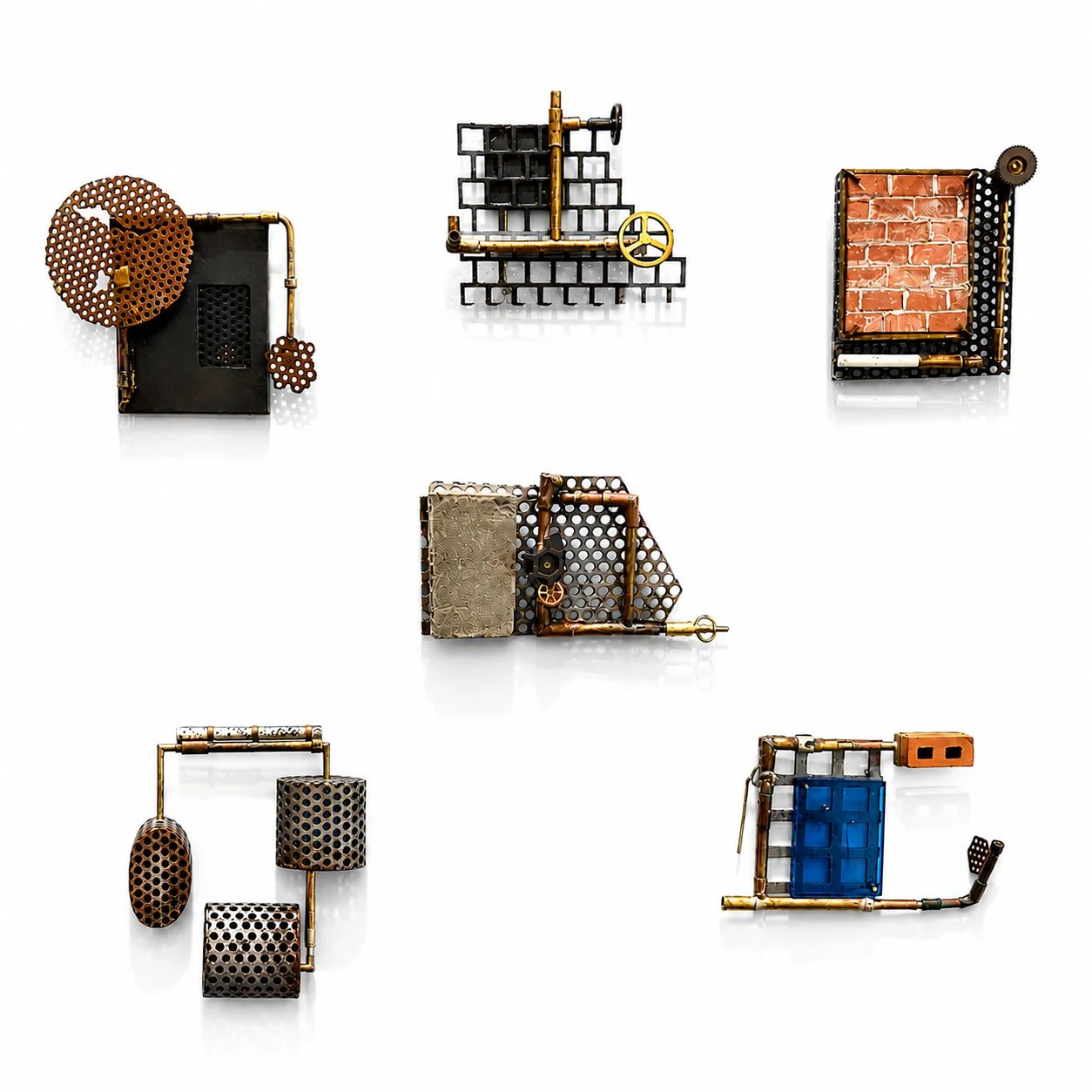
Perforated steel became a façade, fence or damaged wall. Brass pipes crossed the surfaces, changed direction or stopped unexpectedly. Small valves and controllers suggested systems whose original purposes were no longer clear.
Using tap-and-die tools, I made some components interchangeable so that they could be removed, repositioned or rotated. I connected concrete to perforated steel and claw-set porcelain bricks into brass frames as though they were gemstones.
This opened an unexpected material territory. A fragment of brick or concrete could become the precious centre of a piece. Plastic could sit beside brass, while found mechanical parts could meet carefully constructed jewellery settings.
I was not abandoning my previous visual language. I was asking it to say something new.
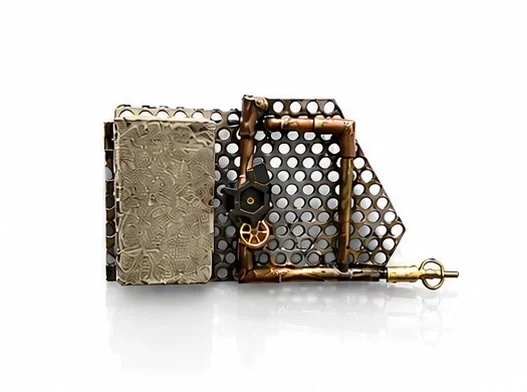
“The Wall Without Water” brooch 2026. Perforated mild steel, brass pipes, Interchangeable controllers made of industrial fragments, patina and steel.
The Brooch as a Small Wall
The brooch became an important format because it sits directly on the body.
Architecture usually surrounds and contains us. A brooch reverses that relationship, turning a fragment of architecture into something portable and intimate—a small wall carried on clothing.
Although the front may suggest instability, the back still has to function. Concrete must be securely connected to metal. Porcelain must be held without cracking. A rotating controller needs enough movement without becoming loose. Every structure must respond to weight, balance, comfort and the movement of the wearer.
This is where material knowledge remains essential. AI can propose a structure, but it cannot feel its weight on the body. It does not know how thin steel moves beneath a hammer or how much pressure porcelain can withstand.
AI can suggest. My experience has to filter. My hands have to test. The materials answer.
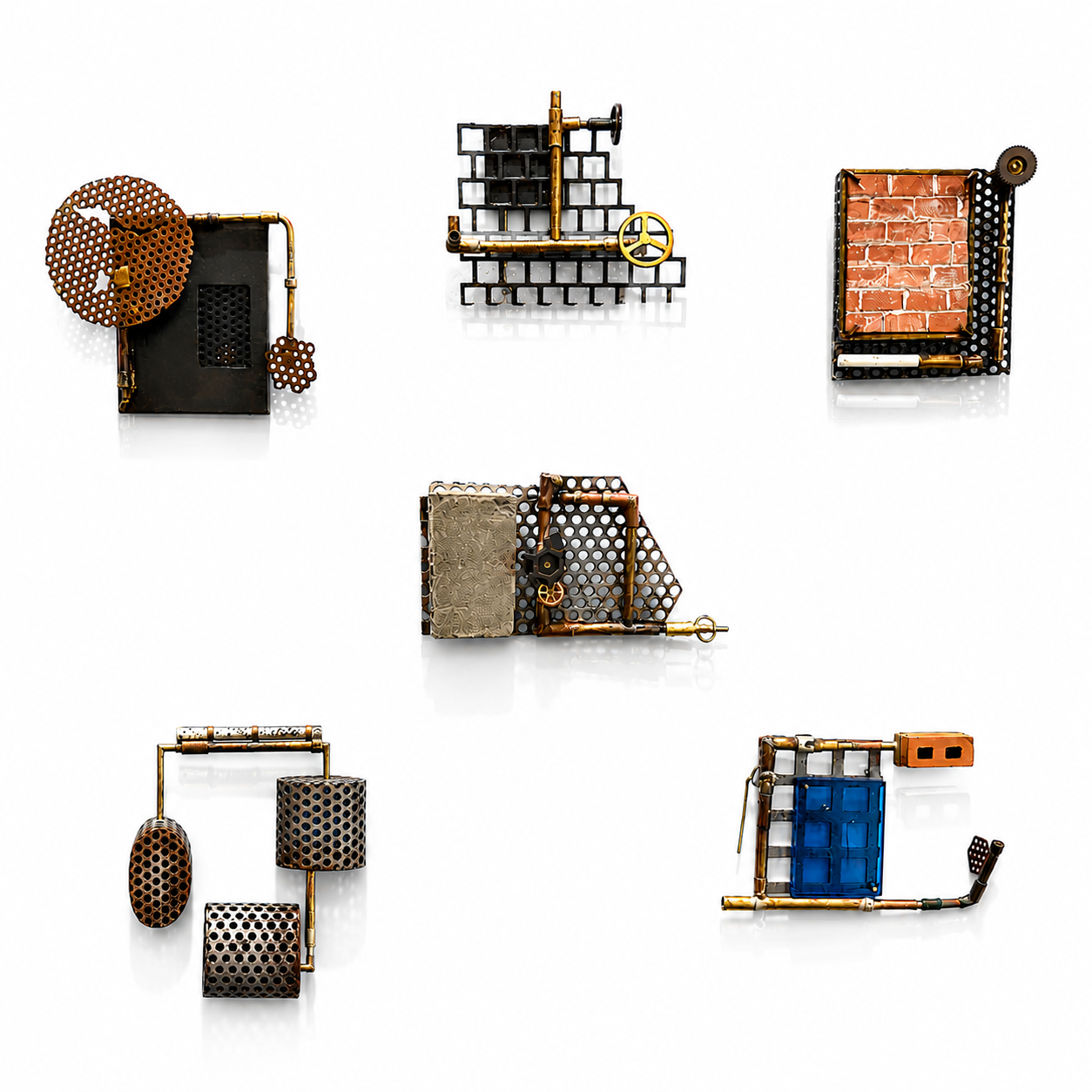
Initial 6 brooches created.
Was I Saying Something?
As I made more brooches, a recognisable visual language emerged: perforated steel, grids, pipes, concrete, porcelain, brass and industrial fragments. The pieces were graphic, architectural and carefully composed.
But another question appeared:
Was I making beautiful geometric compositions, or was I saying something?
My previous jewellery often celebrated precision, repetition and technical refinement. These qualities naturally entered the new brooches, but I began to wonder whether the works were describing the appearance of a city without expressing what it might feel like to live within one.
The grids communicated order. The pipes suggested systems. The concrete created physical and visual weight. But Murakami’s title is not simply about a city and its walls. It is about uncertain walls.
Where was the uncertainty?
What Happened Here?
Through continuing conversations with AI, I began changing the questions I used while designing.
Instead of asking:
How should I compose this piece?
I began asking:
What happened here?
Why is the pipe disconnected?
What has been blocked?
Who closed this opening?
What is hidden behind the grid?
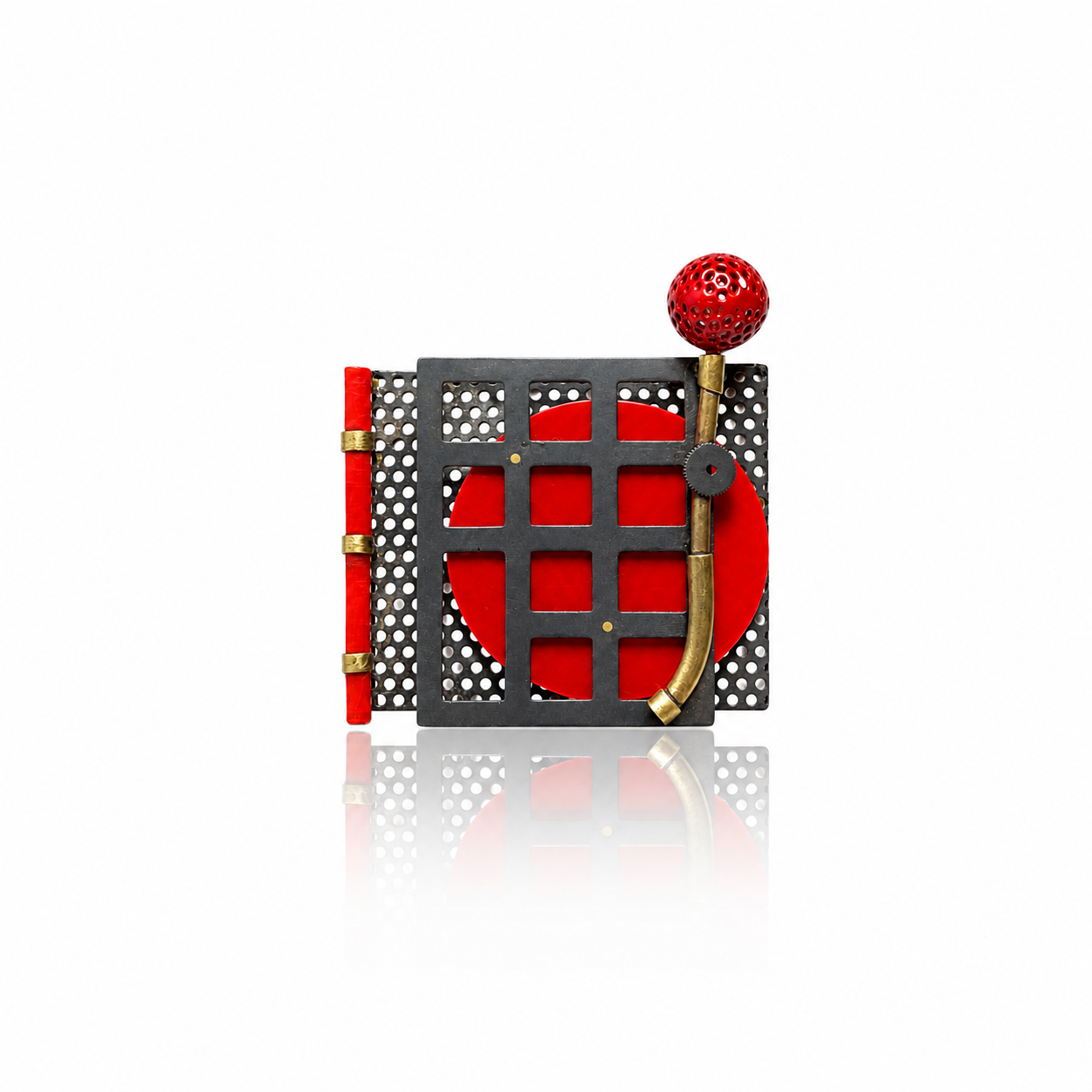
In one recent brooch, a red perforated sphere sits behind a blackened grid. I considered titles such as The Red Chamber and Behind the Grid. The sphere creates a strong geometric contrast, but the grid changes its meaning. It might be protected, trapped, hidden or observed. We do not know whether it is trying to enter the wall or escape from it.
That uncertainty creates emotional space.
What Does This Wall Remember?
The industrial elements began to suggest more than function. A pipe ends before reaching its destination. A window is blocked. A crack has been repaired, but the wound remains visible.
The components have not changed, but the questions have.
What does this wall remember?
I began to think of walls as witnesses. They remain after people leave, quietly holding traces of weather, damage, repair and absence.
Perhaps this is also connected to migration. I moved from Korea to Melbourne in 2000, but one city did not simply replace the other. Their surfaces, languages and memories continue to overlap. The wall may be something I observe in Melbourne, but it may also be something I carry.
Geometry remains central to the work, but now I want to interrupt it—to hide part of a circle, break the rhythm of a grid or stop a pipe without explanation. Through these small disruptions, precision can begin to hold uncertainty, silence and unease.
My conversations with AI have changed as well. Instead of asking only for new compositions, I now ask:
What is hidden? What has disappeared? What happened here?
AI can suggest possibilities, but it cannot give the work its meaning. That emerges through choosing, resisting and making.
I had to construct the first walls before I could hear what they were asking.
The question is no longer simply:
What should this brooch look like?
It is:
What does this wall remember?
The wall does not answer.
That is where the work begins.