Chap.5-40 : Concrete Walls — From Industrial Structures to Poetry and Graffiti
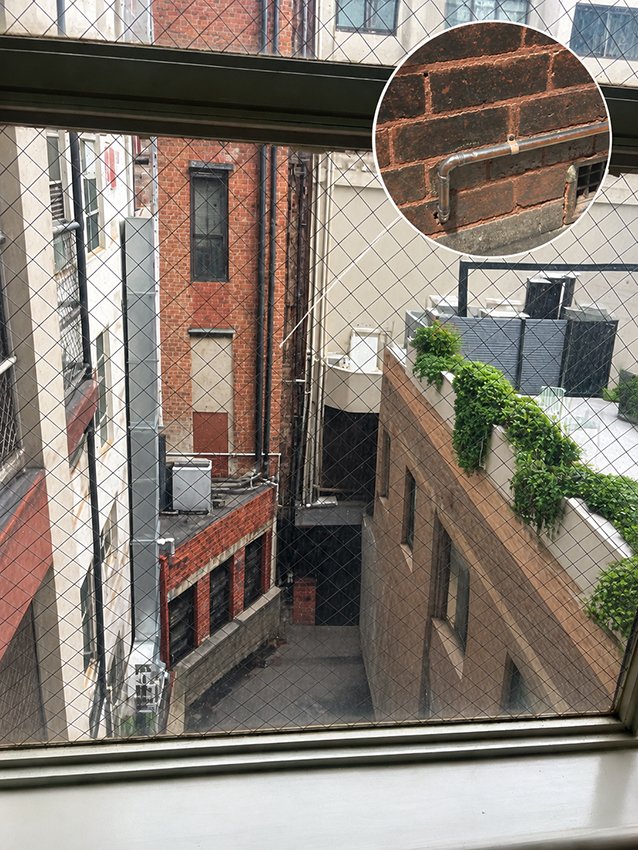
As my brooch collection The City and Its Uncertain Walls developed, concrete became one of my favourite materials to work with. It is such an ordinary material in the city, but bringing it into contemporary jewellery has been quite fascinating.
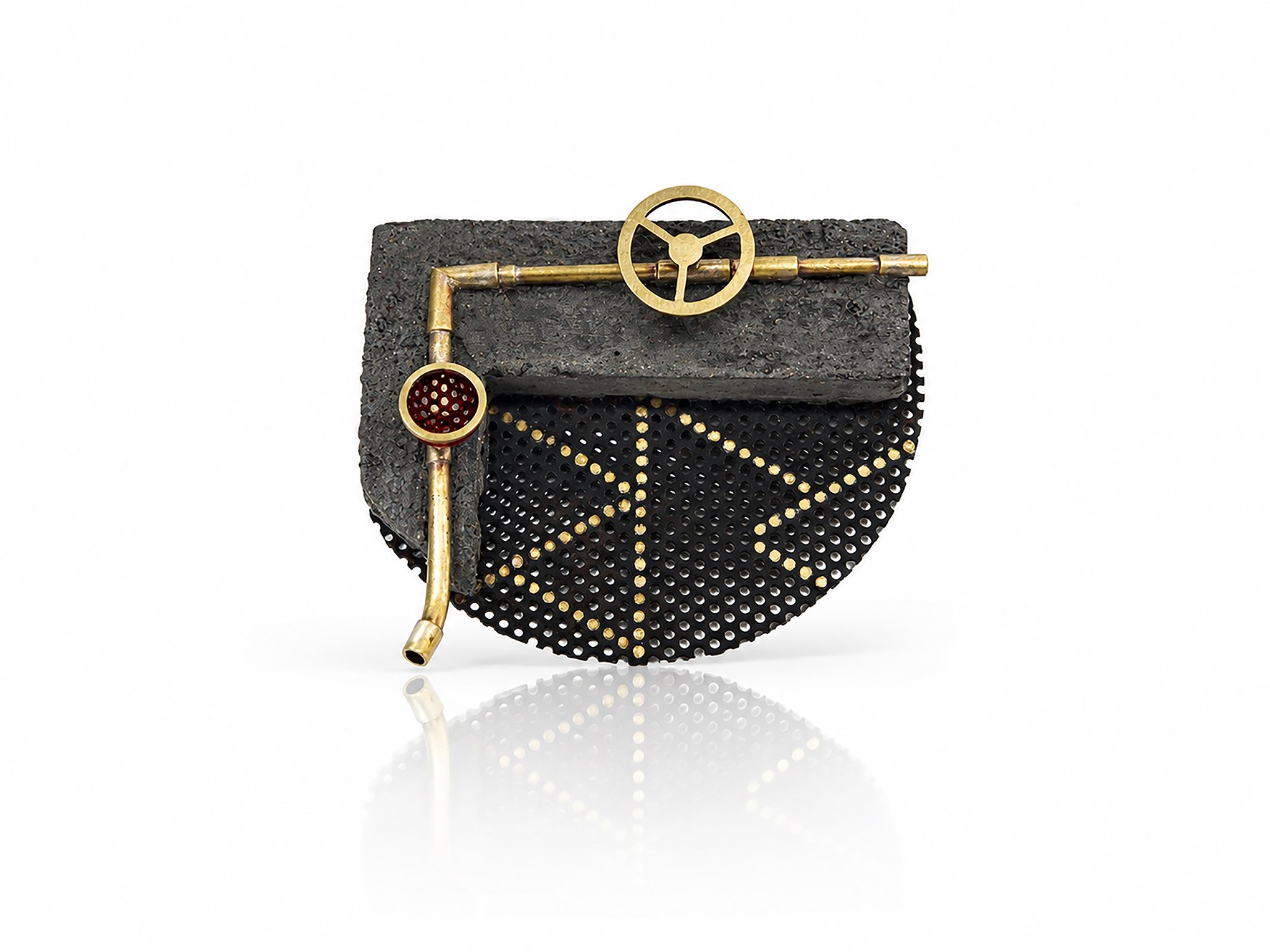
These three brooches were made in sequence: The Wall Has No Water, Poetry of the Wall, and Graffiti Wall. Although they all use concrete, each has a different story and construction process.
1. The Wall Has No Water
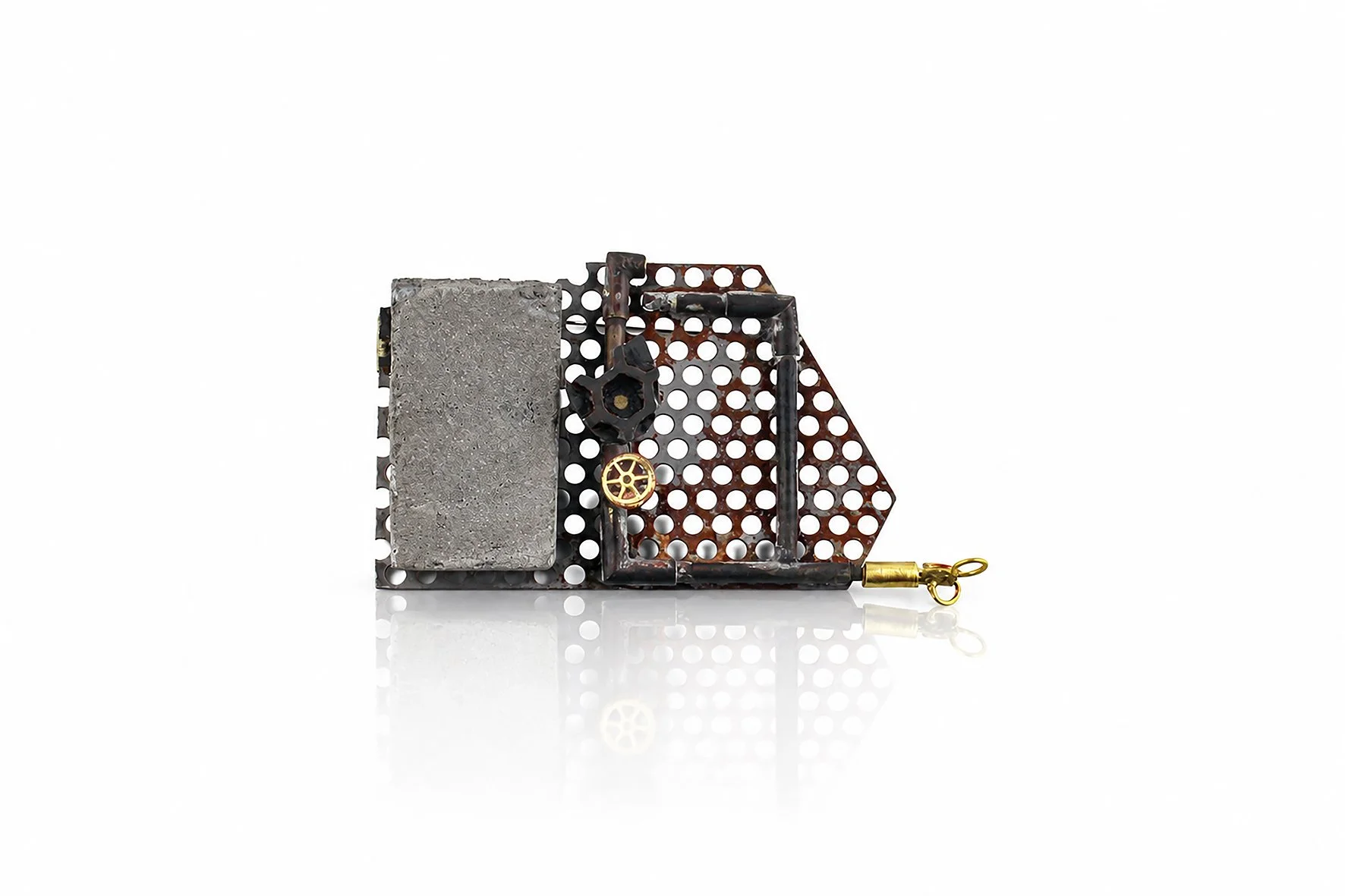
This was my first experiment with setting concrete into a brooch. I made a small mould using thin balsa wood and poured in the concrete mixture of cement, sand, aggregate and water. It needed at least three to four days to set and dry enough for further work.
The concrete wall was made separately and then incorporated into the perforated steel structure with brass pipes and controllers.
I loved the contrast between the heavy, solid concrete and the perforated steel. The pipes suggest a water system, but where is the water? The wall is solid, yet everything around it seems to be leaking or unable to contain anything.
2. Poetry of the Wall
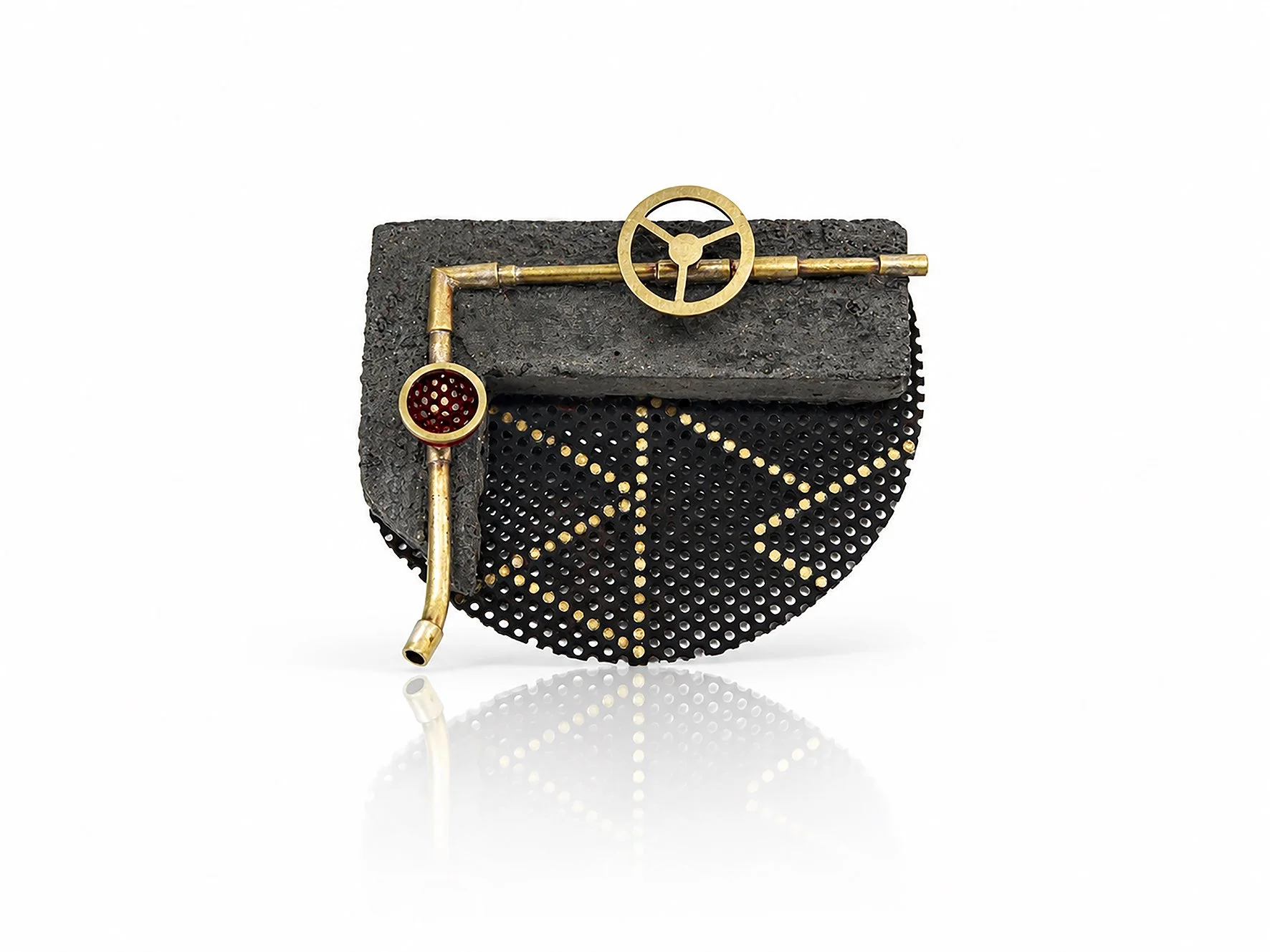
For the second brooch, I wanted to go a little further with the construction.
This time, I embedded my pre-made brass pipe structures directly into the concrete. I soldered small legs underneath the pipes so they could be securely anchored inside the concrete as it set. Again, I used a balsa wood mould to form the wall.
I also applied my Latent Lines technique, using brass inlay through the perforations to create hidden geometric lines.
Looking at the finished piece, I thought there could be something poetic about these industrial materials. Even in a space filled with concrete, metal and pipes, there might be some romance, sweetness or beauty.
That is why I called it Poetry of the Wall.
3. Graffiti Wall
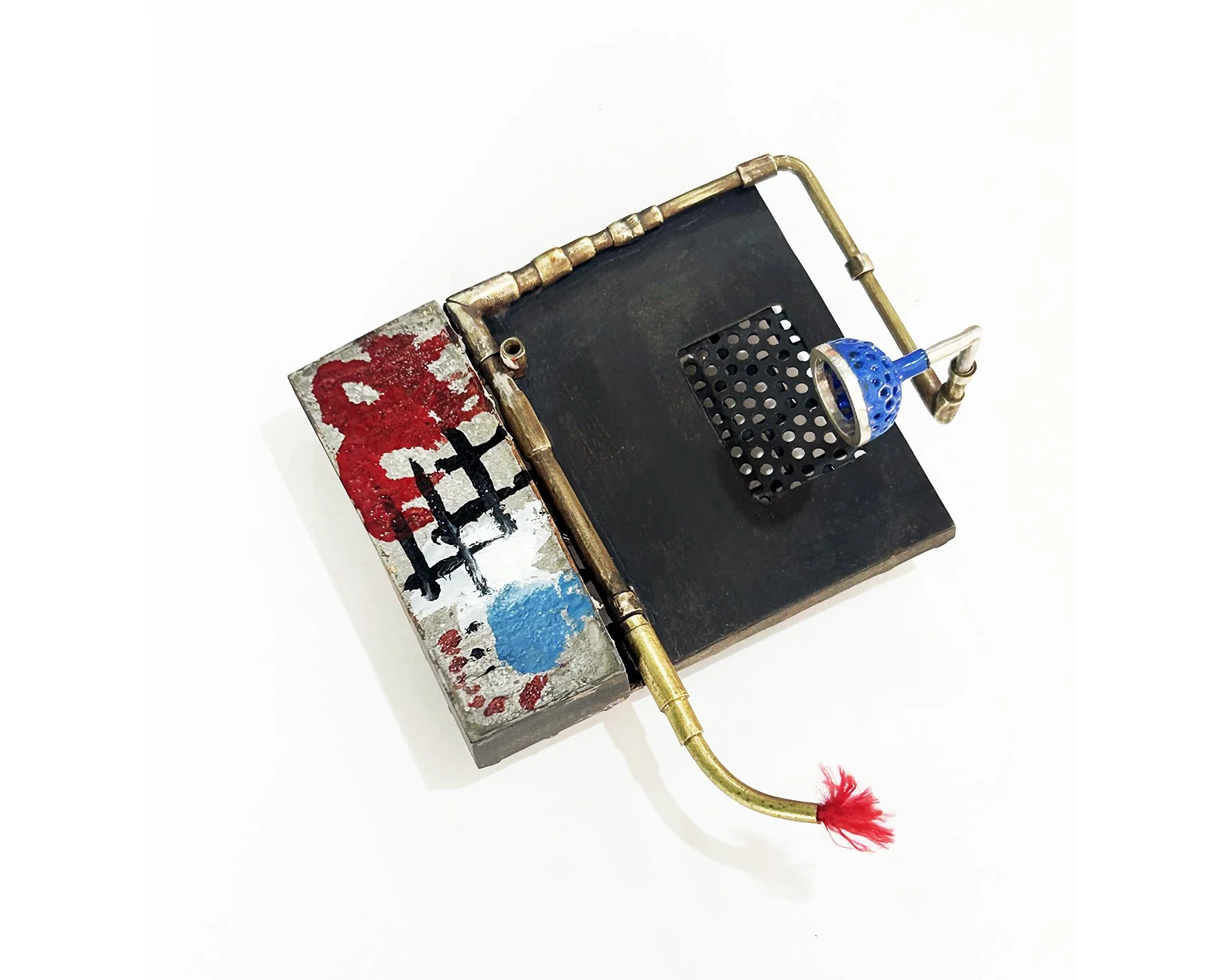
The third brooch developed in a slightly different direction.
Instead of using a temporary balsa wood mould, I constructed a steel frame around the concrete wall and poured the mixture directly inside. Once the concrete had dried, I painted graffiti onto its surface using enamel paint.
Graffiti is everywhere in the city. Sometimes we admire it, sometimes we are curious about it, and sometimes we find it annoying. But it certainly changes the way we see an ordinary wall.
I wanted to bring some of that energy into this brooch.
The brass pipes are intentionally disconnected. There is red inside one opening, suggesting something leaking, while a bright blue perforated half-sphere with a silver rim is connected through a threaded silver wire.
I particularly love that unexpected blue element. Against the dark steel, concrete and painted wall, it brings a little brightness and something almost precious into this industrial structure.
Just like graffiti in the city, it is a little strange, playful and perhaps not everyone's taste!
Concrete as a Jewellery Material
Working with concrete required patience. Unlike soldering or forming metal, I couldn't simply finish everything at the bench in one session. I had to prepare the moulds, mix the concrete, wait for it to set and then continue constructing the brooches.
Each piece taught me something new about how concrete and metal could work together.
What began as an experiment with an industrial building material gradually became a way to express different emotions — emptiness, poetry, curiosity and even humour.
The material stayed the same, but the stories kept changing.
And I think that is what I enjoy most about making this collection.