Chap.5-39 : Concrete and Red Bricks – The Foundation Has Moved
The City and Its Uncertain Walls – Brooches (Inspired by the same title novel written by Haruki Murakami and my city Melbourne)
After experimenting with miniature porcelain bricks and different ways of constructing brick walls, I wanted to introduce concrete into the collection.
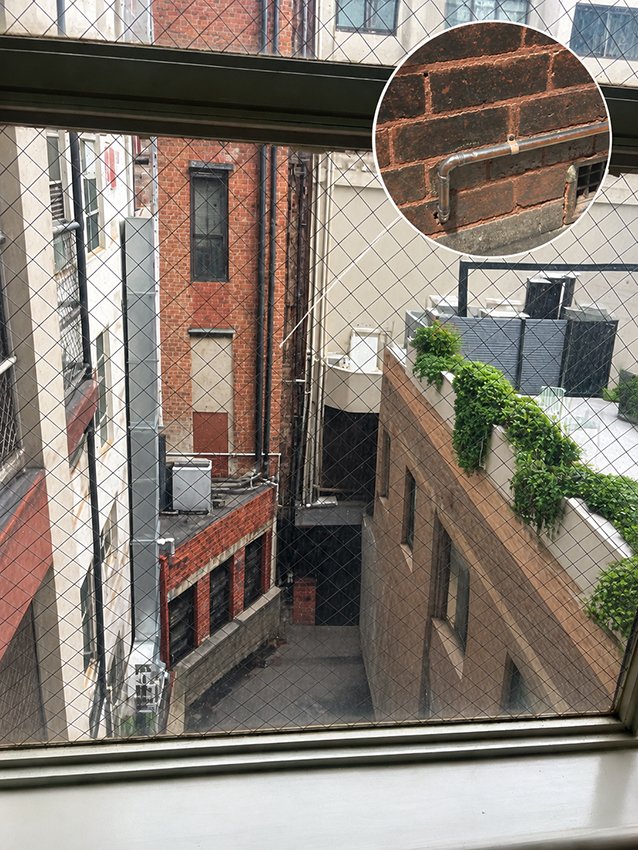
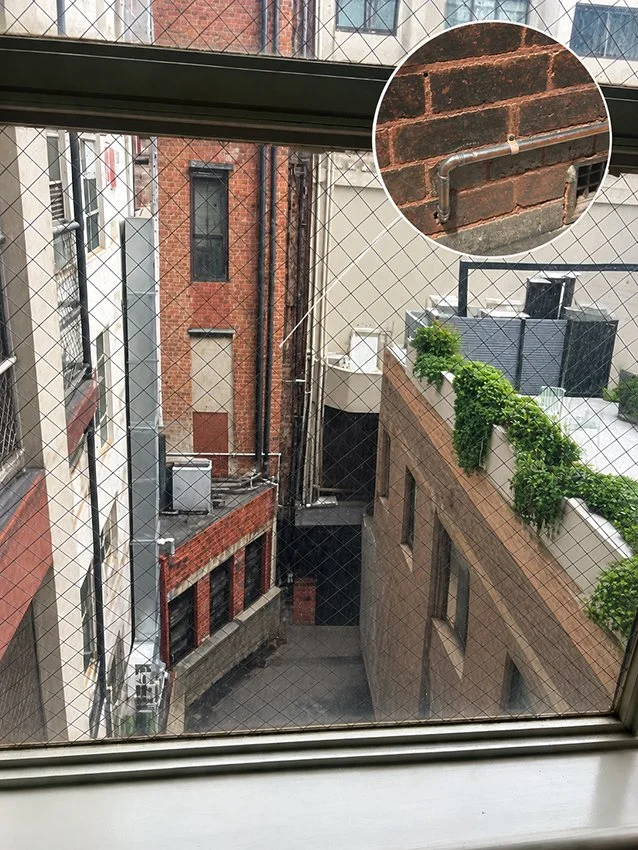
I have always been fascinated by the surfaces of old buildings, particularly red brick walls, concrete, exposed pipes and the marks left by time. They are ordinary materials we see everywhere in the city, but when I look closely, I find their textures, colours and structures quite beautiful.
For these two brooches below, I explored different ways of combining miniature red bricks with metal structures.
The Foundation Has Moved
For the first brooch, I decided on the title The Foundation Has Moved.
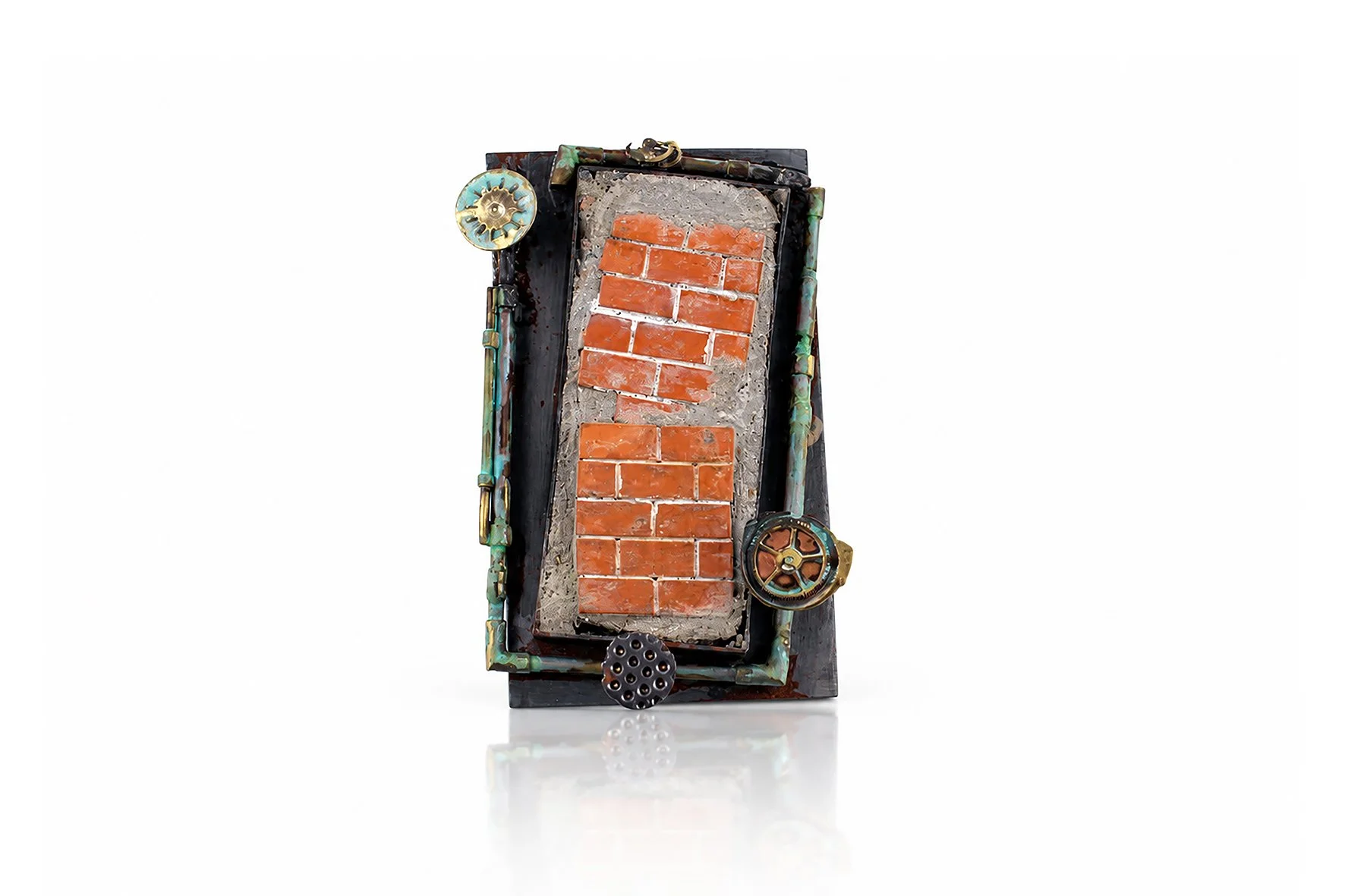
“The Foundation has moved”-Mild steel, porcelain bricks, concrete mix, found objects, components of old watches, brass pipes, steel and patina
Sometimes, walking through the city, we see old buildings where the foundations have shifted, walls have cracked or structures have been repaired over time. I find these changes fascinating because they reveal the history of a building.
I embedded sections of miniature red brick walls into concrete, leaving some areas exposed and others partly covered. I constructed brass pipes around the concrete and treated them with patina to create the greenish, aged surfaces. I also incorporated old mechanical components, continuing the industrial language I have developed over the years.
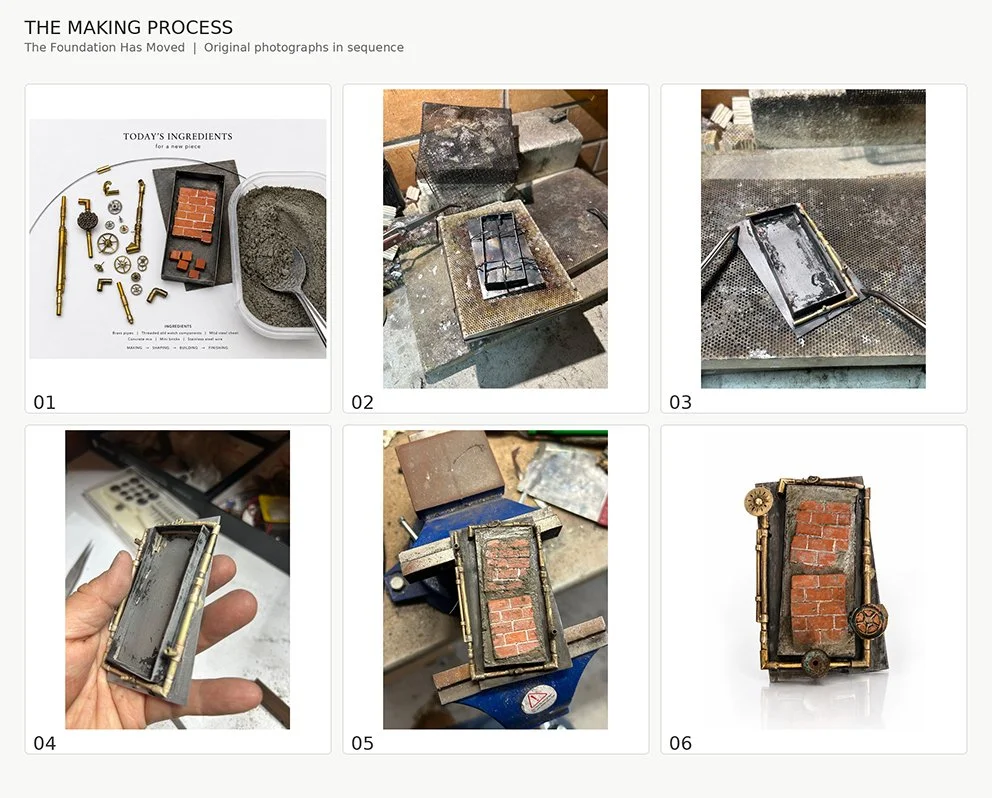
The process of making in order. From the ingredients to completion of the form of the brooch
I put an enormous amount of time and energy into making this piece. Working with concrete, miniature bricks and metal components was not straightforward. Each material behaved differently, and bringing everything together required patience and many adjustments.
As I was making it, I began thinking about the title in a more personal way.
The foundation of my own life has shifted too. Moving from Korea to Australia changed so many things in my life. The place where I started is still part of me, but I cannot simply return to the life I once had. Too much has changed, including myself.
Perhaps a foundation does not always remain where it was originally built. Sometimes it shifts, and we have to build something new upon it.
The foundation has moved, and there is no going back.
A Brick Wall to Carry
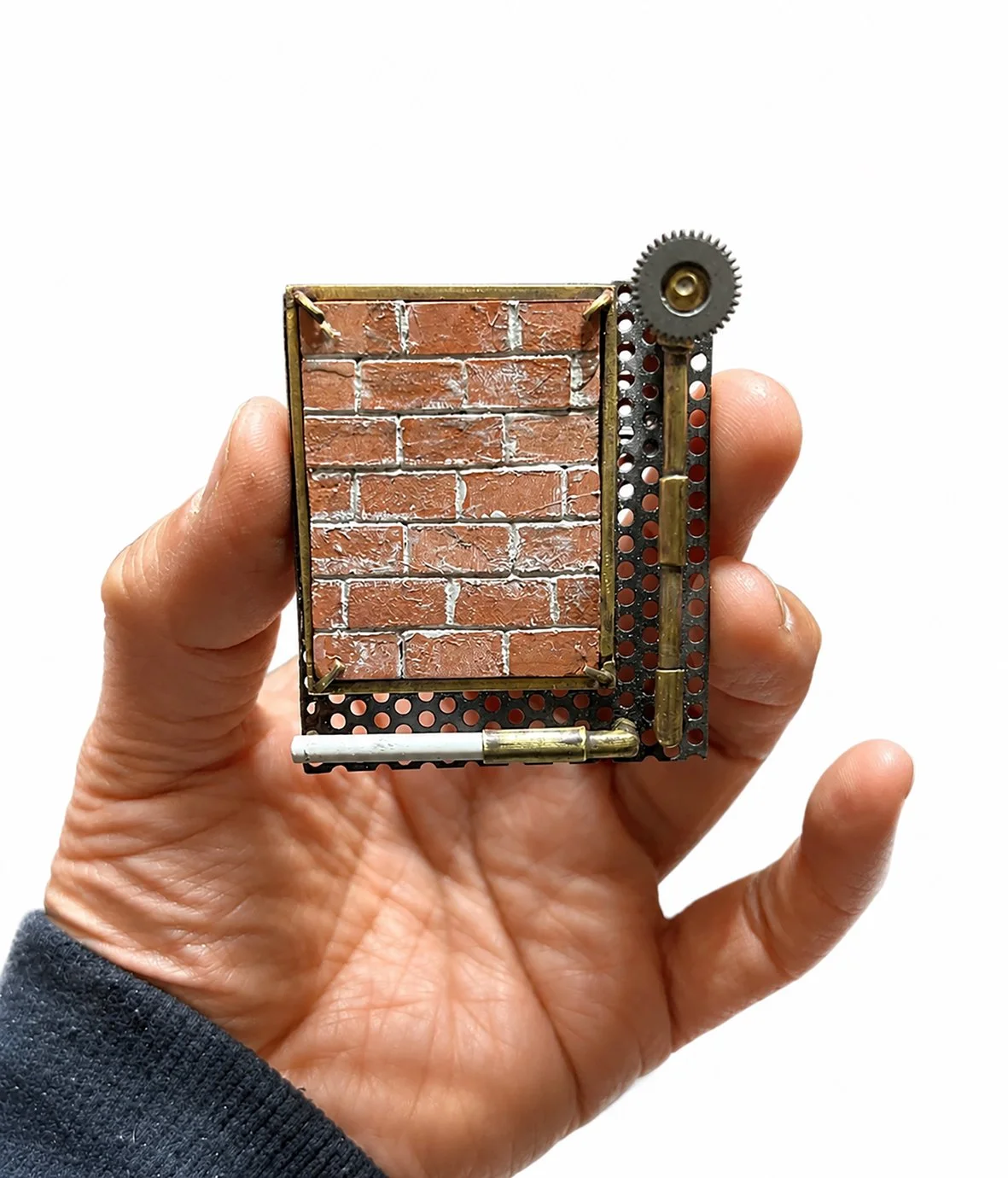
A Brick Wall to Carry: perforated mildsteel, components of old watch, plastic pipes, steel, porcelain mini bricks.
The second brooch was constructed differently. I made a rectangular brass frame to hold the miniature brick wall, using the traditional claw-setting technique I had learnt from jewellery making. The wall sits on a perforated steel base, surrounded by brass pipes and an old gear. I also introduced a white tube to create a contrast between the materials.
What I find interesting is how these familiar building materials become something quite different when reduced to the scale of jewellery. A brick wall becomes precious enough to be carefully set with claws, almost like a gemstone. Concrete, normally associated with heavy construction, becomes part of a small object worn on the body.
There is also something contradictory about making a wall into a brooch. Walls are usually fixed, heavy and permanent, while jewellery is portable, personal and moves with the wearer.
Perhaps this is what interests me most about The City and Its Uncertain Walls. The materials still carry the memory of architecture, but their original functions have changed.
Both brooches required considerable time, patience and technical problem-solving. Although they share similar materials, each developed its own character through the making process.
For me, these works are not simply miniature architectural structures. They are also about memory, change and the emotional value we attach to places and materials.
A wall no longer needs to stand. It can move with us.